Iran Tours for US Citizens
U.S. travel advisory: The U.S. Department of State currently rates Iran Level 4: Do Not Travel and advises U.S. citizens not to travel there for any reason. It cites risks including terrorism, unrest, kidnapping, arbitrary arrest, and wrongful detention. There is no U.S. Embassy in Iran. A guided tour or travel insurance does not remove these risks. Read the current U.S. advisory before making plans.
If you are considering a future trip, check the advisory and current entry rules first. The Iranian Interests Section’s visa instructions say U.S. passport applicants must apply through a travel agency or host in Iran and follow its e-visa and document process. Ask SURFIRAN about itinerary feasibility and assistance, but do not assume a visa or trip can be confirmed.
How to travel to Iran as a US citizen?
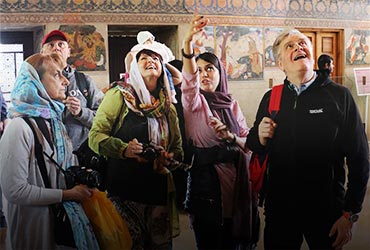
Our Iran tours for US citizens are designed as intimate small group experiences with a maximum of six travelers. This setup creates a more personal atmosphere, helps you connect with like-minded explorers, and ensures smooth, well-organized travel from start to finish.
 SURFIRAN

 SURFIRAN
Essential Advice for US Travelers
Explore vital tips for US citizens planning Iran tours, covering everything from visa processes to cultural etiquette, ensuring a well-prepared and enriching travel experience.
Iran Visa for US Citizens
The Iranian Interests Section’s current visa instructions say U.S. passport applicants must apply through a travel agency or host in Iran. Follow its official e-visa, document, payment, and submission instructions, and check its current contact details before applying. Fees and procedures can change.
The October 2025 instructions give an average visa issuance time of 10 business days after complete documents are received; incomplete applications may take longer. This is an average, not a guarantee or a timeline for the whole trip-planning process. The office advises waiting for visa issuance before buying tickets.
Visa and Master Cards in Iran
Travelers heading to Iran need to be aware of a significant financial consideration. Due to the US trade embargo, international credit and debit cards, including Visa and MasterCard, are not accepted in Iran. This restriction also means visitors cannot withdraw cash using these cards from ATMs in Iran.
However, Iran does have a network of ATMs, but they are compatible only with locally-issued bank cards, such as the Mellat Card and Melli Card, provided by local Iranian banks. To navigate this financial landscape, one practical solution for international visitors is the OrientTrips Tourist Card.
The OrientTrips Tourist Card offers a convenient and secure way to manage your expenses while in Iran. It eliminates the hassle of carrying large amounts of cash and provides an efficient alternative to non-functional international banking cards.
By using this card, you can easily make transactions and access funds, ensuring a smoother and worry-free travel experience in Iran.
Solo Travel in Iran as an American
When traveling solo in Iran as a US citizen, a key rule is to always have a guide with you.
Can U.S. Citizens Travel To Iran By Land Or Sea?
Entry by land or sea, including with a private vehicle, depends on current visa, border, and vehicle rules. Confirm the specific route and requirements with the relevant authorities before planning.
Currency Exchange Offices (Money Changers In Iran)
Travelers arriving at the new Imam Khomeini International Airport in Tehran will find convenient currency exchange facilities. For those who need to exchange currency upon arrival, this service is a great relief.
Additionally, Tehran and other major cities in Iran boast a network of currency exchange offices. These are licensed by the Iranian National Bank, ensuring reliability and trust. It’s not just the airport; you can find these exchange services spread across the city centers.
Many local banks also provide foreign exchange services. However, it’s important to note that not all bank branches offer this. For the best advice on where to go, your host or hotel staff can be a great resource. They can guide you to the nearest and most reliable currency exchange points.
Cell Phone Service And Internet
Traveling to Iran requires a bit of tech preparation, especially when it comes to staying connected. US cell phone service providers, like Sprint and Verizon, don’t offer roaming in Iran. This means you’ll need an alternative for making calls and accessing the internet.
Upon arrival, purchasing a local SIM card at the airport is a convenient solution. This allows you to make both domestic and international calls and access 3G and 4G internet on your cellphone. A popular choice among travelers is the prepaid MTN IranCell, the second-largest mobile phone network operator in Iran, partly owned by South Africa’s MTN Group.
For a hassle-free experience, consider exploring Iran SIM Cards by OrientTrips. They offer a range of options tailored for international visitors, ensuring you stay connected with ease during your travels in Iran.
Obtaining Travel Insurance
For US citizens traveling to Iran, securing travel insurance is essential. Start by checking with your current insurance provider; some may offer international coverage.
If not, consider specialized travel insurance companies that cater to international travelers. Look for policies covering medical emergencies, trip cancellations, lost baggage, and other unforeseen circumstances.
It’s crucial to confirm that the policy is valid for travel in Iran. For convenient options, explore OrientTrips which offers tailored insurance solutions for travelers to Iran.
Can You Travel To Iran As An Unmarried Couple?
Yes! This is an often more assumed problem than a real one for most travellers. Travelling to Iran will not be a problem. Most hotels, like everyone else, won’t ask or care about your relationship status.
In the case that they do, it is up to individual travellers to decide how they respond but no proof of marriage is required.
In the very worst scenario, you may be required to take separate rooms but this is almost unheard of, particularly for foreign travellers. But remember unmarried Persian couples are not able to get a hotel room.
If you’re married to an Iranian we advise you to carry your marriage certificate with passport as proof of marriage.
Drink Alcohol And Eat Pork In Iran
Drinking alcohol is against the law in Iran and no shops are permitted to sell it. Anyone caught in possession of alcohol faces arrest and in the case of a tourist face deportation.
People in Iran tend to drink tea, Sharbat (a cool, sweet drink known as the world’s first soft drink) or doogh (a savoury yogurt drink). Alcohol free beer is also available. Pork is not available.
When it comes to meat most Iranians tend to eat chicken, beef or lamb, all of which are widely available.
Best Time to Visit Iran
Deciding the best time to visit Iran greatly depends on your travel preferences and activities. Iran experiences extreme weather variations, with hot summers and cold winters. In some regions, you might even encounter snow during winter.
Travelers should be aware of the month of Ramadan. During this period, many food stores remain closed during the day, which can be challenging for visitors not observing the fast.
Another important time to consider is around the Iranian New Year, celebrated on March 21. This is a peak holiday season for locals, making it harder to find available accommodations. Planning ahead is crucial if you wish to travel during this vibrant but busy time.
For more detailed information and assistance in planning your visit to Iran, check out SURFIRAN’s tours for a variety of options that cater to different seasons and interests.
How Much Money to Bring
When planning your budget for a trip to Iran, consider your personal spending habits and travel style. On average, allocate around $25-35 USD per day for food and entry fees to various sites. However, this is just a starting point.
Remember to set aside extra funds for souvenirs, laundry, and other incidentals. It’s also wise to have a “miscellaneous/emergency fund.” Based on personal experience, for a 15-day trip, you might budget approximately $800 USD but end up spending around $500 USD. This variance includes small souvenirs, occasional upscale dinners, and tips for your driver and guide. Keep in mind that this estimate assumes modest eating habits and might vary for those who prefer more lavish dining experiences.
Customized Tours for US Explorers
An Iran Private Tour offers personalized travel experiences in Iran for individuals or groups, providing flexibility and a unique perspective on the country.
 SURFIRAN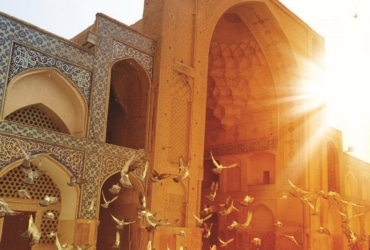

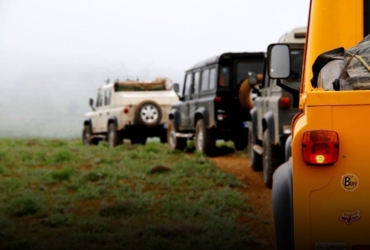
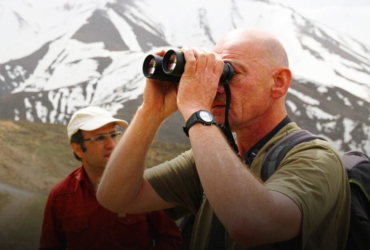
SURFIRAN Reviews
What initially attracted me to choose Surfiran for my trip to Iran was their beautiful website, if you can believe it. Thankfully, I soon learned that the substance of this organization matched its style.
Surfiran not only provided me with an unforgettable trip through Iran, but showed incredible patience and persistence in getting my visa (I’m American, so it was difficult), and was available before, during and after the trip to hear feedback and solve problems.
Mersi!

My trip was not an ordinary tourist trip to Iran visiting the sights of the ancient civilization if the country. I was interested in the equine activities n the country due to the fact that I had been a horse trainer working for the Court in the 1970s. SURFIRAN did a great job in satisfying my desires.
I not only met up with old friends in the horse world but it was arranged for me to visit shows, polo matches, races and many horse farms and clubs. Their guides, driver and personnel were the best. I highly recommend this agency.

Do yourself a favour and visit Iran. And if you would like a smooth, inclusive and carefree experience contact SURFIRAN.
Everything has been great, Farzaneh helped us from day 1, there were a couple of small misunderstanding/miscommunication on behalf of the Australian operator, and Farzaneh went above and beyond to sort them out. The guides were fantastic, we spent a day with Sarjat in Tehran, followed by the rest of the tour with Arya. I will always treasure the memories I’ve made with these people and all the knowledge they’ve shared with us. Farzaneh called everyday to check that everything was good. I was very impressed by the level of attention.
Hotels were great, clean, comfortable and top quality service. Definitely an excellent experience.

We spent two weeks in Iran and loved our time there. SURFIRAN were fantastic to work with and helped us plan an amazing itinerary. We wanted to plan and book with a local company to get local knowledge and put our money on the ground there instead of going through a larger international tour company.
The lovely people in the office were helpful and prompt with our questions. Our two guides were fantastic. Sajad, our guide in Tehran, is a friendly knowledgable guy. We had a ball and enjoyed his company. Our guide in other cities, Mustafa, is a real character and expert. Both are warm like most people we met in Iran.
Iran is an amazing place. And, while it’s history, culture and food are clear highlights, the one thing that keeps shining through is that war,th of the people. We had many experiemces of people’s hospitality and just wanting to welcome us to Iran.
Thank you SURFIRAN for showing us you great country.
We had a great experience with Surfiran who helped us plan a customised honeymoon package that took us from Tehran to Kashan, Esfahan, the Central Desert, Yazd, Persepolis and Shiraz in 13 days.
Everything went smoothly thanks to Farzaneh who was extremely prompt over email and Whatsapp and kept in touch with our guides the whole trip to make sure things were on track. The guides – Hosein, Kian, Ali and Sajad – were all professional, attentive and spoke fluent English, each with their own distinctive personalities and all passionate to show us Iran from a local perspective.
I’ll admit we were rather cautious about going to Iran at first but the experience with Surfiran really changed our perspective. The level of service was comparable to what we were used to in Singapore and on trips to Europe and the hospitality and warmth far exceeding what we would have got from a mass tour. Kudos to the team and we hope to be back!

I took 9-Day Iranian Culture and Heritage Small Group Tour from April 27th through May 5th 2018 with Surfiran tour company. I spend 2 extra days in Tehran before the tour. Complimentary scenic day tour on private train to Alborz mountains north of Tehran is included in every tour with Surfiran.
I also visited Shiraz, Persepolis, Yazd, Isfahan, Kashan and small cities in between. I was amazed by magnificent architectural and cultural heritage of Iran, and its beautiful nature and kind people. I was joined by another tourist from Germany, so my tour was almost private for the price of a group tour. As US citizen I felt very comfortable in Iran all the time during my tour.
Iranian people which I met treated me extremely warm and friendly. I stayed in good quality hotels in the center of visited cities, breakfasts were plentiful and tasty. On recommendation of my guide Hossein I tried different cuisine in authentic Persian restaurants.
Hossein provided exceptional information about culture and history, always tried to show something unique and interesting. The whole tour was well organized by Surfiran and by sales manager Farzaneh Sarafraz, who guided me through visa application process and answered multiple questions. I definitely recommend Surfiran as a travel company to visit Iran.
Twelve Greeks friends visited Iran from 18 of April till 2 of May. We returned home just a few days ago and a part of our heart is still there; this is quite natural. We came back physically tired but brim-full of images, colours, scents, and melodies; above all, deeply impressed by the kindness, warmth, and hospitality of your compatriots. We feel lucky that we had chosen SURFIRAN travel agency to organize our trip. In particular, we would like to thank:
1. Miss Elham Babaee for the excellent trip she organized for us. The schedule she prepared included visits to very beautiful and equally important places from historical point of view. Places that bear the imprint of your civilization. She had also the kindness to insert in the schedule whatever we asked her. The fact that she offered us a bus of 30 seats made our trip very comfortable, given that most of us were over fifty years old. The hotels she chose were in general very good. She was also taking care of us during the whole trip and arranged on the spot any matter that arose. We apologize if we wearied her with many requests or embarrassed her for any reason.
2. Our guide, Miss Fatemeh Heydari, who made us love your country as she was talking about its history and answering to our innumerable questions. She also presented to us some of the best aspects of modern Iran and helped us visit some excellent restaurants and coffeeshops. She has been tireless and addressed always with a warm smile any contingency. When we said goodbye at Teheran airport, she was already our friend Miss Fatemeh.
3. Our chauffeur Mr Mahdi. Unfortunately, I was not keen to be informed of his family name. He was driving carefully and safely during the whole journey and always kept the bus clean and had available fresh water and coffee for us.
4. Last but not least, we thank Dr. Mahdi Eshragi because his agency always supported us whenever we needed you and his main concern was to please his guests and not how to earn more money.
My husband and I just returned from our tour a few days ago so every experience we had is still fresh in our minds.
SURFIRAN arranged the tour just for the two of us. Though we had an itinerary, there was flexibility. From the day we stepped into Iran to the day we left, we were given very personalised service. Farzaneh, Sajad and Alireza are people we will long remember.
Never have we ever been to a country (and we gave been to more than a hundred) where we were greeted with warmth almost everywhere we went! People on the streets, in the museums, on the trains, at the airport; everywhere. The traffic in Tehran may seemed chaotic but it is somehow it flowed smoothly.
Out of bustling Tehran there’s so much to feast the eyes. The ancient sights, the old buildings, the bazaars, the museums, the traditional accomodations, the desert and not forgetting the food! With two days extention on our own, we had 11 wonderful days in Iran!

Un pays magnifique , des sites et des paysages à coupler le souffle. L’accueil des iraniens est à recommander à beaucoup d’autres: conviviaux , agréables, prêts à aider…
Notre périple d’abord classique Téhéran, Kashan, Ispahan , Yads et Shiraz sans oublier Persépolis. Ensuite Mashhad , le nord et la mer caspienne puis le retour à Téhéran à travers le massif de l’Arlborz…inoubliable. Cet itinéraire permet d’appréhender la grande variété des paysages de l’Iran et éviter de penser qu’il n’y a qu’un désert.
Pour l’agence un sans faute , très bonne organisation et réactivité . Une guide parlant français Maryam très compétente , un chauffeur extra, un accompagnement de tous les instants sans pesanteur. Ils nous ont permis de découvrir des lieux que seuls nous aurions ignorés.
A recommander nous aimerions y retournés et bien évidemment si cela se fait ce sera avec la même agence.

Most we enjoyed the landscape and wildlife we saw, it was just amazing and not comparable with nature we found in Germany and Europe, one of my greatest experiences! Second we enjoyed the kindness of you guys (Mehdi, Negin and her family, and the two houses we stayed) it was like meeting family and friends :)
We really enjoyed the whole trip with you guys: the landscape and wildlife were fascinating. The organization by Surf Iran was perfect and well done, we are grateful all our wishes and ideas were considered in the best way. Our hosts Mahmoud, Azar and Negin were such friendly, hospitably and had best knowledge of the region and wildlife, good to had you! Furthermore it was so good to write with you and get some help even after our trip when we were on Qeshm and Bandar Abbas, thank you a lot!
Best wishes,
Christian, Robin and Tim
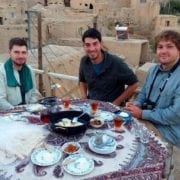
Everything was arranged very efficiently. Nothing went wrong. Our guide, Mostafa Farhadi, was remarkable. Not only was he a brilliant driver, but his knowledge of the culture, history and contemporary life of Iran was amazing. He also had superb contacts in all the places we visited.
He is clearly known and respected by many other guides, as well as by managers and owners of the hotels, restaurants and sites we visited. He managed to satisfy all our interests and to overcome every difficulty. Of course we were thrilled to experience the cultural treasures of this great country, but still the most treasured memories are of our encounters with Iranian people, Including some introductions that our friends had made beforehand.
Thank you for arranging everything.

My colleague and I are in tea business. We are working on a book about the stories of people behind your cup of tea. We were looking for someone to help us getting introduced to the tea industry and show us around in Gilan. SURFIRAN arranged everything for us: the contacts, the meetings, the cultural activities and the logistics.
We were overwhelmed by the friendliness, the hospitality and the professional approach of both the team of SURFIRAN in Teheran and the guides they work with.
It was business, but it never felt like that. It felt like coming home. We are already planning a next tour with a group!

Can US citizens travel to Iran?
The U.S. Department of State currently advises U.S. citizens not to travel to Iran for any reason (Level 4). If considering a future trip, review that advisory and current Iranian entry requirements before making plans. The Iranian Interests Section says U.S. passport applicants must apply through a travel agency or host in Iran. Confirm any route and escort requirements with the relevant authorities; entry and visa approval are not guaranteed.
How do US citizens obtain a visa for Iran?
US citizens need to apply for a visa through a licensed tour operator in Iran, which will require a passport scan, a complete tour itinerary, personal information, and a professional resume.
What is the cost of living for a US citizen traveling in Iran?
On average, budget around $25-35 USD per day for food and entry fees, plus extra for souvenirs, laundry, and other incidentals.
Can US citizens use their credit/debit cards in Iran?
Due to the US trade embargo, international credit and debit cards are not accepted in Iran. Visitors should use locally-issued bank cards or consider the OrientTrips Tourist Card for financial transactions.
What about cell phone and internet service for US citizens in Iran?
US citizens should check with their current provider for international coverage or consider specialized travel insurance companies. OrientTrips also offers tailored insurance solutions for travelers to Iran.
What are the best times to visit Iran for US citizens?
The best time to visit depends on your preferences. Iran has hot summers and cold winters. Note that during Ramadan and the Iranian New Year (March 21), certain services may be limited.
Is English widely spoken in Iran?
English is commonly spoken among younger Iranians and in tourist areas, but it’s less prevalent in rural regions. Having a guide helps navigate any language barriers.
Is Iran safe for US citizens?
The U.S. Department of State rates Iran Level 4: Do Not Travel and advises U.S. citizens not to travel there for any reason. It cites risks including terrorism, unrest, kidnapping, arbitrary arrest, and wrongful detention. There is no U.S. Embassy in Iran. A tour guide or travel insurance cannot eliminate these risks. Review the current advisory before making plans.
What are the dress code requirements in Iran?
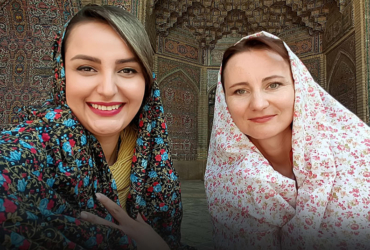
Observing the Islamic dress code, including Hijab, is necessary in Iran. However, the rules are not strictly enforced for tourists. Women are required to cover their hair, but light enforcement means a kind reminder if forgotten.
What are the rules for photography in Iran?
Photography rules vary by location. Photography is generally allowed in many mosques and some museums, but not in government and military buildings. Always ask for permission before photographing people.
Can Americans travel alone in Iran?
No, American citizens cannot travel independently in Iran. They are required to travel as part of an organized tour or with a private guide. The itinerary and tour guide must be approved in advance.
Can Americans visit Kish Island?
Yes, American citizens can visit Kish Island, but like the rest of Iran, they must be accompanied by an approved guide and follow a pre-approved itinerary.
What should US citizens check before planning travel to Iran?
Check the current U.S. travel advisory first: Iran is currently Level 4, Do Not Travel. If you are considering a future trip, confirm visa and entry requirements with the Iranian Interests Section and relevant authorities before paying for travel. Visa approval, entry, and itinerary feasibility are not guaranteed.
L2, 141 Taleghani St, Tehran 1571757333
Phone: +98 21 910 30 860
Fax: +98 21 7105 7311
Email: contact@surfiran.com
WhatsApp: +98 912 880 3921