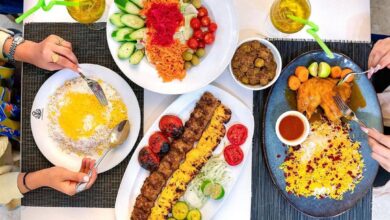
This article revisits Nigel Slater’s television journey through Iran, where food becomes a way to understand everyday life, hospitality and regional traditions. Rather than a complete guide to Persian cuisine, it is a useful starting point for travelers interested in how familiar dishes are prepared and shared in Iran.
Contents
Nigel Slater’s Food Journey in Iran
British food writer Nigel Slater traveled through Iran as part of his exploration of food and culture in the Middle East. In Tehran, his encounters included dizi, the slow-cooked lamb, chickpea and bean stew also known as abgoosht. The dish is traditionally served in stages, with the broth eaten separately before the remaining ingredients are mashed together.
The program is best treated as a snapshot of Iranian food culture at the time it was filmed. Travelers planning a current trip should verify restaurant details and opening hours independently, as these can change.
Persian Food Beyond Tehran
Iranian cuisine changes significantly by region. Northern Iran is known for herb-rich dishes, sour flavors, rice and seafood, while central and southern regions bring different combinations of stews, kebabs, breads, dates and spices. Exploring local food is therefore most rewarding as part of a broader journey rather than through a single national menu.
For practical ideas, see our guides to foods to try in Iran, popular Persian snacks, and the Rasht travel guide.
Watch the Original Program
The video previously embedded on this page is no longer embedded because the original player is not reliably available. If you find the program through an authorized broadcaster or streaming service, use the title and episode information shown by that provider to confirm availability in your region.
Planning a Food-Focused Trip
A food-focused itinerary works best when it combines markets, bakeries, traditional restaurants and regional specialties. Travelers who want a structured activity can also browse current Iran experiences on OrientTrips, while SURFIRAN’s tailor-made trips can be adapted around culinary interests.