Kermanshah is a base for exploring western Iran’s rock reliefs, archaeological sites and food traditions. Taq-e Bostan lies at the city’s northeastern edge; Bisotun and Kangavar require separate trips into the province.
This guide separates city sights from excursions beyond Kermanshah. The principal heritage stops are the Sasanian carvings at Taq-e Bostan and the Achaemenid inscription at Bisotun; local pastries provide another way to explore the region’s culture.

Kermanshah Province is a mountainous region located between the Iranian plateau and the Mesopotamian plain. It’s dominated by mountains, peaks, and elevations of the Zagros Mountain Range. Parallel ranges of the Zagros Mountains span the province, interspersed with elevated mountain plains and key Zagros passes.

The province boasts a diverse climate with four distinct seasons. However, in general terms, it can be divided into two climate zones: the warm region (which includes the western parts of the province covering cities such as Qasr-e Shirin, Sarpol-e Zahab, Gilan-e Gharb, Soomar, Naft Shahr, and the southern part of Kermanshah city) and the cold region (covering the rest of the province).
Contents
Best Time to Travel to Kermanshah
The best time to visit Kermanshah, from a weather perspective, is from early June to early September. During these months, Kermanshah enjoys an average temperature of around 24 degrees Celsius, which is considered pleasant.
| Month | Weather Condition | Tourism Crowd | Recommendation |
|---|---|---|---|
| January | Cold | Low | Moderate |
| February | Cold | Low | Moderate |
| March | Cool | Moderate | Recommended |
| April | Mild | Moderate | Highly Recommended |
| May | Warm | High | Highly Recommended |
| June | Warm | High | Recommended |
| July | Hot | Moderate | Moderate |
| August | Hot | Moderate | Moderate |
| September | Mild | Moderate | Highly Recommended |
| October | Mild | Low | Highly Recommended |
| November | Cool | Low | Recommended |
| December | Cold | Low | Moderate |
However, on some days, temperatures can reach as high as 35 degrees Celsius, which is the highest it can go. The average minimum temperature in Kermanshah during these months is approximately 14 degrees Celsius. If you plan to travel to Kermanshah in the spring, June is the ideal time because the weather gradually becomes warmer.
It’s advisable to avoid traveling to this city during the winter months, as Kermanshah experiences cold and frosty winters. The average temperature in the coldest months, from early January to early February, ranges from about 1.3 to 2.7 degrees Celsius, with the average minimum and maximum temperatures being approximately 3.5 and 7.5 degrees Celsius, respectively.
How to Get to Kermanshah
To travel to Kermanshah, you have several options, including land and air travel, which involve trains, buses, airplanes, and private vehicles. Each of these options has its advantages, disadvantages, and cost considerations, so carefully review them to make the best decision for your journey.
Traveling to Kermanshah by Air

Kermanshah is served by the Ashrafi Esfahani International Airport, which is the primary airport for the western region of Iran. This airport is located near Imam Khomeini Square (Airport Square) in the city. It offers convenient access to Kermanshah for domestic and international travelers.
Kermanshah International Airport on Google Maps
Kermanshah By Train

Kermanshah’s railway connection was inaugurated on 20 March 2018. The contemporary opening report describes the first passenger departure towards Mashhad. That opening history should be distinguished from the routes and departures offered for a particular travel date.
Traveling to Kermanshah by Private Vehicle
Depending on your starting point, there are five main routes to enter Kermanshah by road:
- The most common route from all directions (except the south of Iran, Kurdistan, and the Azerbaijan region) is the Keshvari Highway, located on the eastern side of Kermanshah. After passing through Hamedan Province, it ultimately leads to Imam Khomeini Square (Airport Square) in Kermanshah.
- Another route is for travelers coming from the south of Iran. After passing through Ilam Province, it reaches the city of Islamabad Gharb and splits into two branches. The western branch goes to Qasr-e Shirin and from there to Iraq, while the eastern branch continues via the Karbala Road Highway towards Kermanshah city, ultimately reaching Azadegan Square in Kermanshah.
- The third route for reaching Kermanshah passes through Kurdistan Province and the city of Sanandaj. This is a common route for travelers coming from the northwest of Iran.
- The fourth entry route to the province is from the southeast and is suitable for travelers coming from Lorestan, Kohgiluyeh and Boyer-Ahmad, Isfahan, Chaharmahal and Bakhtiari, and Fars provinces. This route passes through Lorestan Province and the city of Khorramabad, reaching the city of Harsin in Kermanshah Province. From there, it connects to the main eastern route of the province, leading to Imam Khomeini Square in Kermanshah.
- The fifth route is suitable for travelers coming from Iraq, Kurdistan, or Syria. This route enters Kermanshah through the Khosravi Border Crossing and leads to Qasr-e Shirin. From there, it continues through the Karbala Road Highway to Azadegan Square in Kermanshah.
Traveling to Kermanshah by Bus

The Shahid Kaviani Terminal, located in the eastern part of the city, serves as the main entry point for bus travelers coming from Tehran and other eastern destinations.
The Karbala Road Terminal, located in the western part of the city, serves as the entry point for travelers coming from Baghdad and Erbil in Iraq.
When planning your journey to Kermanshah, consider the most convenient mode of transportation based on your starting point and preferences.
Shahid Kaviyani Bus Terminal On Google Maps
Accommodation in Kermanshah
Choosing the right place to stay is undoubtedly one of the most important considerations when planning your trip. Depending on your budget and the attractions you intend to visit, you can select your accommodation in Kermanshah.
The city offers a range of hotels, from two to five stars, scattered throughout different parts of town, so you can make reservations in advance based on your needs.
During the Nowruz holidays, schools across the city are also considered for accommodating travelers, and in some parks and green spaces, you’ll be allowed to set up and use camping tents.
Parsian Kermanshah Five-Star Hotel

If budget constraints are not an issue, the Parsian Five-Star Hotel can be an exceptional choice for you. This hotel offers excellent amenities, including a swimming pool, fitness center, café, and restaurant. Besides the mentioned facilities, there are several other reasons to choose this hotel for your Nowruz holidays. It’s just a five-minute drive from the airport, a 10-minute drive to Kermanshah’s traditional bazaar, and close to the historical and recreational areas of Taq-e Bostan and the Mountain Park. In smooth traffic, it’s a 15-minute drive by car.
Jamshid Four-Star Hotel

Located at the end of Taq-e Bostan Boulevard, Jamshid Hotel is a good choice in terms of easy and quick access to Taq-e Bostan and the Mountain Park. Keep in mind that your distance from the city center and Kermanshah’s bazaar will be around 30 to 40 minutes by car.
Sina Two-Star Hotel

Located in the western part of the city, Sina Hotel offers the most budget-friendly rates among Kermanshah’s hotels. The hotel is approximately a 30-minute drive from the airport.
Public Transportation in Kermanshah

The city of Kermanshah has short distances, making it easy to get around by bus and taxi. Additionally, Kermanshah has a wireless taxi service system with the number 1881, always ready to provide services to travelers and tourists.
Kermanshah, a province and city in western Iran, is a cultural haven that captivates tourists both local and international. A treasure trove of historical, recreational, and natural attractions, Kermanshah annually pulls a significant number of visitors into its embrace. While it’s hard to cover all the remarkable spots in one article, here are some must-visit sites that you should definitely include in your itinerary. Whether you’re on a group tour or enjoying a tailor-made tour with SURFIRAN, you can easily incorporate these sites into your journey.
The Historic and Natural Ensemble of Bisotun

Bisotun lies on the historic route between the Iranian plateau and Mesopotamia. Its monuments span several periods, so the site should be understood as an archaeological landscape rather than one isolated inscription.
The principal monument is Darius I’s relief and inscription. The text presents his account of securing royal power in 521–520 BCE, in Elamite, Babylonian and Old Persian. UNESCO inscribed Bisotun in 2006. The relief depicts the king, his supporters and defeated opponents, making it evidence of royal self-presentation as well as political history.
For religious pilgrims, the Imamzadeh Baqer, attributed to Imam Kazem, offers a serene spiritual experience. If you’re looking for a place to stay, the Safavid caravanserai has been converted into Laleh Bisotun Hotel, a cozy four-iwan structure perfect for travelers.
• Address: Bisotun, Kermanshah Province, Iran
• View Historic and Natural Ensemble of Bisotun on Google Maps
Tagh Bostan and Koohestan Park

Taq-e Bostan stands beside a spring on Kermanshah’s northeastern fringe. Its Sasanian reliefs include the investiture scene of Ardashir II and two rock-cut iwans. Visit Iran identifies Shapur II and Shapur III in the smaller iwan and Khosrow II in the larger one.
What makes Tagh Bostan even more captivating is its proximity to nature. Located against a mountain and spring, the area has been a recreational hotspot since ancient times. You can walk towards Koohestan Park, which is very close by, and soak in the awe-inspiring beauty of a path surrounded by towering, ancient trees. Local belief holds that a tree in this area is more than 600 years old!
Don’t forget to visit one of the traditional eateries or restaurants in the area to taste the famous Kermanshahi “Dandeh Kebab.” As you ascend Koohestan Park, you can marvel at the panoramic views of Kermanshah city, especially mesmerizing at night.
• Address: Tagh Bostan, Kermanshah, Iran
• View Tagh Bostan on Google Maps
Do-Ashkaft Cave

Do-Ashkaft is a cave site on the northern outskirts of Kermanshah. Archaeologists Fereidoun Biglari and Saman Heydari reported evidence of Middle Paleolithic activity here. Their survey places the site among several caves and shelters on the Kermanshah Plain that preserve evidence of early stone-tool use.
- Elevation: About 1600 meters above sea level
- Unique Features: Consists of two adjacent caves, located about 300 meters above the plain.
Address: Kermanshah, Iran
Anahita Temple of Kangavar

The monument conventionally known as the Anahita Temple stands on a raised stone platform in Kangavar. Its dedication and original function remain debated. Iranica’s archaeological account questions whether these remains are the temple mentioned by Isidore of Charax. A late Sasanian palace has also been proposed, but the surviving evidence does not settle the building’s function.
- Location: On the route from Hamedan to Kermanshah
- Unique Features: One of the largest stone buildings in Iran
Address: Kangavar, Iran
View Anahita Temple on Google Maps
Sarab-e Niloufar

Sarab-e Niloufar is a small spring-fed lake outside Kermanshah. Visit Iran describes the lilies associated with the lake and the springs that feed it. Flowering and water levels vary, so treat photographs of the lake in bloom as a seasonal view.
- Unique Features: A picturesque lake filled with blue water lilies, various amenities for tourists, and opportunities for boating and fishing.
Address: 30 km northwest of Kermanshah, Iran
View Sarab-e Niloufar on Google Maps
Quri Qaleh Cave

Quri Qaleh Cave lies in the Shaho foothills on the Ravansar–Paveh route, approximately 25 kilometres from Ravansar. It is a limestone cave with water-filled passages and chambers. Visit Iran’s description records stalactites and limestone formations. The extent explored by cavers should not be confused with the length of a visitor route.
- Features: Water-filled passages, limestone formations and named chambers.
Address: Near Ravansar, Iran
View Quri Qaleh Cave on Google Maps
Plan Your Visit: For a hassle-free trip, consider booking a tailor-made tour or join one of the group tours
Inside Quri Qaleh, the chambers near the entrance, Maryam Hall and Kuhan-e Shotor (Camel’s Hump), are known for their stalactites and stalagmites; deeper halls such as Aroos (Bride) may be closed or need special arrangements. Iran’s official tourism portal gives the interior temperature as about 9°C all year, so bring a warm layer and shoes with good grip. Bats and salamanders live in the cave: keep noise down, stay on the marked path and do not touch the formations.
Tekyeh Moaven Al-Molk

Tekyeh Moaven Al-Molk is a Qajar-period religious complex in Kermanshah, built for mourning ceremonies associated with Imam Husayn. Its tiled walls are central to the visit. Iran Press’s 2024 report describes tile scenes of those ceremonies in the Hosseiniyeh.
The complex comprises the Hosseiniyeh, Abbasiyeh and Zeinabiyeh. Alongside religious imagery, its tiles depict historical figures and episodes from Iranian literature, including Rostam and Sohrab, as described in this architectural introduction. These subjects give visitors a way to compare the building’s religious and literary imagery.
- Address: Kermanshah, Iran
- View Tekyeh Moaven Al-Molk on Google Maps
Kermanshah’s Traditional Bazaar

Kermanshah’s covered bazaar, also known as Tarikeh Bazaar, dates to the Qajar period. Start near Sabzeh Meydan on Modarres Street and follow the passages into the older trading courtyards. Look for the Emad od-Dowleh Mosque and its clock tower, or stop at a bakery for kak and nan-e berenji (rice-flour cookies). Visit Iran’s bazaar guide describes the layout and traditional trades.
- Address: Kermanshah, Iran
- View Traditional Bazaar of Kermanshah on Google Maps
Kermanshah Souvenirs
Food Souvenirs
Kak is a crisp, layered pastry associated with Kermanshah. Etrat Elahi’s account describes thin dough briefly cooked on a saj, sprinkled with icing sugar, cardamom and almonds, then folded. The name also applies to different breads and cakes elsewhere, so those recipes should not be confused with this local pastry.

These can be easily found at the Traditional Bazaar in the rice-bread bakeries section. Moreover, Kermanshah is famous for its animal-based oils that can be used to infuse an exceptional aroma and taste to your meals.
Handicrafts

When it comes to handicrafts, Kermanshah boasts a wide variety. Prominent among these are carpets and rugs, kilims, colorful Giyehs, Jajims, Moje, jewelry, and leather artifacts. Depending on your taste, these handicrafts can serve as precious mementos or gifts for your loved ones.
Kermanshah’s Culinary Traditions
Kermanshah’s local dishes include grilled lamb ribs, a meat stew with almond slivers and barberries, and a thick meat-and-grain ash. These offer three different preparations to look for on a menu.
Dandeh-Kebab

Dandeh kebab is Kermanshah’s grilled lamb-rib dish. Iran Press’s culinary report describes ribs basted while grilling with a sauce of tomato paste, lemon juice, saffron and seasoning. It may be served with rice or bread. Recipes vary; this describes one documented preparation rather than a fixed recipe used by every restaurant.
Khoresht Khalal-e Badam

Khoresht Khalal-e Badam is a meat stew with almond slivers and barberries, served with rice.
Ash-e Abbas-Ali

Ash-e Abbas-Ali is a thick pottage made with legumes, wheat, rice and red meat. Maryam Abolbagha’s 2022 report from Kermanshah documents its long, slow cooking and association with Ramadan meals, while noting that it is also served outside Ramadan. The meat is part of the dish, so a bowl should not be assumed to be vegetarian.
Plan Your Trip: For convenient travel arrangements including hotels, insurance, and more, check out OrientTrips.
To make your trip hassle-free, consider booking hotels and flights through OrientTrips.
IRAN GROUP TOURS
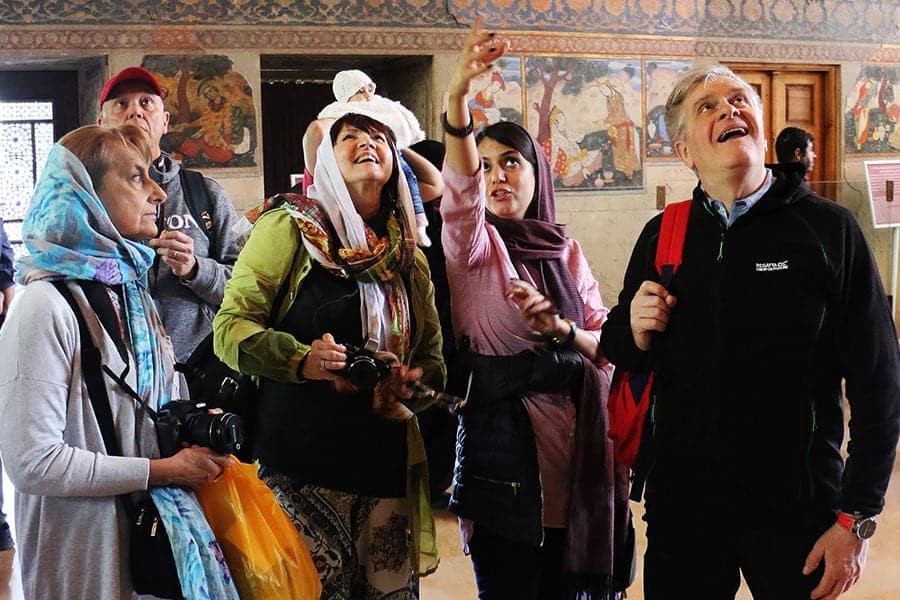
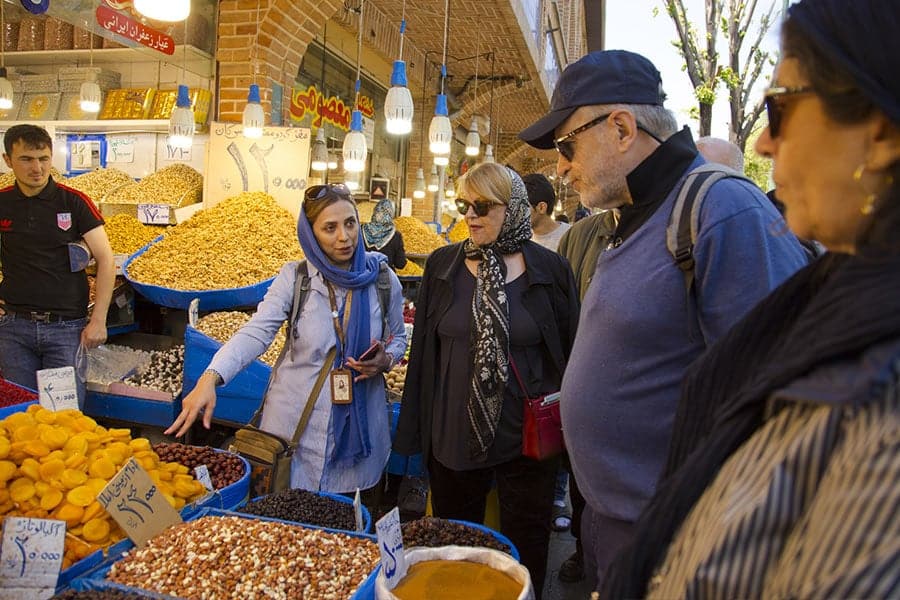
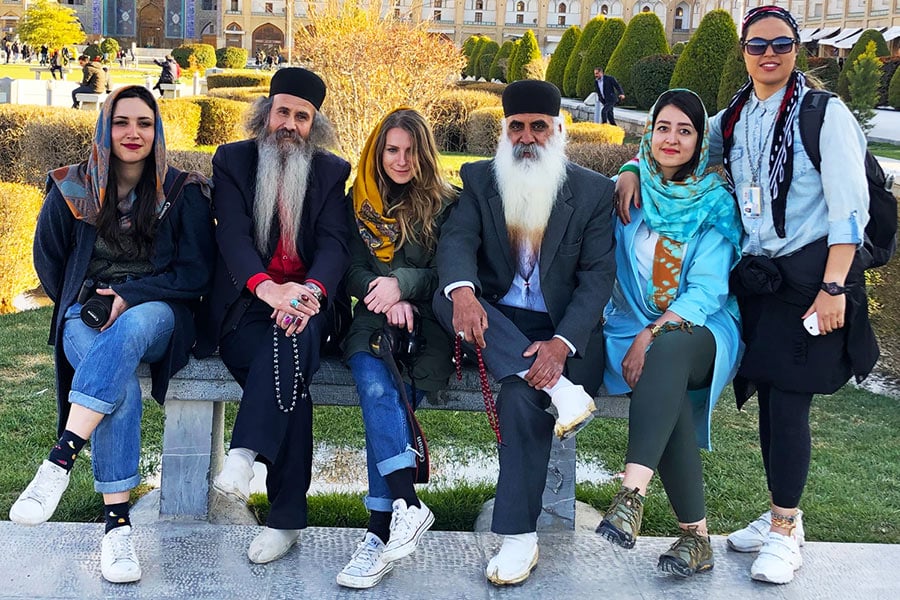
Explore sample small-group routes. Departure dates, availability and final prices are confirmed case by case before booking.
Iran 7-Day Tour
Final price and availability on request
Iran 9-Day Tour
Final price and availability on request
Iran 15-Day Tour
Final price and availability on request