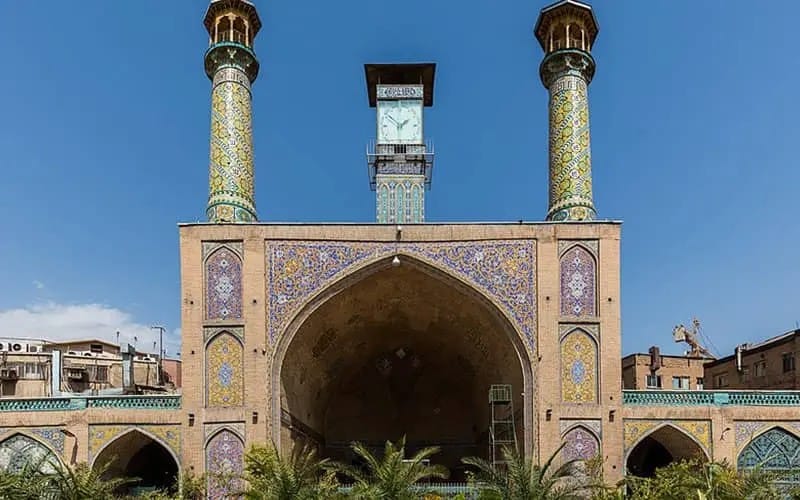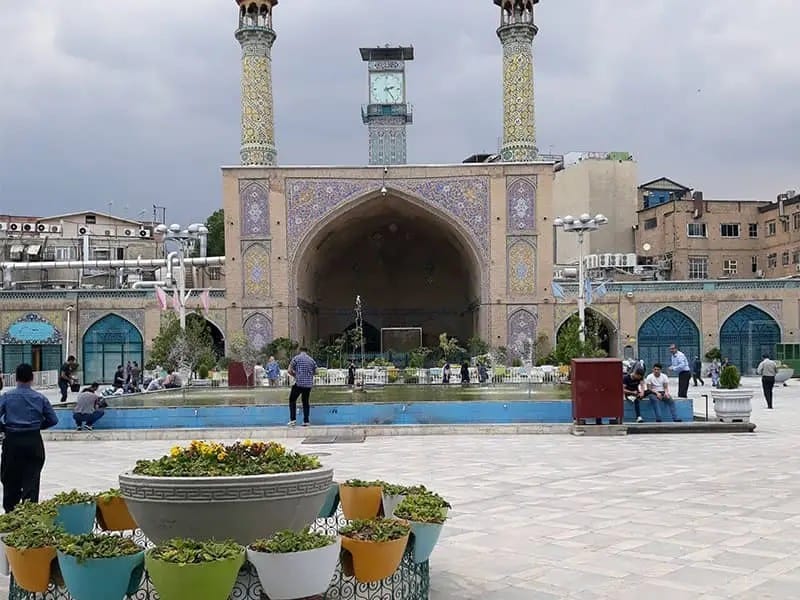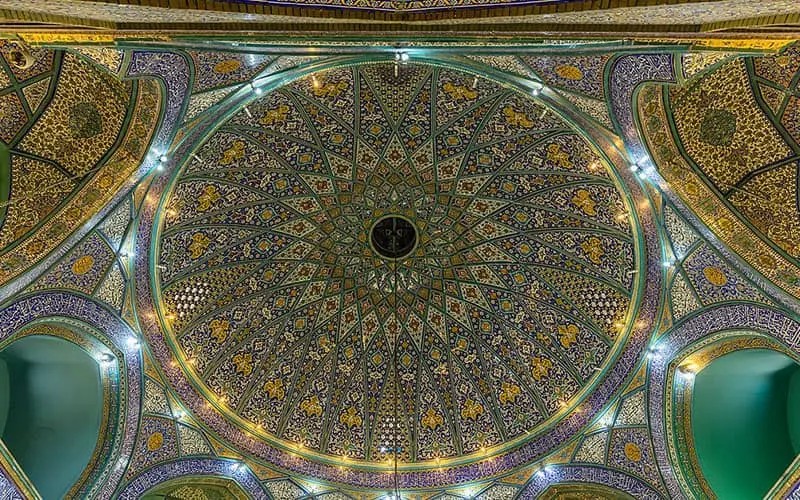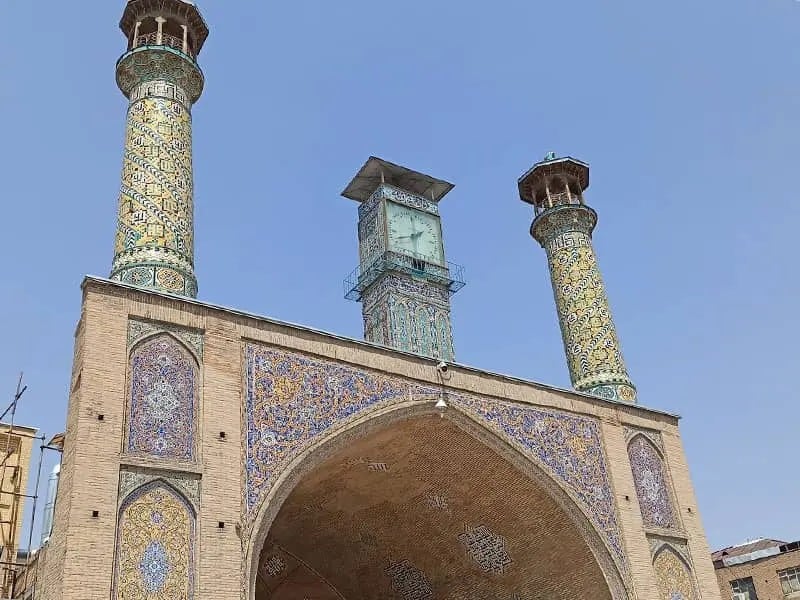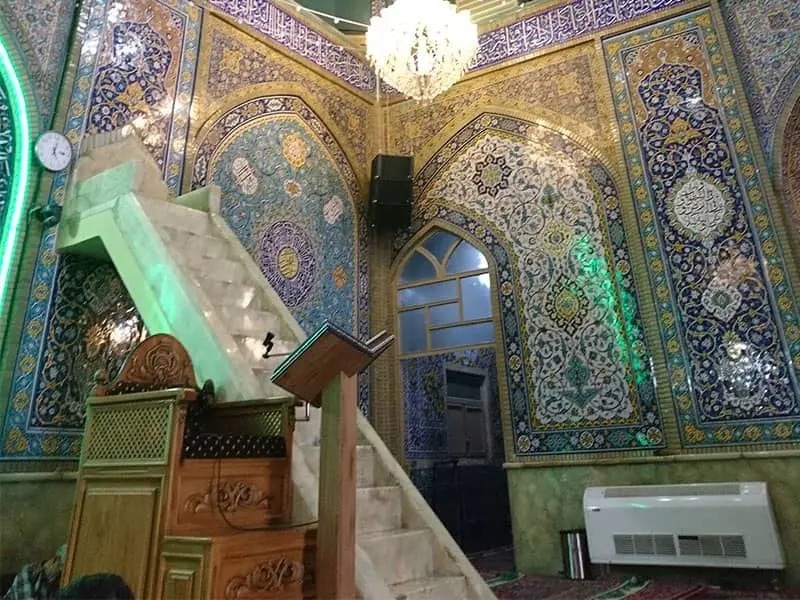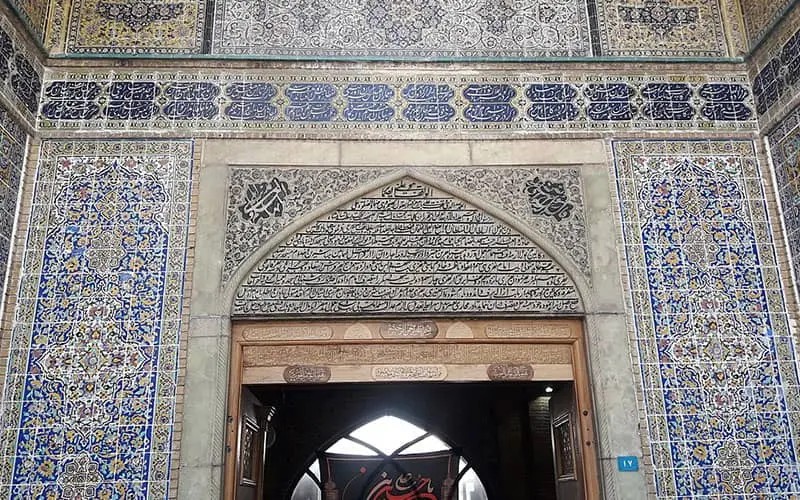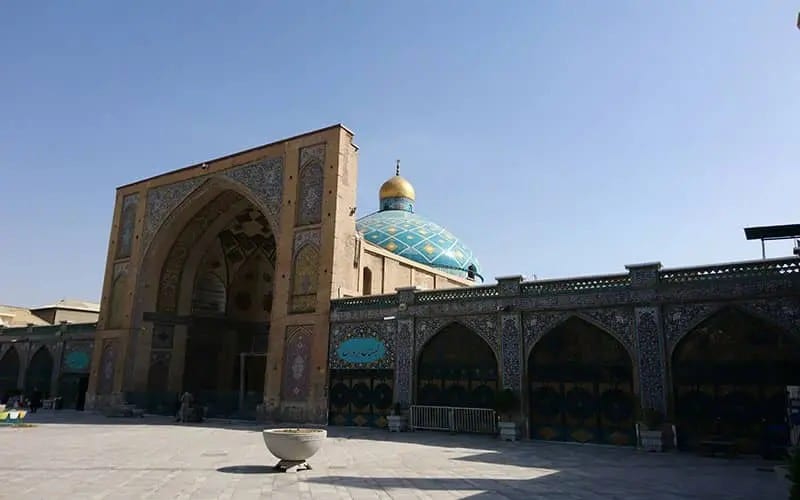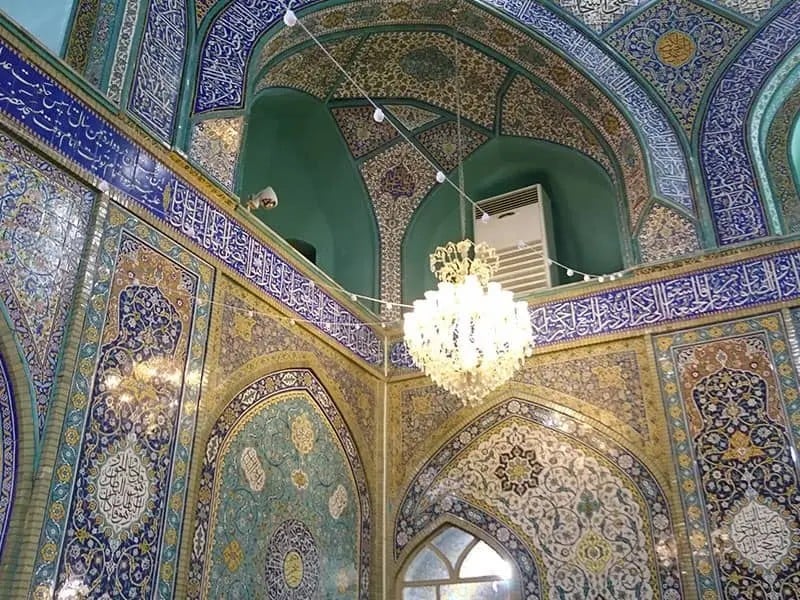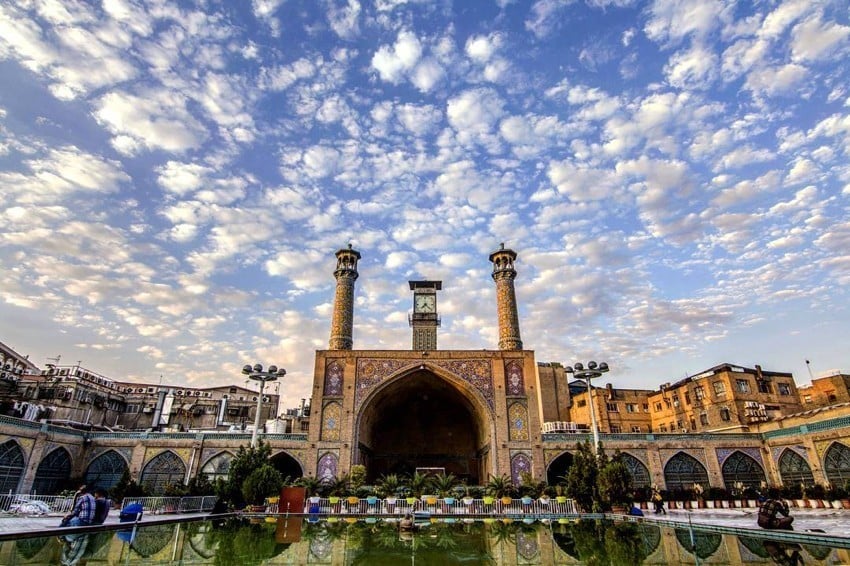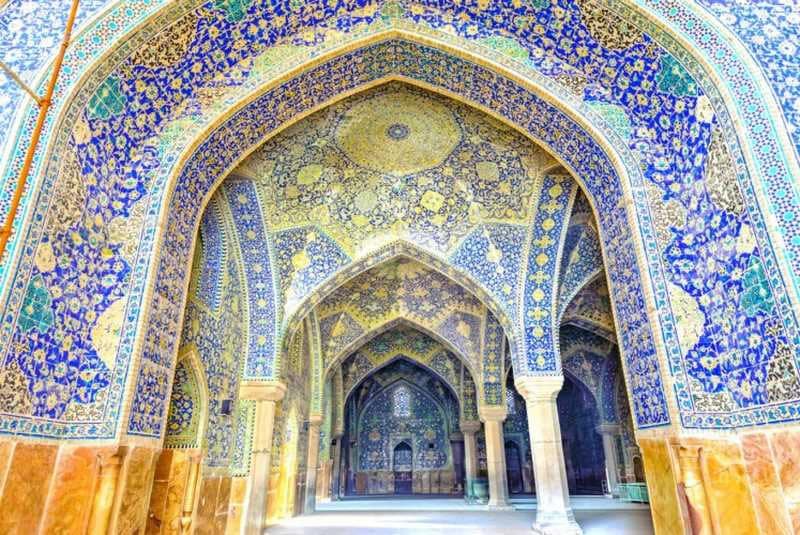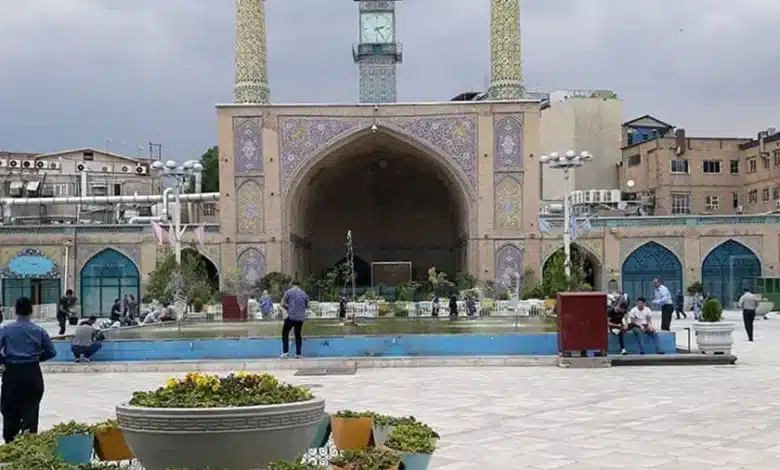
Imam Khomeini Mosque in Tehran, historically known as the Shah Mosque or Soltani Mosque, is a major Qajar-era mosque beside Tehran Grand Bazaar. Commissioned during the reign of Fath-Ali Shah Qajar, it remains an active place of worship as well as an important work of early 19th-century architecture.
Contents
History of Imam Khomeini Mosque
The mosque was built in the early 19th century under Fath-Ali Shah Qajar. Later additions and alterations were made during the reign of Naser al-Din Shah, including the prominent minarets. After the 1979 Iranian Revolution, the mosque became officially known as Imam Khomeini Mosque.
Its position next to the Grand Bazaar gave the mosque a role beyond worship. The surrounding bazaar and religious institutions were closely connected to Tehran’s commercial and civic life.
Architecture
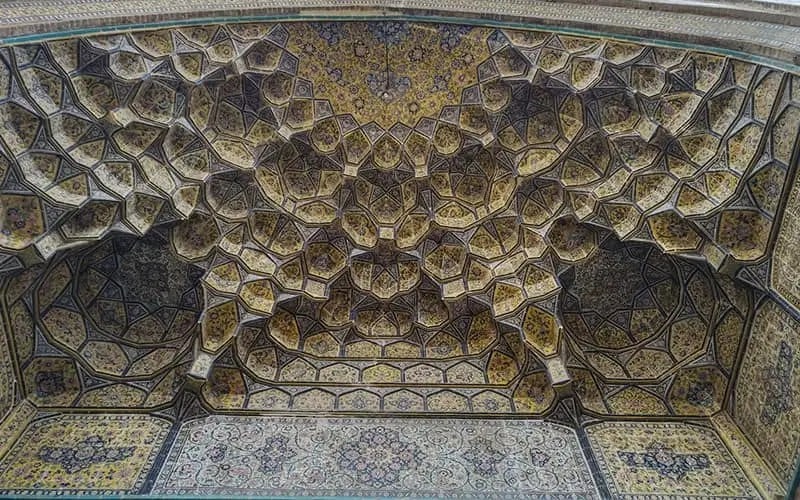
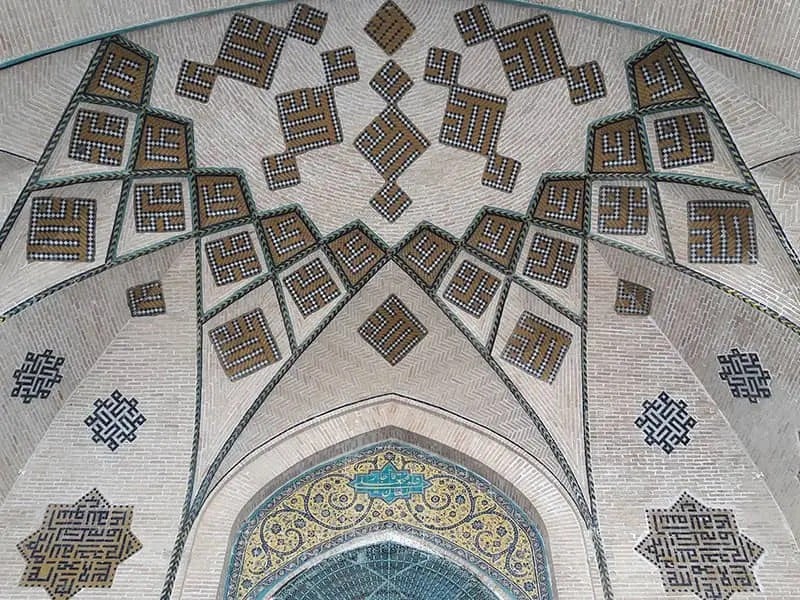
The mosque follows the Iranian four-iwan tradition, organized around a central courtyard. Its architecture includes a domed sanctuary, prayer halls, arcades, minarets and richly decorated iwans. Brickwork, plaster, inscriptions, muqarnas and colourful Qajar tilework are among its defining visual features.
Location and Access
The mosque stands in Tehran’s historic bazaar district near 15 Khordad Street. The 15 Khordad metro station is a practical public-transport reference point. Nearby attractions include Tehran Grand Bazaar and Golestan Palace.
Visiting Respectfully
This is an active mosque rather than a conventional museum. Access can vary during prayers, religious events or local restrictions. Dress respectfully, avoid disrupting worshippers and follow instructions at the entrance. Do not rely on old online opening-hour listings without checking locally.
Photo Gallery