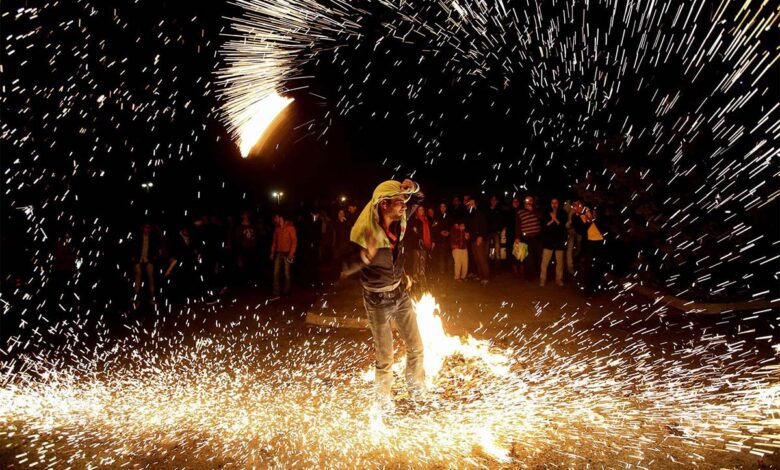
Chaharshanbe Suri is the fire festival held on the evening before the last Wednesday of the Iranian year. Families light bonfires and jump over the flames, children go door to door banging spoons, and the night opens the final week before Nowruz, the Persian New Year. In 2027 it falls on the evening of Tuesday 16 March.
Contents
Chaharshanbe Suri 2027
سهشنبه، ۲۵ اسفند ۱۴۰۵
Evening of Tuesday 16 March 2027
The last Wednesday of the Iranian year 1405 is 26 Esfand, Wednesday 17 March 2027, so the celebrations begin at sunset on Tuesday 16 March. The new year 1406 begins four days later, at about 23:54 Iran time on Saturday 20 March. The Gregorian date of Chaharshanbe Suri changes every year because it depends on which Wednesday is the last one before Nowruz.
| Event | 2027 date | Iranian date |
|---|---|---|
| Chaharshanbe Suri | Evening of Tuesday 16 March | 25 Esfand 1405 |
| Turn of the year | About 23:54, Saturday 20 March | 29 Esfand 1405 |
| Nowruz Day | Sunday 21 March | 1 Farvardin 1406 |
| Sizdah Bedar | Friday 2 April | 13 Farvardin 1406 |
What does Chaharshanbe Suri mean?
Chaharshanbe means Wednesday, and most people pronounce the name Charshanbe Suri. Some scholars link suri to sur, “feast”, while others read it as a form of sorkh, “red”, for the fire or for the healthy glow it is meant to give. The Encyclopaedia Iranica considers the second reading more likely and records local names such as Gul Charshanbe in Ardabil and Charshanbe Sorkhi in Isfahan.
Jumping over the fire
In the afternoon, families lay out bundles of brushwood in a yard, a village square or a quiet street, traditionally in an odd number such as three, five or seven. At sunset the bundles are lit, and men, women and children take turns jumping over the flames.
As they jump, people sing zardi-ye man az to, sorkhi-ye to az man: “my yellow to you, your red to me”. The pale yellow of illness and worry goes to the fire, and its warm red comes back as health for the year ahead.
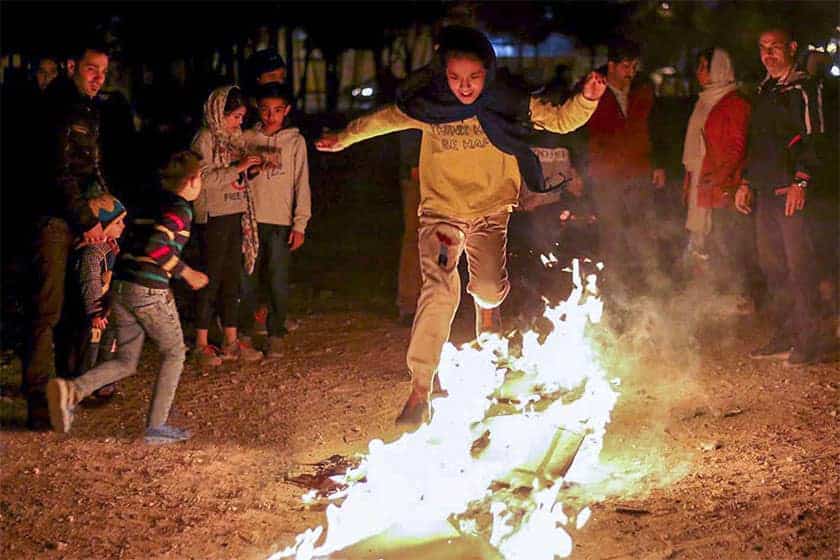
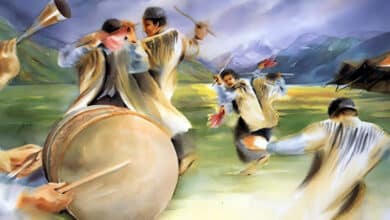
Custom says no one should blow on the fire. Once everyone has jumped, it is left to burn out, and in some homes a young girl carries the ashes to a crossroads and scatters them. In some towns fires are lit on rooftops or hilltops instead. Village musicians often play, and in cities firecrackers have largely replaced the old custom of firing shots into the air, so the evening can be very loud.
Other Chaharshanbe Suri traditions
The fire is the centre of the evening, but each region adds its own customs. These are the best known.
Spoon-banging (ghashogh-zani)
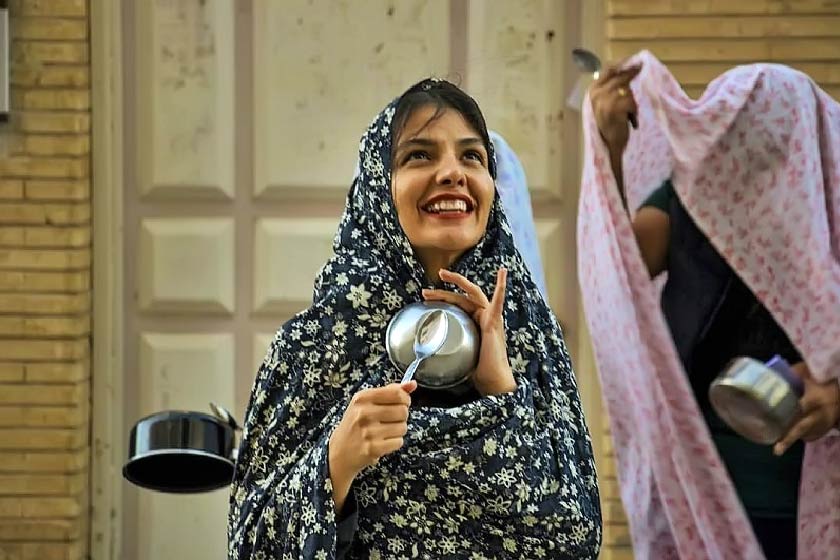
After the fire, people wrap themselves in a chador or a sheet so they cannot be recognised and go from door to door, banging a spoon against a bowl or pan. The household answers with a small gift: sweets, nuts, fruit or a little money. The custom was also a chance for a young man to visit the home of a girl he liked, and what she put in his bowl was read as her answer.
Smashing the pot (kuzeh-shekani)
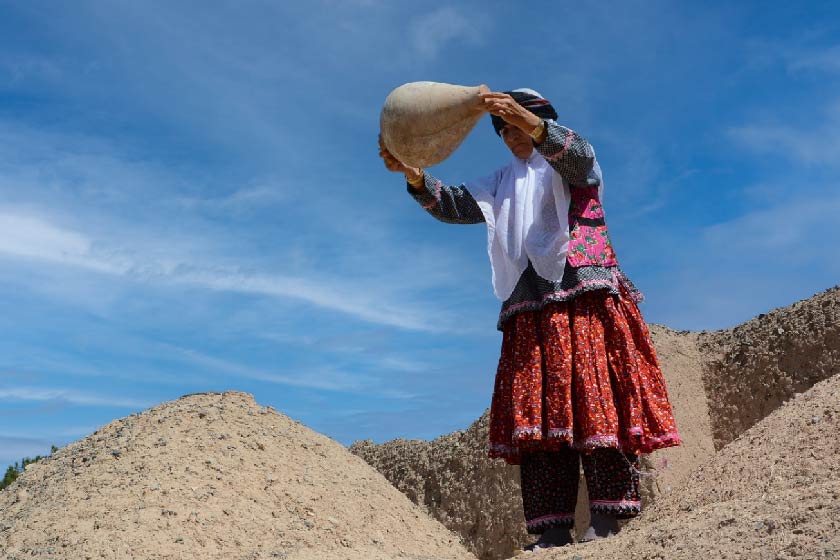
In many towns a clay jug is thrown from the roof into the street after the fire-jumping, in the belief that the household’s misfortune breaks with it. In Tehran a coin or two was put inside a new jug first; in Khorasan families added a lump of charcoal for bad luck and salt against the evil eye, and each person swung the pot around their head before it was thrown.
Fortune-telling (fal-e kuzeh)
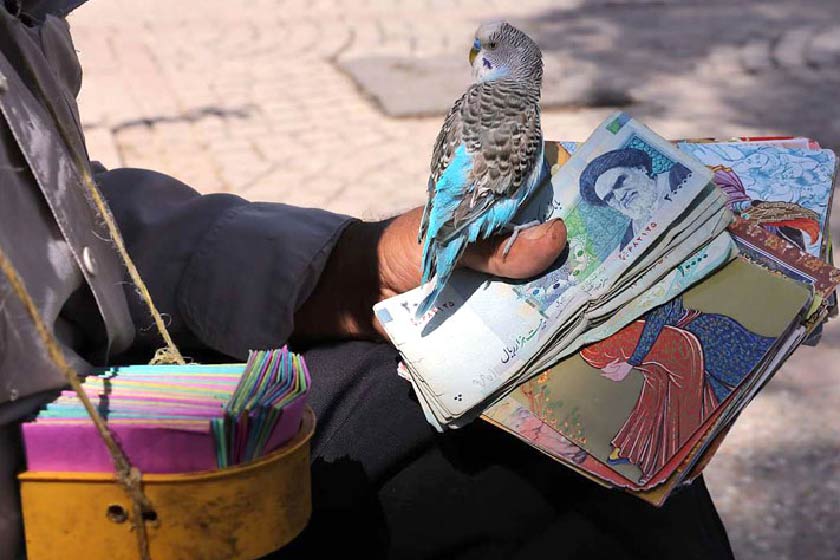
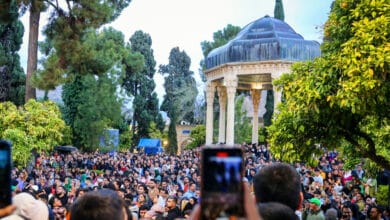
For fal-e kuzeh, everyone drops a ring, earring or other small item into a wide-mouthed jug, together with slips of paper bearing verses. A child draws out one verse and one item, and the verse is read aloud as the fortune of the item’s owner. In Isfahan and much of central Iran, the verses are taken at random from the Divan of Hafez instead.
Burning wild rue (esfand)
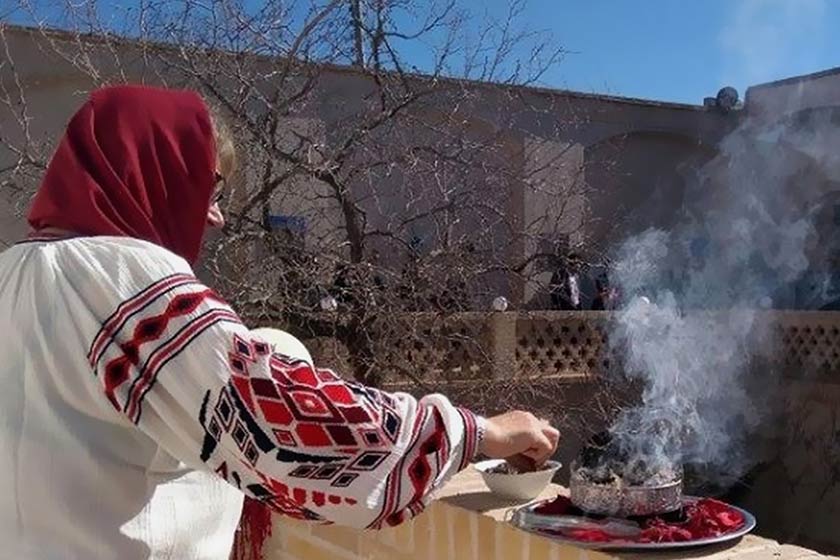
Throughout Iran, people throw seeds of wild rue (esfand), sometimes with frankincense and a pinch of salt, onto hot coals during the evening, and recite a short rhyme against the evil eye. It is a folk custom of protection, and you will see the same fragrant smoke at weddings and other family occasions all year round.

Iran Tourist Card
Dropping the shawl (shal-andazi)
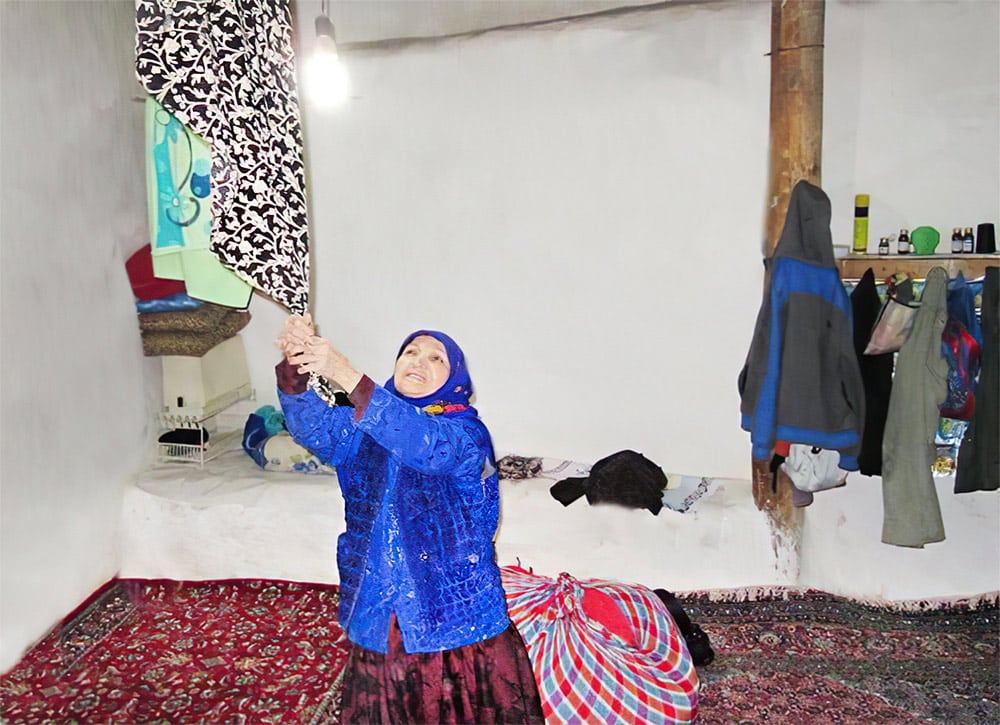
In this custom, a young man ties a shawl, sash or rope of knotted handkerchiefs to a small basket and lowers it through the roof opening or chimney of a neighbour’s house, then hides and waits. When he feels a tug, he pulls it back up. The family’s gift tells his fortune: bread for blessing, sweets for joy, a pomegranate for children, walnuts for a long life. If he hopes to marry a daughter of the house, the gift is read as the family’s answer.
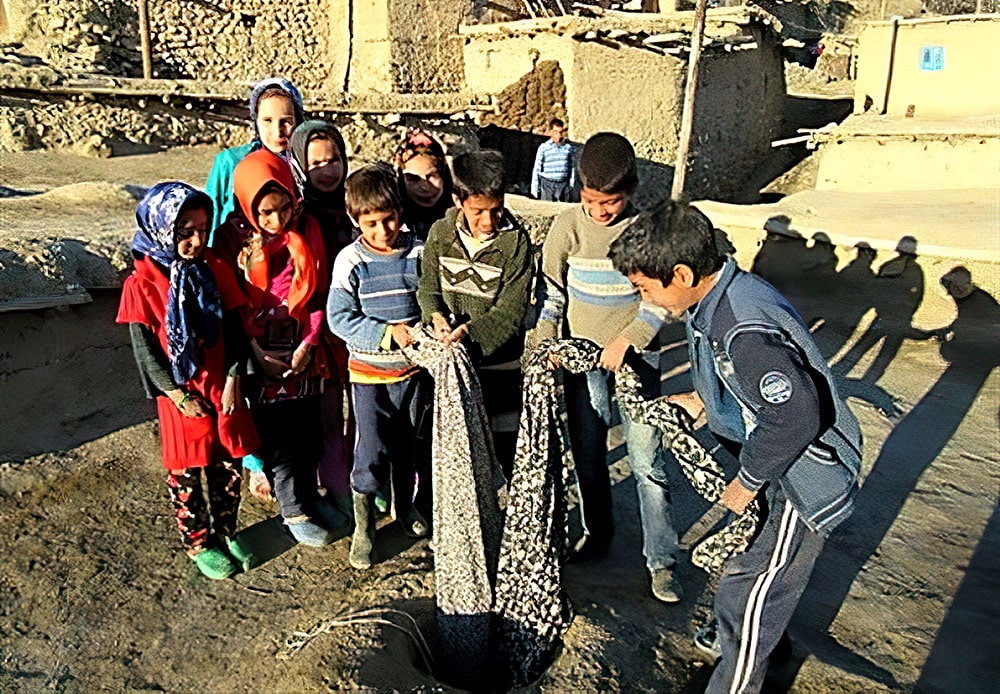
The custom belongs mainly to the north and northwest of Iran, including Azerbaijan, Gilan, Zanjan, Qazvin and the area around Hamadan. In some villages of East Azerbaijan it is known as shal sallamaq, and the roof opening as baca.
Untying one’s luck
Many old rituals of the night were meant to “untie” the luck of an unmarried girl or a childless wife. A common one was to wear a small padlock and wait at a crossroads or by a mosque until a passer-by opened it with a key and wished her well. Most of these customs survive today as memories and stories rather than common practice.
What people eat on Chaharshanbe Suri
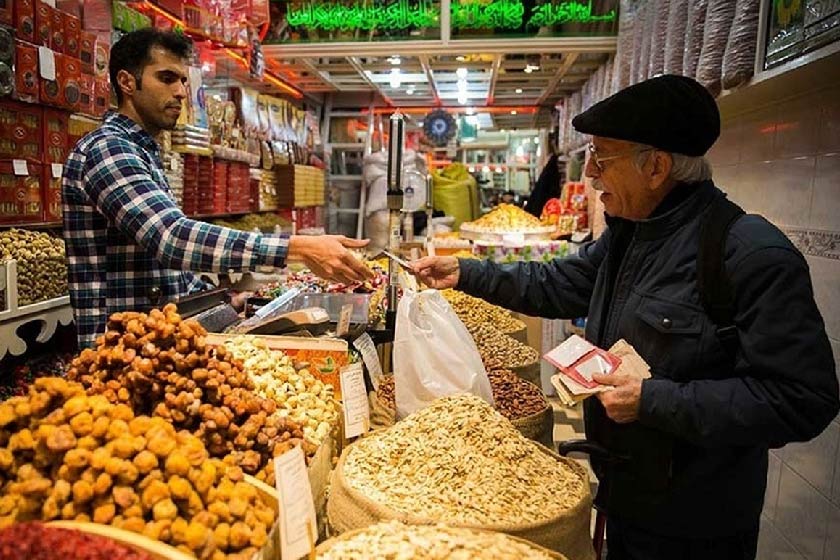
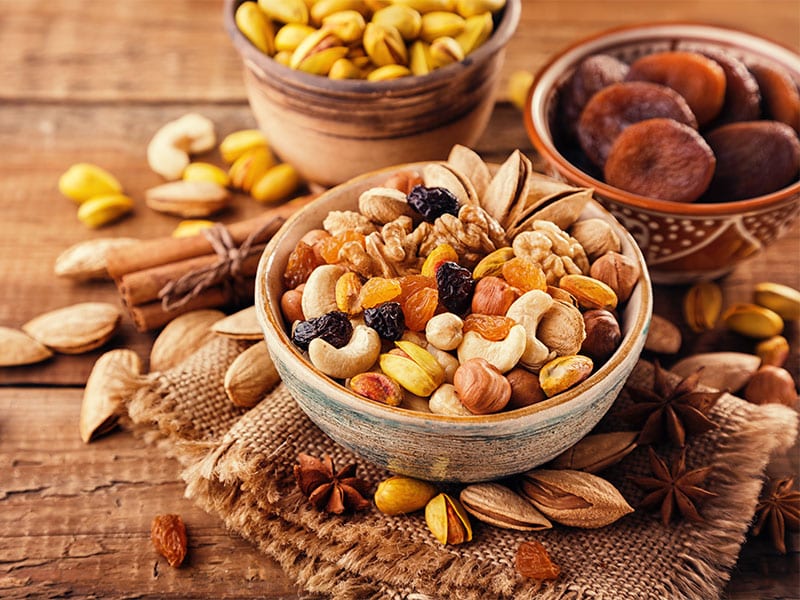
The classic snack of the evening is ajil, a mix of nuts and dried fruit such as salted pistachios, hazelnuts and almonds, raisins, dried apricots and prunes. The Chaharshanbe Suri mix is often called ajil-e moshkel-gosha, “the problem-solving ajil”, and some families share it while making a wish. See our guide to Persian snacks for more.
BOOK ONLINE
Isfahan Hotels
Supper after the fire depends on the region. In Tehran, Mazandaran, Gilan and Gorgan, many families serve sabzi polo ba mahi, herbed rice with fish. In Kerman and Shiraz, rice is often paired with ash-e reshteh, a thick noodle soup, and the long noodles are said to bring a long life. In Khorasan, several kinds of polo are traditional, with lentils, noodles or herbs.
Origins of Chaharshanbe Suri
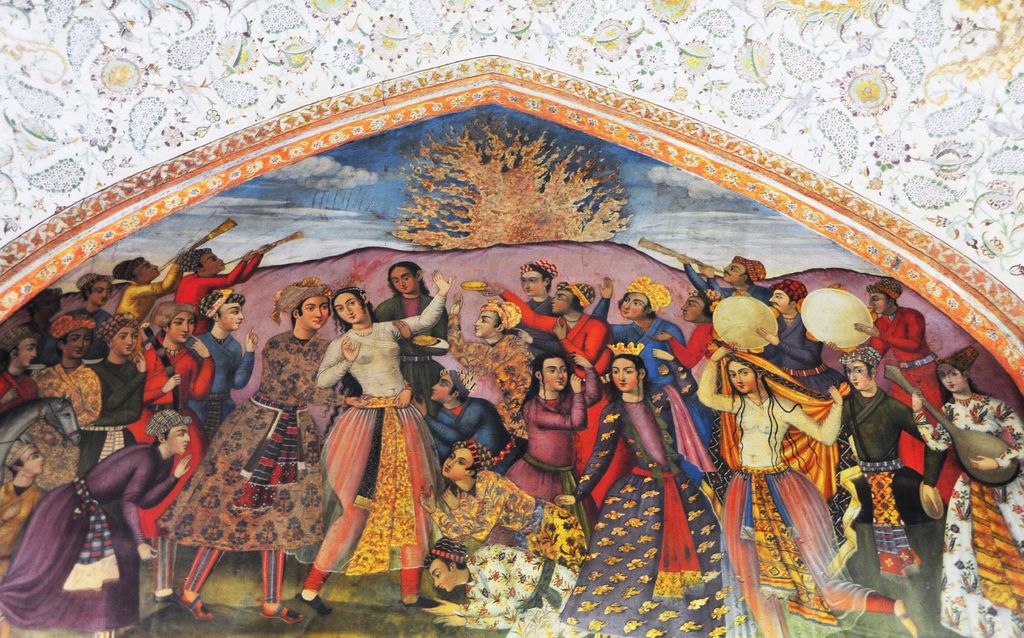
Fire festivals in Iran are very old, but the date and many of the customs are more recent than people often assume. The scholar Ebrahim Purdavud linked Chaharshanbe Suri with Hamaspathmaedaya, the ancient feast at the end of the year when the spirits of the dead were believed to return to their homes. Fires were also lit at Zoroastrian festivals such as Sadeh, and the 10th-century historian Narshakhi describes a great fire on an evening before the end of the year in Samanid Bukhara.
The link with Wednesday, however, came after the arrival of Islam. The Encyclopaedia Iranica suggests the last Wednesday was chosen because of an old belief that Wednesdays were unlucky, so the fire was lit to drive away the misfortune of the final one. The festival survived repeated objections from religious scholars, and after the 1979 revolution a short-lived ban on the celebration was dropped when people kept lighting their fires.
The Pearl Cannon of Qajar Tehran
In Qajar Tehran, crowds gathered on Chaharshanbe Suri around the Tup-e Morvarid, the Pearl Cannon, a heavy gun cast by the founder Esmail Esfahani in the reign of Fath-Ali Shah. Until the 1920s it stood in Arg Square. Unmarried women and unhappy wives climbed onto its barrel or crawled beneath it in the hope of a change in fortune, and mothers passed naughty children under it to improve their behaviour. The custom ended when the cannon was moved to the Officers’ Club in the 1920s.
A second Pearl Cannon in Tabriz drew women who tied written wishes to its barrel. The writer Sadegh Hedayat used the Tehran cannon as the title and target of his satirical book Tup-e Morvarid, which mocks old superstitions; read more about Iranian folklore.
Regional variations
Chaharshanbe Suri is celebrated across Iran, with local names and extra customs. In Ardabil and Urmia, the last three Wednesdays of the year each have their own name, and at least one village near Urmia marks four. In Tabriz, the bazaar was traditionally decorated and lit for the occasion, and families bought a mirror, rue seeds and a new jug for the year ahead. Iranian communities around the world also light fires on the last Tuesday evening of the year, in many cities at public events in parks. See our guide to Iranian festivals and celebrations for the rest of the calendar.
Chaharshanbe Suri for travellers
- What you will see. From late afternoon, small fires appear in parks, alleys and residential streets, and the sound of firecrackers carries on late into the night. Older neighbourhoods and villages tend to keep the more traditional customs, while big cities are louder and busier.
- Joining in. Many celebrations happen in family courtyards and private gatherings. In public spaces, people often welcome onlookers; ask before taking close-up photos of families.
- Opening hours. Chaharshanbe Suri is not a public holiday, and offices and shops open as usual during the day on Tuesday 16 and Wednesday 17 March 2027. Bazaars are very busy in the evenings of this last week as families shop for Nowruz.
- Booking. The days that follow are the start of Iran’s busiest travel season. Book hotels, flights and trains for the Nowruz period well in advance, and see our Nowruz guide for the full 2027 holiday calendar.
To see the whole season, from the fires of Chaharshanbe Suri to the Haft-sin table and the picnics of Sizdah Bedar, browse our Iran tours or plan a private tour.
Chaharshanbe Suri in photos


Frequently asked questions about Chaharshanbe Suri
When is Chaharshanbe Suri 2027?
Chaharshanbe Suri 2027 falls on the evening of Tuesday 16 March, 25 Esfand 1405. It is held on the eve of the last Wednesday of the Iranian year, which in 2027 is 17 March. Nowruz follows on Sunday 21 March 2027.
Why is it held on a Tuesday evening?
The festival belongs to the last Wednesday of the year, and in the Iranian tradition a day begins at sunset. The fires are therefore lit on the evening before, which is Tuesday evening in the Gregorian week.
What do people say when they jump over the fire?
They sing zardi-ye man az to, sorkhi-ye to az man, which means my yellow to you, your red to me. The fire takes away the paleness of illness and gives back its healthy red glow for the coming year.
Is Chaharshanbe Suri a public holiday in Iran?
No. Offices and shops open as usual during the day. The celebrations take place in the evening, and the main new year holidays begin a few days later with Nowruz.
Read more
- Nowruz 2027: Persian New Year Date, Traditions and Travel
- Nowruz Bazaar: A Cultural Celebration of Iranian New Year
- Are Iranians Superstitious?
- Fire Temple of Isfahan: Atashgah-e Isfahan
IRAN GROUP TOURS
Explore sample small-group routes. Departure dates, availability and final prices are confirmed case by case before booking.
Iran 7-Day Tour
Final price and availability on request
Iran 9-Day Tour
Final price and availability on request
Iran 15-Day Tour
Final price and availability on request