Exploring Maharloo Lake: A Comprehensive Guide

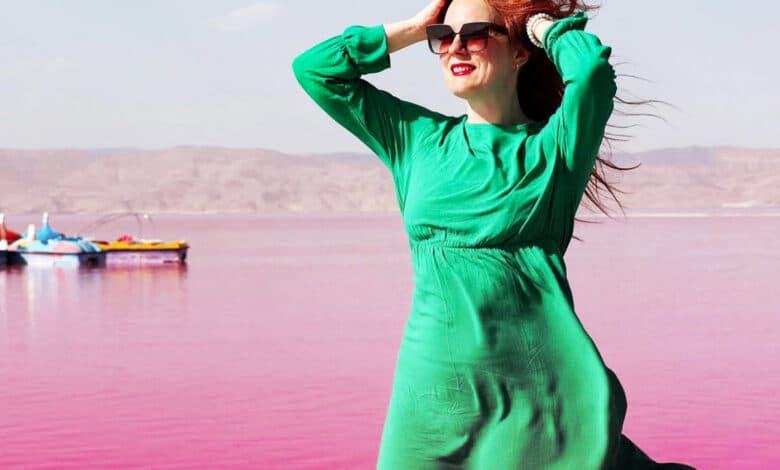
Maharlu, also spelled Maharloo Lake, is a seasonal salt lake southeast of Shiraz. Its appearance varies with water levels and the organisms in its salty water; a visit does not always reveal pink water.
The lake’s footprint includes more than open water. A satellite study covering 1987 to 2022 distinguished water, exposed salt flats and bare ground. Those surfaces shift as the lake fills and dries, so one area figure cannot describe the water you will see on a particular visit.
For a visit from Shiraz, the main draw is the contrast between coloured water, pale salt crusts and the surrounding dry landscape. Water and exposed ground can occupy very different areas from one season to another.
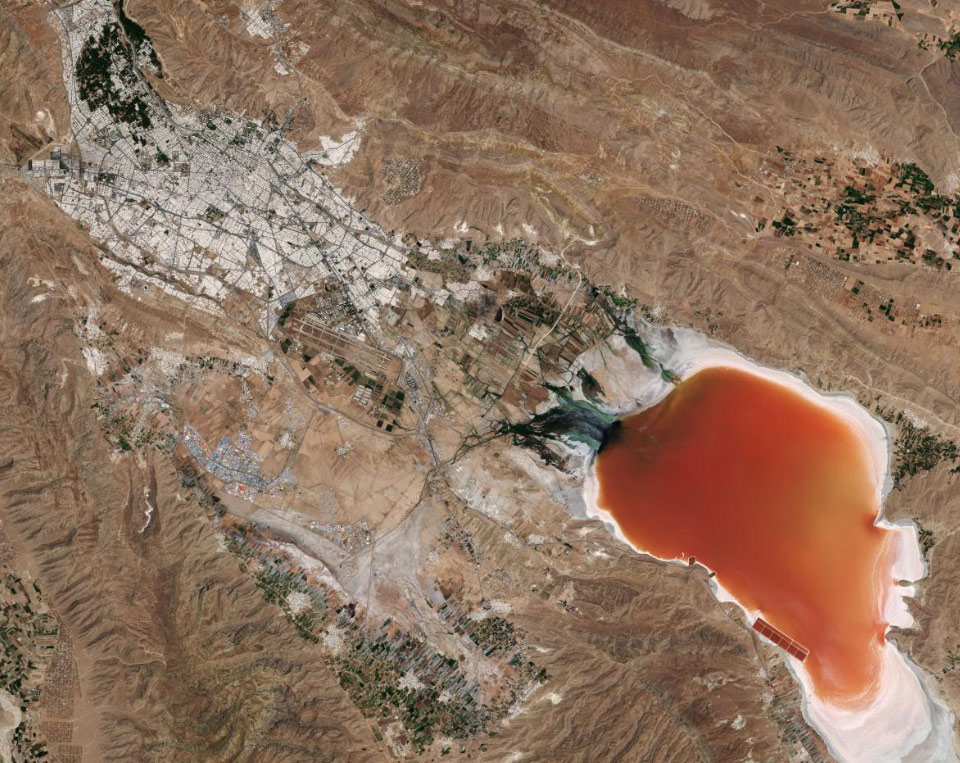
The European Space Agency places the lake around 27 kilometres southeast of Shiraz. This is a geographic reference, not a driving distance to every part of the shore.
Maharloo is also a breeding site for greater flamingos. Its value for birds depends on wetland conditions, and sightings vary. The wildlife section below describes observations from specific breeding seasons rather than a fixed calendar for visitors.
Drought and changes to the water feeding the lake affect its habitat. A study of the 2023 and 2024 flamingo breeding seasons identified drought, upstream dams and agricultural irrigation among the pressures on southern Iran’s saline wetlands.
Give birds room to feed and rest. Use binoculars from a distance, keep away from nesting areas and avoid approaching flocks for a closer photograph.
Contents
Why is Maharlo Lake Pink?
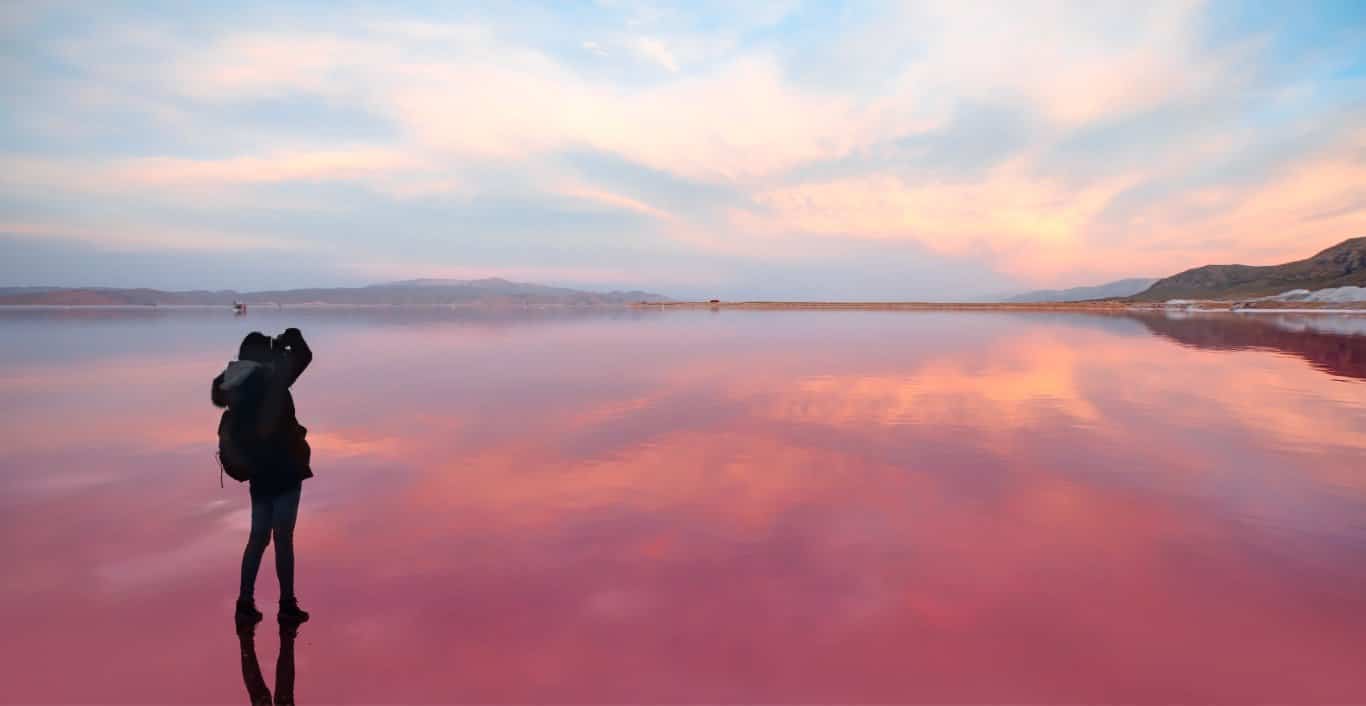
Pink and red saline waters owe their colours to pigments produced by microorganisms. In hypersaline environments, the alga Dunaliella salina can accumulate beta-carotene. However, the amount of a pigment present and its contribution to the visible colour are not necessarily the same.
Salt-loving archaea, a group distinct from bacteria, can contain red carotenoid pigments called bacterioruberins. Some bacteria, including Salinibacter, can also contribute pigments to red brines. Archaea, bacteria and algae are different biological groups, and their pigments differ.
Research on crystallizer ponds in Eilat found that the water’s optical properties closely matched the pigments of red archaea even when extracted pigments contained more algal beta-carotene. A later study of Spanish salterns found an additional bacterial contribution and geographic differences in microbial communities. These studies explain why a photograph of Maharloo cannot identify a single dominant organism; they are not measurements of Maharloo’s own pigment balance.
The best season to visit Maharloo Lake
Water levels generally fall in summer and rise in winter. The European Space Agency’s observations show why the season alone cannot guarantee a particular colour or amount of water.
ESA’s June 2019 image shows shallow orange water, while its June 2021 comparison shows a dry lake. These are dated observations, not a report of today’s conditions.
Mid-summer is therefore not a reliable recommendation for seeing pink water: evaporation may leave little water or a dry lake bed.
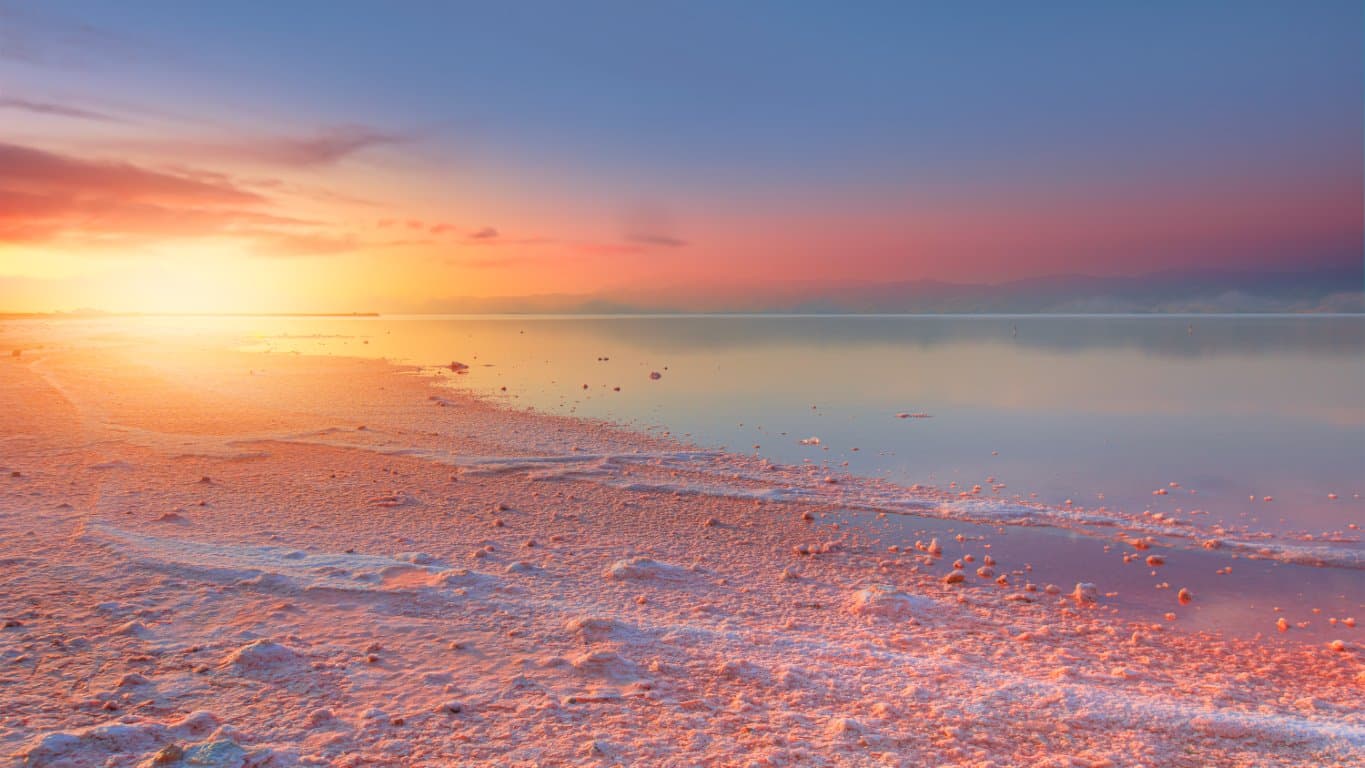
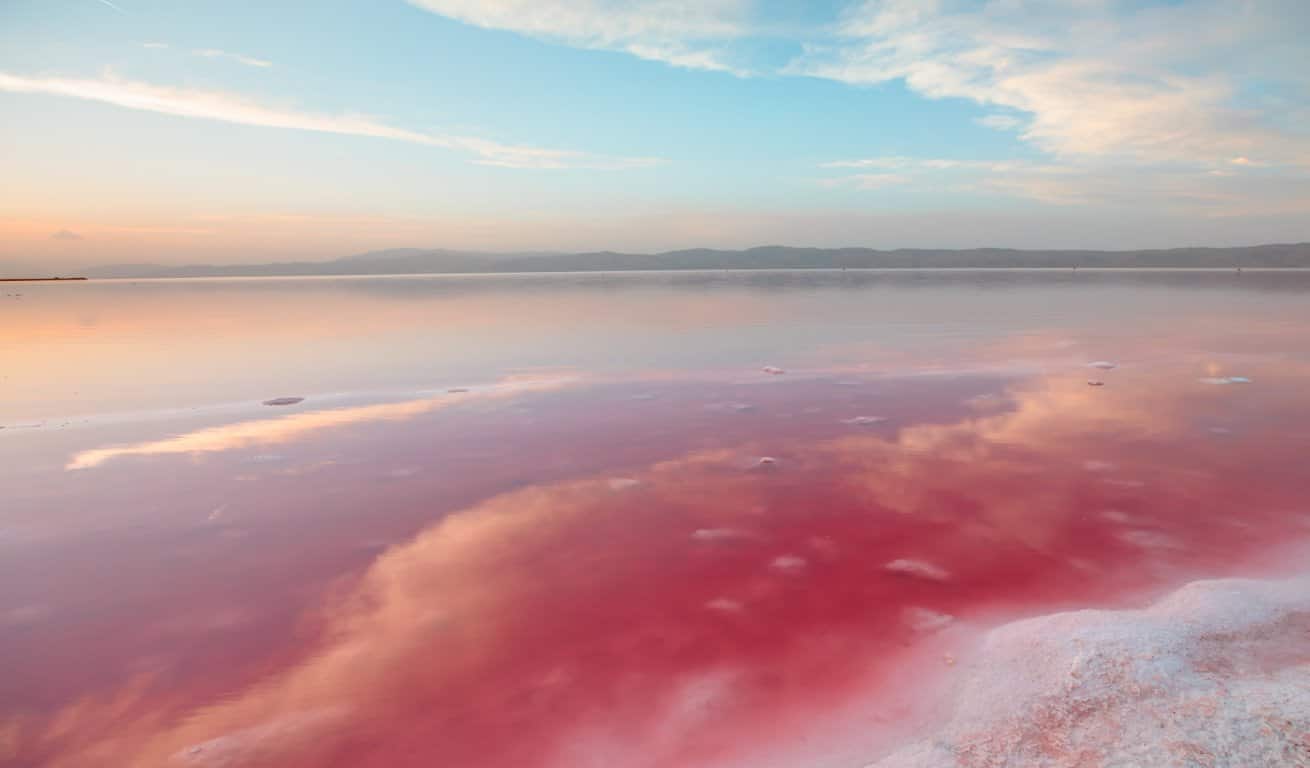
The visible colours range from pink through orange to red. Water level and the lake’s organisms both matter, so photographs taken at different times can show very different scenes.
How to Get to Maharlu Lake?
Choose a shore destination before arranging a car from Shiraz. Agree on the route, waiting time and return journey with the driver. For an organised outing, request the actual itinerary and included services; transport, guiding and refreshments depend on the booking.
From Shiraz, plan the outing around a specific shore stop and agree on the return pickup before setting out. The lake is southeast of the city, and the distance depends on which part of the shore you visit. Stay on established roads and keep vehicles off exposed salt flats.
Maharloo Lake’s Economic Impact
Salt extraction is part of the lake’s landscape. ESA identified extraction facilities along the southern shore in its June 2019 satellite image. The image documents that activity at the time; it does not establish today’s production, food-grade quality or export income.
Salt flats remain where water evaporates. They are part of the changing landscape and can become a source of windblown dust. Kazemi and colleagues linked lower water levels and exposed surfaces at Maharloo with greater dust activity.
Maharloo Lake’s Wildlife
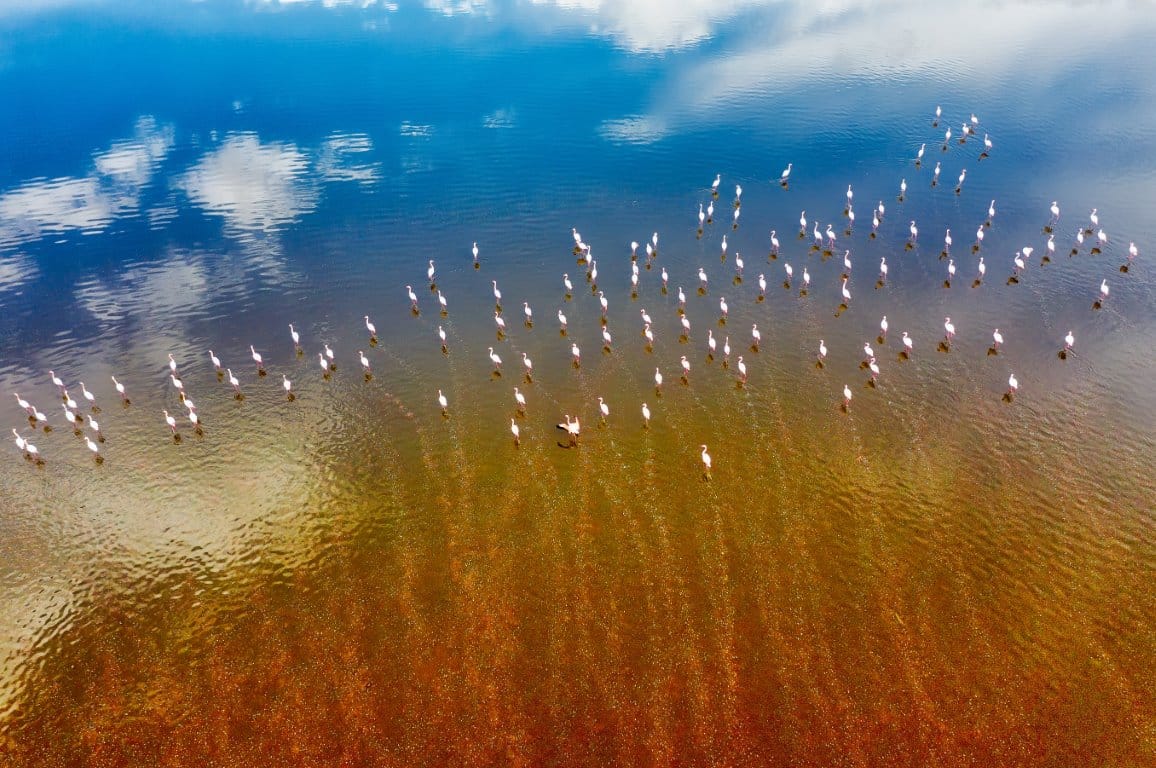
A study published in 2026 estimated 1,700 to 2,200 greater flamingo chicks at Maharloo in 2023. Surveys there in 2024 found no nests or chicks. These contrasting breeding seasons show why a visit cannot be planned around an assured nesting colony.
Birdwatching should follow the conditions on the ground. Watch from an established access route, let flocks move freely and leave a nesting area undisturbed if birds are present.
Maharloo Lake Photos
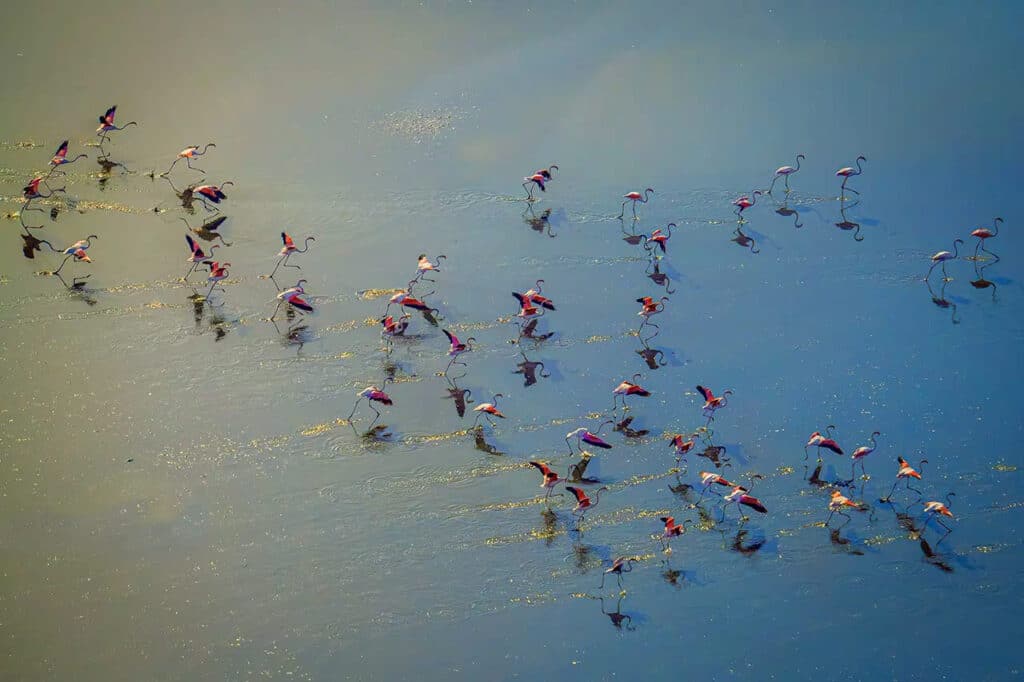
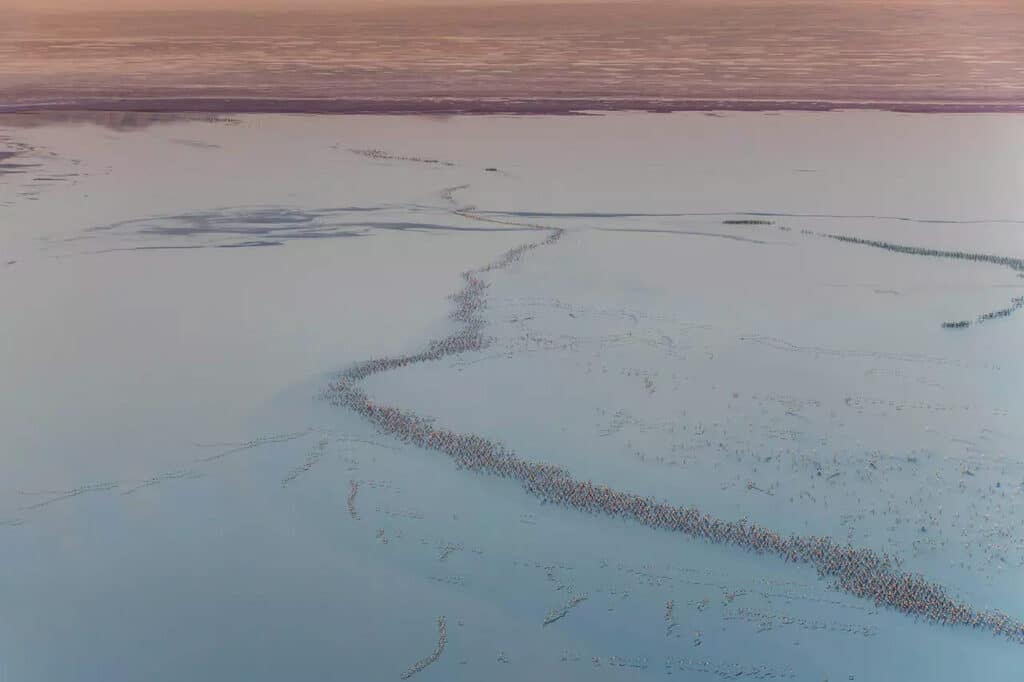
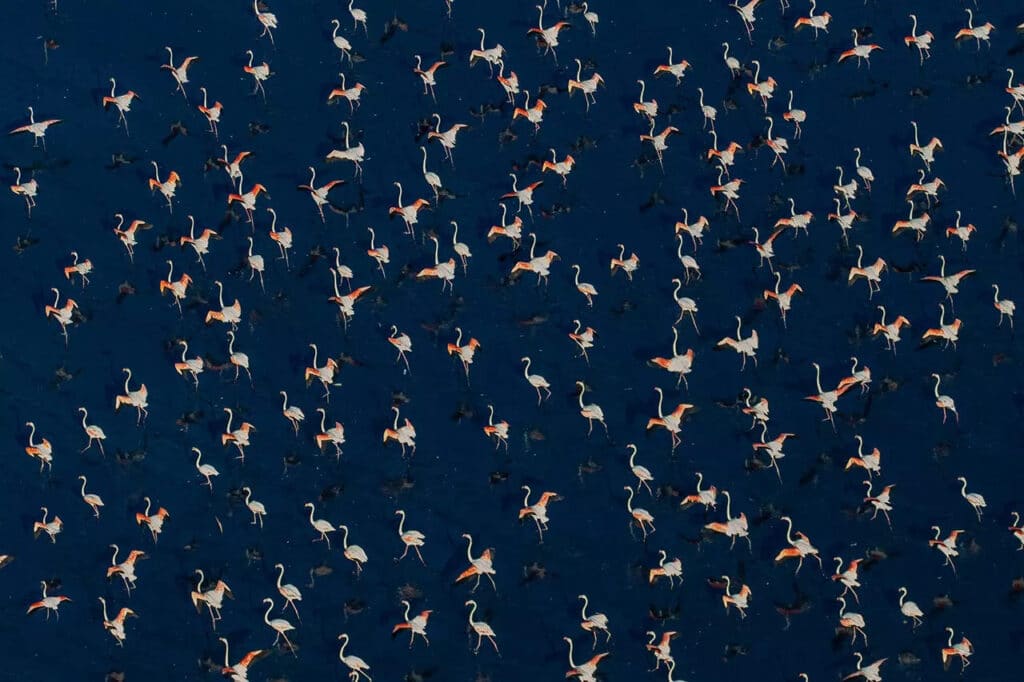
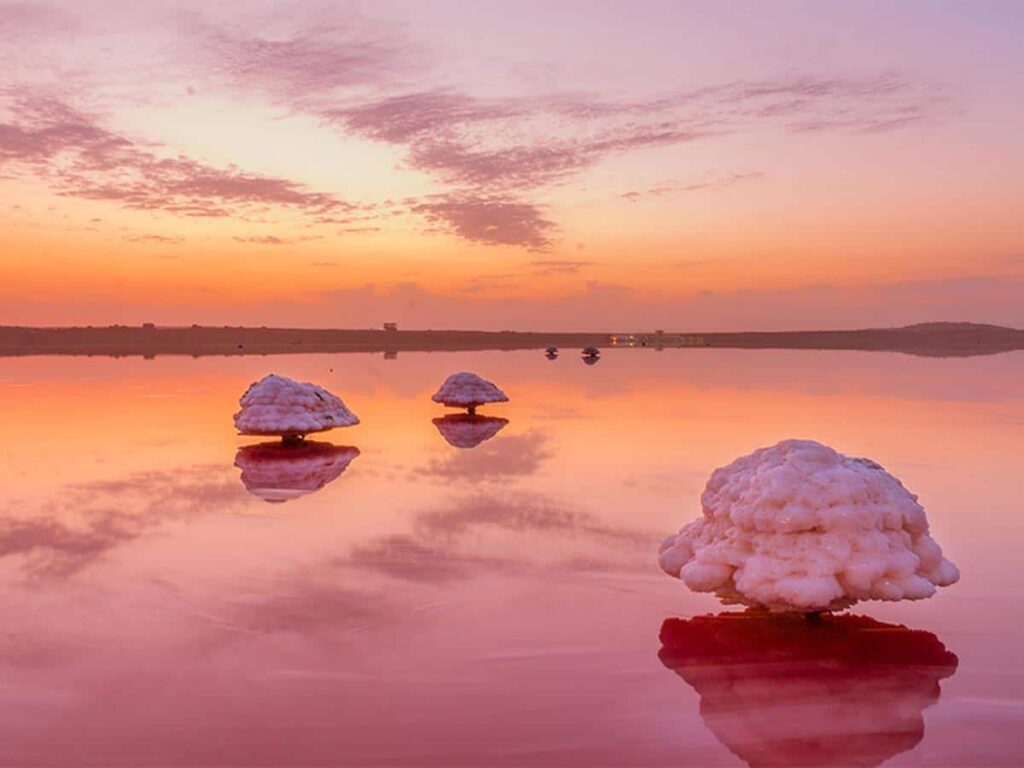
The lake belongs to a wider basin fed by the Khoshk River, smaller streams and springs. Its hypersaline open water and the basin’s freshwater habitats support different forms of life.
Gholamifard and Demilio’s study of the basin’s freshwater habitats drew on field visits from August 2017 to March 2018. It reported a basin fauna of fourteen fish species, including Iranian endemics, while failing to find several native species during those visits. Drying habitats and introduced fish were conservation concerns. Fish records from these springs and streams should not be read as records from the lake’s hypersaline water.
In Closing
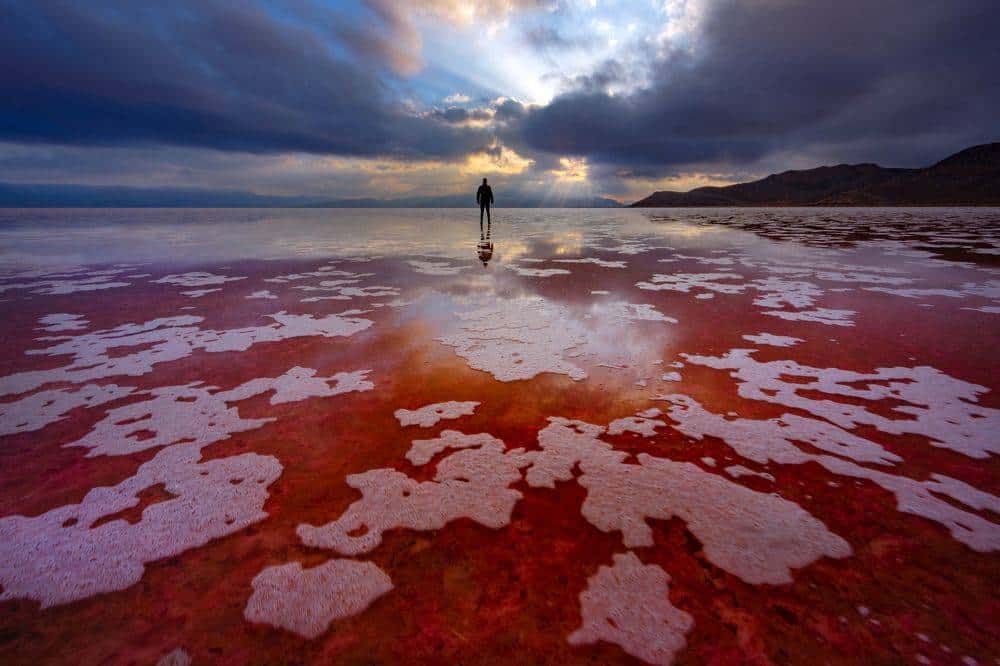
Plan a visit around this changing saline landscape rather than expecting one fixed view. Stay on established access routes and leave salt crusts, birds and other wildlife undisturbed.
Source for seasonal conditions: European Space Agency. (17 September 2021). Earth from Space: Maharloo Lake. Sources for microbial colour mechanisms: Oren, A., Stambler, N., & Dubinsky, Z. (1992). On the red coloration of saltern crystallizer ponds. Oren, A., & Rodríguez-Valera, F. (2001). The contribution of halophilic Bacteria to the red coloration of saltern crystallizer ponds. Sources for wetland wildlife: Gholamhosseini, A., Jafari, M., & Béchet, A. (2026). Drought-driven breeding failures of greater flamingos, Ornithology Research, 34, article 20 (abstract). Gholamifard, A., & Demilio, E. (2025). Wetlands of the Maharlu Lake basin, Iranian Journal of Ichthyology, 11(4), 236–255.
Read More