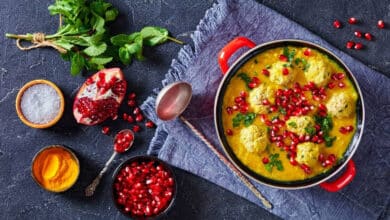
Abgusht, also spelled abgoosht, is a slow-cooked Persian stew of meat and legumes. Often called dizi after its traditional cooking pot, it offers two distinct parts of the same meal: a savoury broth and a mash of the tender solids.
For a first introduction to Iranian home-style cooking, the serving ritual is as memorable as the stew itself. You tear bread into the broth, then eat the mashed meat, beans and potatoes with more bread and accompaniments.
Contents
What Goes into Abgusht?
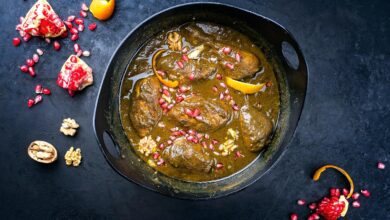
A familiar version uses lamb, chickpeas, white beans and potatoes, with turmeric and dried Persian lime for seasoning. Tomatoes or tomato paste appear in many recipes. There is no single household formula: cooks vary the cuts of meat, legumes and sour ingredients.
Dried lime gives the stew a tangy note, while long, gentle cooking softens the meat and pulses. Some cooks use individual clay or stone pots; a heavy saucepan also works. For quantities and cooking instructions, follow our abgusht recipe.
How to Eat Abgusht
Start by separating the broth from the solid ingredients. Tear flatbread into a bowl and add the broth so the bread absorbs it. This bread-and-broth mixture is often called tilit or tirit.
Next, remove any bones and mash the cooked meat, legumes and potatoes with a pestle or masher. The result is gusht-e kubideh, the pounded portion of the dish. Eat it with flatbread, taking small portions rather than treating it as a second soup.

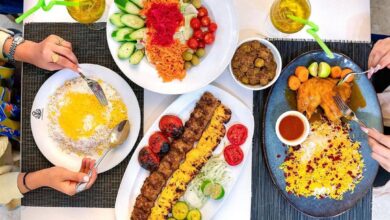
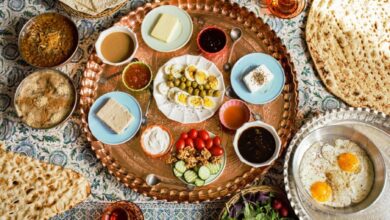
Fresh herbs, raw onion and pickled vegetables often accompany the meal. Different kitchens serve and season it differently, so ask your host or server to explain their version. Homa’s Persian Mama recipe illustrates one family approach to the broth, bread and accompaniments.
Why Is It Also Called Dizi?
A dizi is a traditional pot used to cook the stew. The vessel’s name also became a name for the meal. Small pots made it possible to prepare individual portions slowly, including beside the heat of bakery ovens.

The Encyclopaedia Iranica entry on abgusht traces its terminology, variations and place in everyday cooking. This history helps explain its flexibility: legumes and vegetables could make a small quantity of meat go further.
Trying Abgusht in Iran
When ordering, confirm which meat the kitchen uses and what accompanies the dish. Traditional abgusht contains meat; ask specifically about ingredients if you follow a vegetarian diet or have dietary restrictions.
To explore beyond dizi, browse our guide to Persian dishes or include a food-focused stop in a tailor-made Iran itinerary.
More on Iranian Food and Culture