Dash Kasan: Zanjan’s Dragon Temple
Ilkhanid rock carvings near Soltaniyeh


Dash Kasan, often called the Dragon Temple, is a rock-cut site above the village of Viyar, southeast of Soltaniyeh in Zanjan Province. Two dragons carved into opposing rock faces are its best-known features. The carvings date to the Ilkhanid period, but the site’s original function is still debated.
Contents
The Enigmatic Construction of Dash Kasan
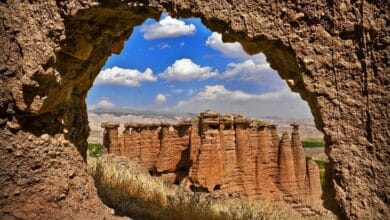
Carved decoration and traces of stone extraction survive side by side here. Their relationship is part of the puzzle: the visible quarrying does not establish a single, securely dated construction sequence.
SURFIRAN Tours
Best Iran Tours
A Collaboration of Cultures
A Buddhist monastery is one interpretation of Dash Kasan, but it is disputed. In a field study published in 2022, archaeologist Amin Moradi proposed a ceremonial or audience-hall function, drawing comparisons with Mongol palaces. He also considered quarrying after the Ilkhanid period. Neither the dragons nor the extraction marks, on their own, settle the building’s purpose or the order of its uses.
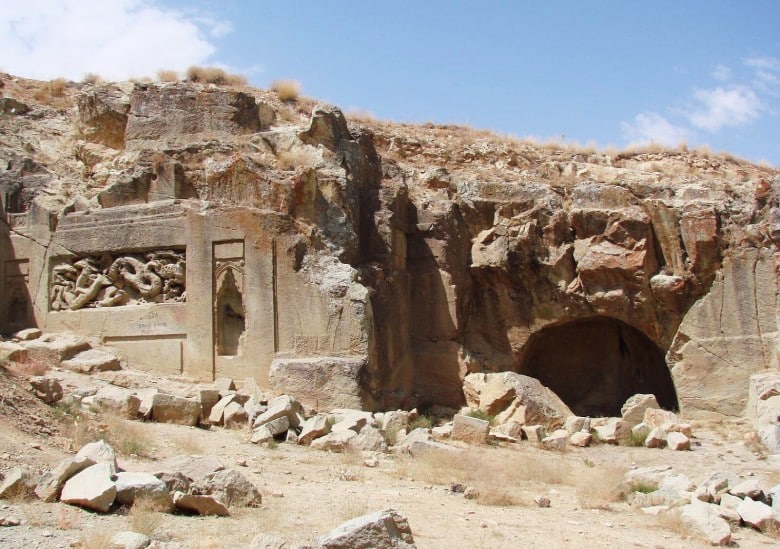
The Dragon Temple’s Architecture
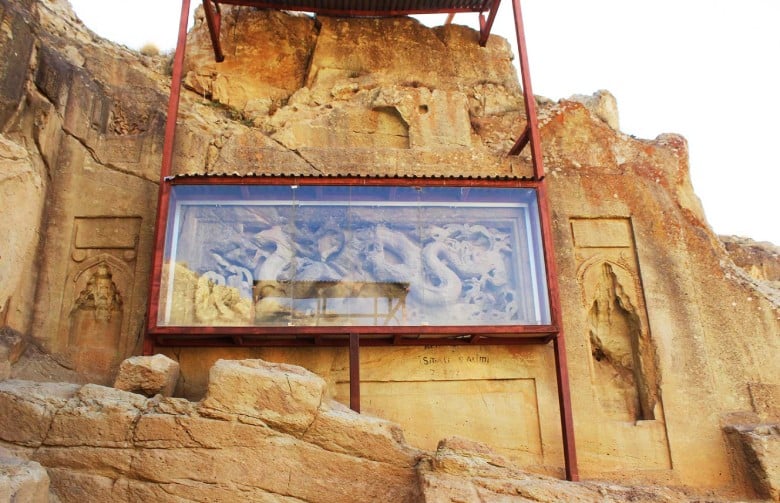
Much of the complex is open to the sky. Moradi’s survey records three shallow levels along the hillside and three major rock-cut niches. The central niche on the south side is higher than the two lateral niches to the east and west. Look across these spaces to compare their arches, then examine the contrast between finished panels and rough stone.
The Dragon Motifs
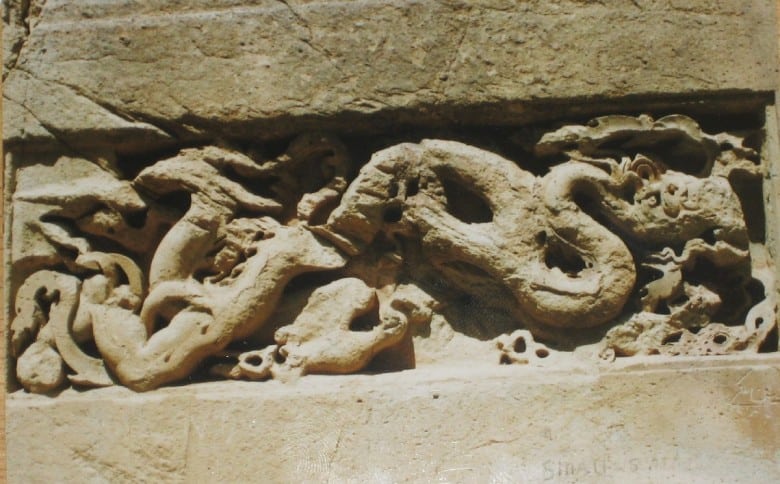
Each dragon panel is about five meters long. The dragons are cut directly into the cliff, and their curling bodies echo designs on Ilkhanid tiles excavated at Takht-e Soleyman. Compare the two panels from the open court to see how they frame the space.
Muqarnas and Plant Motifs
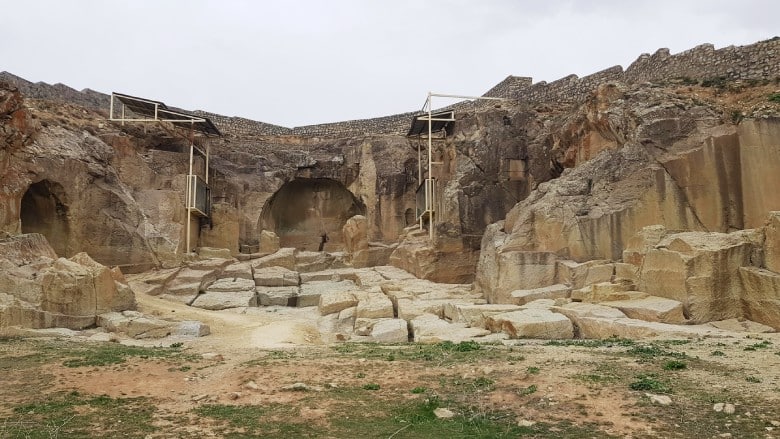
Look beyond the dragons for muqarnas, stepped, honeycomb-like carving around the niches. The frames near the panels include leaves and flowers emerging from vase-like forms. These motifs share the rock face with the dragons.
Visiting Dash Kasan
Accessibility and Preservation
Approach from Soltaniyeh via Viyar. The site lies uphill from the village, and the carved areas sit at different levels. Wear shoes with grip and allow time to move over uneven ground.
Facilities and Guidance
Bring drinking water and plan your return transport in advance. Give yourself time to look at both sides of the court, and keep hands off the carved surfaces.
Book Services, Pay Online








Conclusion
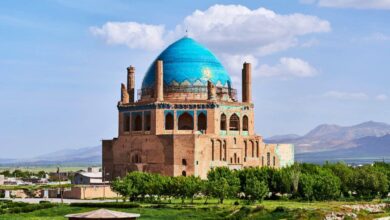
Pair Dash Kasan with the Dome of Soltaniyeh. The dome is Öljaitü’s mausoleum, a well-documented monument of the Ilkhanid capital. At Dash Kasan, the rock-cut spaces and carvings show a different side of the period, with more questions still open about how the site was used.
Read More