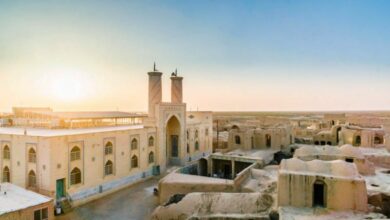
Isfahan Travel Guide
Explore the historic centre, riverfront and Armenian quarter


Isfahan rewards time on foot: start with Naqsh-e Jahan Square, compare its Safavid monuments with the older Jameh Mosque, then explore the bridges and the Armenian quarter of New Julfa.
For a first visit, allow three days to give the main areas their own time. Group sights geographically rather than crossing the city repeatedly: the square and bazaar, the older city around the Jameh Mosque, and the riverfront with New Julfa.
This guide introduces the city’s sights, food, crafts and accommodation options. Use the neighbourhood sections to choose a base and a route that fits your pace.
Contents
Why Visit Isfahan
Isfahan was a major Safavid capital and remains an important centre for Iranian architecture and crafts. Its appeal lies in the variety of spaces you can explore, from mosque courtyards and garden pavilions to workshops and public promenades.
Make room for the working city alongside the monuments. A bazaar visit can involve watching a craft process, discussing materials with a seller or simply taking time over a purchase.
The historic bazaar connects shopping with the city’s architectural setting. Look for workshops as well as finished products, and ask about materials and production methods before buying.

Walk between the riverfront parks and bridges to see how these crossings also serve as public spaces. Khaju and Si-o-se-pol provide different settings for an evening stroll.
Naqsh-e Jahan Square is the centrepiece of the Safavid city and a useful starting point for a first visit.
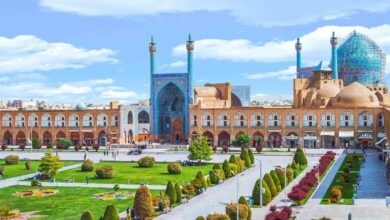
The square brings together the Imam Mosque, Sheikh Lotfollah Mosque, Ali Qapu Palace and the Qeysariyeh bazaar entrance. Look at their placement around the open space before visiting individual interiors.

An unhurried itinerary leaves room to return to a place in different light or spend longer in a museum. Avoid assigning the same short stop to every mosque, palace and neighbourhood.
The Safavid court’s move to Isfahan in 1598 shaped the city’s monumental centre. The square, gardens and bridges make that period particularly visible, while older monuments show that the city’s history began much earlier.
Central Isfahan works well on foot, but its airport, railway station and intercity terminals require separate transfers. Choose accommodation around the places where you expect to spend most of your time.
Isfahan has marked seasonal differences. Summer sightseeing can be hot, while winter days and nights need warmer clothing. Build outdoor walks around the conditions on your travel dates.
Best Time to Visit Isfahan
The best time to visit Isfahan is during the spring (March to May) and autumn (September to November) months. During these periods, the weather is mild and pleasant, ideal for exploring the city’s stunning architecture and gardens without the extreme heat of summer or the chill of winter.
Nowruz, around the March equinox, is a major domestic travel period. Book accommodation ahead if travelling then and allow time for busy sites and roads. Autumn is another option for city walks, without assuming that every date will be quiet.
| Month | General Pattern | Planning Advice |
|---|---|---|
| January | Winter cold | Include indoor stops and warm layers. |
| February | Winter conditions | Keep outdoor walks flexible around the forecast. |
| March | Transition to spring | Allow for busy Nowruz dates around the equinox. |
| April | Generally milder | Combine monument visits with walking breaks. |
| May | Increasing warmth | Leave time to rest between longer walks. |
| June | Summer heat | Plan exposed walks for cooler parts of the day. |
| July | Summer heat | Balance outdoor sightseeing with indoor visits. |
| August | Summer heat | Carry water and allow rest stops. |
| September | Transition from summer | Match walking distances to the day’s conditions. |
| October | Autumn conditions | Carry a layer for evenings. |
| November | Cooling towards winter | Plan warmer clothing for early and late outings. |
| December | Winter cold | Combine shorter outdoor walks with museums. |

Get Around Isfahan
Combine walking in the historic centre with taxis, buses or the metro for longer journeys. Save your hotel’s address in Persian and agree the exact destination when arranging a transfer.
Get Around Isfahan By Bus
For a bus journey, establish the stop and direction before boarding, especially when the return stop is on a different side of the road.

For buses, obtain the current fare and payment instructions locally. Carry the exact destination name as well as the stop you want to use.
Follow the signs and local boarding arrangements on the bus. Keep your destination details available so that you can ask where to get off.
From Kaveh Terminal, plan the onward transfer to your accommodation separately from the intercity journey. Confirm the current city-bus service at the terminal or use a taxi; leave a margin before an onward appointment or connection.
By Metro

Use the metro’s current station map to compare the nearest stop with your actual destination. The railway does not deliver you to the entrance of every sight, so include the final walk or taxi transfer. Obtain the fare and ticket conditions at the station.
Ride-Sharing Apps
Ride-hailing services such as Snapp and Tapsi provide another way to arrange a city journey. Compare the displayed fare and pick-up point for the trip you need; they are not necessarily cheaper in every situation.
What To See in Isfahan?
Squares and streets

Naqsh-e Jahan Square, also known as Meidan Emam, is a UNESCO World Heritage site. Its four sides connect royal, religious and commercial buildings within one planned urban space. It is one of the world’s major historic urban squares.
Meydan Kohne (Kohne Square)
Shahshahan Square
Chaharbagh Boulevard was a principal promenade of Safavid Isfahan. It gives a useful north–south axis for a city walk, connecting the palace-garden area with the river.
Chaharbagh-e-khajou Boulevard
Mosques
Compare the mosques for their different histories and spaces. The Jameh Mosque’s layered construction contrasts with the royal Safavid buildings around the square.
Imam Mosque, also known as the Shah or Royal Mosque, anchors the square’s southern side. Its entrance and prayer spaces turn towards the qibla, creating an architectural relationship worth noticing as you pass from the square into the complex.
Sheikh Lotf Allah Mosque

Sheikh Lotfollah Mosque was built for the Safavid royal court in the early seventeenth century. Its dome, tilework and entrance passage offer a different experience from the larger congregational mosque across the square. Give the dome and tilework time of their own, rather than visiting only for a quick photograph.
Hakim Mosque
Hakim Mosque is a Safavid monument built in the reign of Shah Abbas II, on the site of an earlier mosque. It provides another point of comparison with the royal monuments around Naqsh-e Jahan.
Jameh Mosque is a separate UNESCO-listed complex in the older city. Successive additions over many centuries, especially the Seljuq transformation of its courtyard and domes, make it a different historical experience from the Safavid square.
Palaces

Ali Qapu Palace stands on the square’s western side. Its columned terrace overlooks the open space, while the upper Music Hall has cut-out decorative niches. Interior visits involve stairs, so allow time for the ascent and descent.
Talar Ashraf belongs to the wider Safavid palace area. Treat it as an additional architectural interest rather than assuming that every historic palace building admits visitors.
Hasht Behesht, the Palace of Eight Paradises, is a late-Safavid pavilion in a garden setting. Its octagonal plan and different facades make it a useful contrast to Ali Qapu’s elevated terrace.

Chehel Sotoun combines a columned portico, pool and reception hall. Look at the painted historical scenes inside as well as the relationship between the pavilion and garden. The reflected columns are associated with its “forty columns” name.
Schools
Madreseye Sadr (Sadr school)

Chaharbagh School, also called Madreseh-ye Shah, is a late-Safavid religious school on Chaharbagh Boulevard. Its tiled surfaces, entrance and courtyard belong to a larger ensemble that includes the nearby bazaar. Respect its educational and religious use.
Bridges
The riverfront links parks and historic bridges. Water flow in the Zayandeh Rud varies, so plan the walk for the architecture and public spaces rather than expecting a particular river scene.

Shahrestan Bridge is the oldest surviving bridge in the Isfahan area, with origins attributed to the pre-Islamic period and later rebuilding. Look at the bridge separately from the better-known Safavid crossings nearer the centre.
Khaju Bridge dates to the reign of Shah Abbas II, around 1650. Its passages, seating spaces and pavilion show how a bridge could also function as a place of recreation and control the river’s flow.

Si-o-se-pol, or the Allahverdi Khan Bridge, is named for its thirty-three spans. Built in the early seventeenth century, it connects the Chaharbagh axis across the river.
Joui Bridge dates to Shah Abbas II’s reign, in the later 1650s. Its historic role connecting royal riverfront properties differed from the larger public bridges.
Pol-e-Maarnaan (Maarnaan Bridge)
Churches and Cathedrals

Vank Cathedral belongs to New Julfa’s Armenian Christian heritage. Its painted interior includes biblical scenes and decorative work that differ from the city’s mosque interiors. Combine the cathedral and museum with a walk in the neighbourhood; obtain current admission and photography rules at the site.
Kelisaye maryam (maryam church)
Modern Isfahan
Isfahan City Center offers a shopping-centre alternative to the historic bazaar. A mall visit serves a different purpose from a craft-focused walk, so choose according to what you want to buy or do.

For restaurants, compare the menu and location with the part of the city you are visiting. Leave time for a meal rather than making a long transfer solely to follow an undated recommendation.
For family entertainment, choose a venue around the age group and activity required, then obtain current opening and admission details directly from the venue.
For activities with children, choose facilities according to the child’s age and the service actually provided. A supervised play area, an amusement park and childcare are different services; establish staffing and admission arrangements directly.
Allow time for family activities in the itinerary rather than treating them as an extra stop between major monuments.
Other sights
Atashgah stands on a hill west of the central city. It offers a different setting from the flat walks around the square, with an uphill approach that needs suitable shoes and enough time for the descent. Arrange the transfer around that walk rather than relying on old bus or entrance-price details.

Avicenna’s Dome appears among the city’s lesser-known historic sights. Include it if you want to explore beyond the main monument circuit, with directions arranged locally.
The tombs associated with Nizam al-Mulk and members of the Seljuq dynasty add another historical layer to an extended city itinerary. They need a separate visit from the Safavid square.
New Julfa is the Armenian quarter south of the river. Give its churches, streets and cafes their own part of the day.
Sheikh Bahai Bathhouse is associated with stories about ingenious heating. Distinguish those stories from verified technical explanations, and treat interior access as a separate question from seeing the historic area.
Pigeon towers illustrate the connection between built structures and agriculture: collected droppings were used as fertiliser. Include a tower visit when it fits your route beyond the centre.
Ali Gholi Agha Bathhouse offers another way to explore the city’s historic neighbourhoods. Pair it with a local walk rather than rushing there between distant monuments.
Suggested Three-Day Isfahan Itinerary
Day 1: Naqsh-e Jahan and the bazaar. Start with the square’s layout, then choose mosque and palace interiors. Leave the later part of the day for the bazaar and a meal nearby.
Day 2: The older city and palace gardens. Give the Jameh Mosque its own visit, then choose Chehel Sotoun or Hasht Behesht according to your interests. Avoid fitting every palace into one afternoon.
Day 3: New Julfa and the bridges. Combine Vank Cathedral and a neighbourhood walk with time on the riverfront. Add Khaju or Si-o-se-pol according to the route, leaving distant excursions for an extra day.
What To Do in Isfahan

- Walk along the riverfront and compare Khaju with Si-o-se-pol.
- Spend a morning around Naqsh-e Jahan and the bazaar, leaving time for individual interiors.
- Explore Chaharbagh on foot with time for a cafe or garden stop.
- Give New Julfa its own part of the day, combining Vank Cathedral with a neighbourhood walk.
- Plan countryside or desert excursions separately from the core city days.
What To Buy in Isfahan?
When buying crafts, compare materials, workmanship and the final price. Ask for a written receipt for a significant purchase. Ask the seller to state the total price and any charges before you pay.
Isfahan’s bazaars offer textiles, metalwork, paintings, inlay and sweets. For a meaningful purchase, learn how an object was made and compare its quality with similar pieces.
1. Persian Carpets and Rugs

For a carpet or rug, ask about fibre, knotting, condition and place of production. Handwoven and machine-made products differ. Obtain a written description and receipt for a substantial purchase.
2. Miniature Paintings

Miniature paintings may draw on poetry, epic stories or everyday scenes. Ask whether you are buying an original painting, a print or a painted decorative object, and how to protect it during travel.
3. Khatamkari (Marquetry)

Khatamkari uses small geometric inlay pieces, traditionally including wood, bone and metal. Examine the consistency of the pattern and the finish on corners and edges. Materials matter if you prefer to avoid animal-derived components.
4. Hand-painted Tiles

For hand-painted tiles, look at the design, glaze and finish. Ask the seller to pack fragile pieces for transport and explain whether the object is decorative or intended for practical use.
5. Traditional Sweets and Nougats

Gaz is a regional nougat often containing pistachios or almonds. Ingredients vary by producer, so read the label rather than assuming every version uses the same sweetener. Consider nut and egg ingredients when buying gifts.
6. Termeh

Termeh textiles are sold in the bazaar alongside products from other Iranian craft centres. Ask where a piece was made and whether it is handwoven or machine-woven; the place of sale does not establish its origin.
7. Qalamzani (Metal Engravings)

For qalamzani, or engraved metalwork, compare the depth and consistency of the decoration and ask what metal lies beneath any surface coating. Choose a manageable size if you will carry it through several cities.
8. Pottery and Ceramics

Ceramics offer smaller alternatives to large metalwork or carpets. Check for cracks and ask whether a glazed item is suitable for food contact before using it as tableware.
What To Eat in Isfahan?
For a relaxed break, spend time in a public park with your own picnic supplies and follow local rules. Do not assume that park staff rent carpets or provide tea.
Local foods in Isfahan
- Beryani: Isfahan’s rich meat dish, typically served with bread. It differs from rice-based biryani; ask about the meat and offal used.
- Fereni: A milk-and-rice-flour pudding, sometimes served with syrup. Ask about the topping and portion you prefer.
- Khoresh-e mast: A sweet saffron-coloured preparation containing yoghurt and traditionally lamb, usually served cold. Its name should not lead vegetarians to assume it contains only dairy.
- Doogh and gooshfil: A yoghurt drink paired with a syrup-soaked sweet, combining contrasting flavours.
- Gaz and poolaki: Regional sweets to compare in local shops; inspect ingredients and packaging when buying gifts.
Accommodations in Isfahan
BOOK ONLINE
Isfahan Hotels
Historic and Full-Service Hotel Options
1. Abbasi Hotel Isfahan

Abbasi Hotel suits travellers interested in a historic caravanserai setting and courtyard atmosphere near the Chaharbagh area. Room categories differ in outlook and decoration; compare the actual category rather than assuming that every room faces the garden.
2. Kowsar Hotel Isfahan

Parsian Kowsar Hotel stands on Mellat Boulevard by the riverfront near Si-o-se-pol. It offers a different base from a hotel immediately beside Naqsh-e Jahan. Consider it for riverfront walks and compare the room’s stated view when booking.
3. Attar Hotel Isfahan

Attar Hotel offers a traditional-style alternative in the Masjed Seyyed area. Compare its room layout and location with your walking plans rather than choosing it on the strength of a long list of leisure facilities.
Central Hotel Options
4. Piroozy Hotel in Isfahan

Piroozy Hotel, at Imam Hossein Square, provides a central option for the Chaharbagh and palace-garden area. Its location suits a city-focused itinerary; compare room types and the booked meal plan rather than assuming transfers or extra services are included.
5. Ali Qapu Hotel

Parsian Ali Qapu Hotel serves the Chaharbagh area and riverfront walks. It is a hotel, distinct from Ali Qapu Palace on Naqsh-e Jahan Square. Its listing notes restricted direct car access on the pedestrianised street, so arrange a suitable luggage drop-off.
6. Safir Hotel, Isfahan

Safir Hotel is on Amadgah Street off Chaharbagh Abbasi, near the Art Bazaar and Abbasi complex. It suits travellers who want that part of the centre as a base. Compare the exact room and rate conditions with nearby alternatives.
More Hotels to Compare
7. Setareh Hotel Isfahan

Setareh Hotel is on Hafez Street near Naqsh-e Jahan Square. Consider it when time around the square and bazaar is your main priority. Use the property’s map and room details when comparing it with Chaharbagh-area hotels.
8. Safavi Hotel Isfahan

Safavi Hotel is a modern hotel at the Palestine crossroads, rather than a surviving Safavid-era residence. Its listing includes different room categories, including some without windows, so the precise category matters when comparing rates.
9. Parsian Suite Hotel Isfahan

Parsian Suite Hotel is at the beginning of Aine Khaneh Boulevard near Si-o-se-pol. It provides a riverfront alternative to the square area. A position beside the river does not guarantee water in the river or a river view from every room.
Read More
Sources
UNESCO World Heritage Centre. (n.d.). Meidan Emam, Esfahan.
UNESCO World Heritage Centre. (n.d.). Masjed-e Jame of Isfahan.
Babaie, S. (2007). Isfahan x. Monuments (3): Mosques. Encyclopaedia Iranica.
Babaie, S. (2007). Isfahan x. Monuments (5): Bridges. Encyclopaedia Iranica.
Visit Iran. (n.d.). Ali Qapu.
Visit Iran. (n.d.). Hasht Behesht.
Visit Iran. (n.d.). Chaharbagh School.
Visit Iran. (n.d.). Khoresh-e Mast.
IVisitIran. (n.d.). Beryani.
OrientTrips. (n.d.). Abbasi Hotel Isfahan.
OrientTrips. (n.d.). Parsian Kowsar Hotel Isfahan.
OrientTrips. (n.d.). Piroozy Hotel Isfahan.
OrientTrips. (n.d.). Parsian Ali Qapu Hotel Isfahan.
OrientTrips. (n.d.). Safir Hotel Isfahan.
OrientTrips. (n.d.). Setareh Hotel Isfahan.
OrientTrips. (n.d.). Safavi Hotel Isfahan.
OrientTrips. (n.d.). Parsian Suite Hotel Isfahan.
Tripadvisor. (n.d.). Attar Hotel, Isfahan.