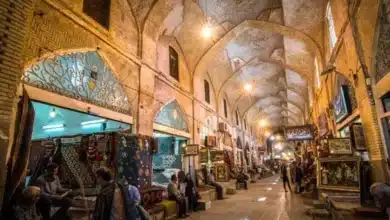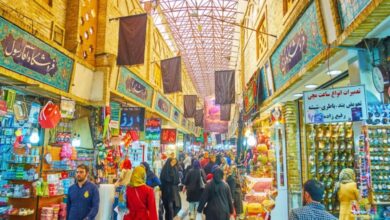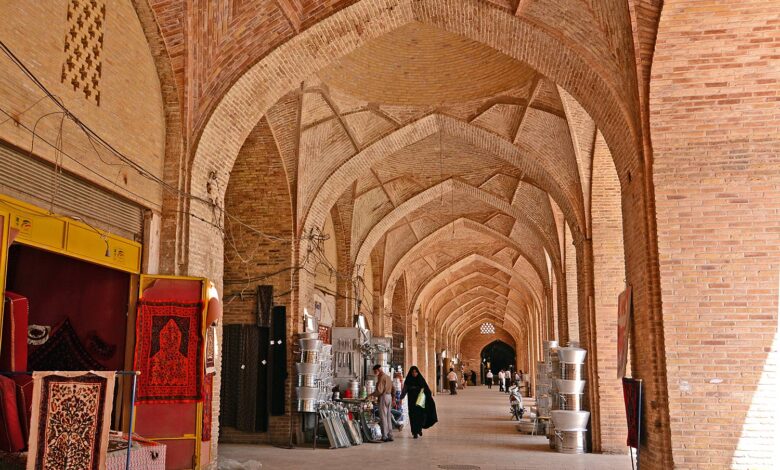
Start at Arg Square in central Kerman and follow the covered market toward the Friday Mosque. Along the way, the lanes open into Ganj Ali Khan Square and branch toward workshops and caravanserais. The route takes you through a working market as well as buildings from the Safavid and Qajar periods.
Contents
How the bazaar is laid out
Kerman grew at a junction of trade routes. The market still follows two historic axes, one running east to west between Arg Square and the Mosque Gate and another running roughly north to south. Covered lanes connect the shops with courtyards, caravanserais and bathhouses.
The bazaar forms part of the Kerman Historical-Cultural Structure, which Iran submitted to UNESCO’s World Heritage Tentative List in 2008. The submission describes how the market’s two axes shaped the old city.
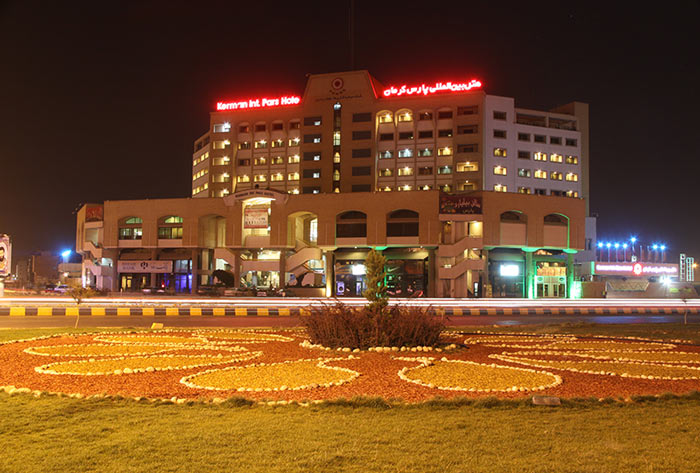
Book Kerman Hotels
Safavid and Qajar building campaigns
Much of the layout visitors can trace today took shape in successive building campaigns. Ganj Ali Khan laid out part of the central market under Shah Abbas I in the late 16th and early 17th centuries. In the 19th century, the Qajar governors associated with the Vakil Bazaar rebuilt and extended parts of the market, adding buildings along the main axis.
The Ganj Ali Khan complex is a good place to pause. Market arcades border the square on three sides, with the caravanserai to the east. Look for the former mint, the water cistern and the bathhouse entrance off the south side. Visit Iran describes how the bath’s bent corridor screened the dressing room from the street. The bath now houses an ethnography museum.
The covered Chahar Su is where the main market routes cross. Coming from Arg Square, the first stretch is Arg Bazaar. At the junction, pause to look up at the ceiling before continuing through the market.
BOOK ONLINE
Kerman Hotels
Farther east, the Vakil section adds another layer to the route. Its shops, caravanserai and bathhouse show how the Qajar builders extended the market beyond the Safavid square. Ekhtiari is another named section along the main route.
What’s famous in Kerman’s Grand Bazaar
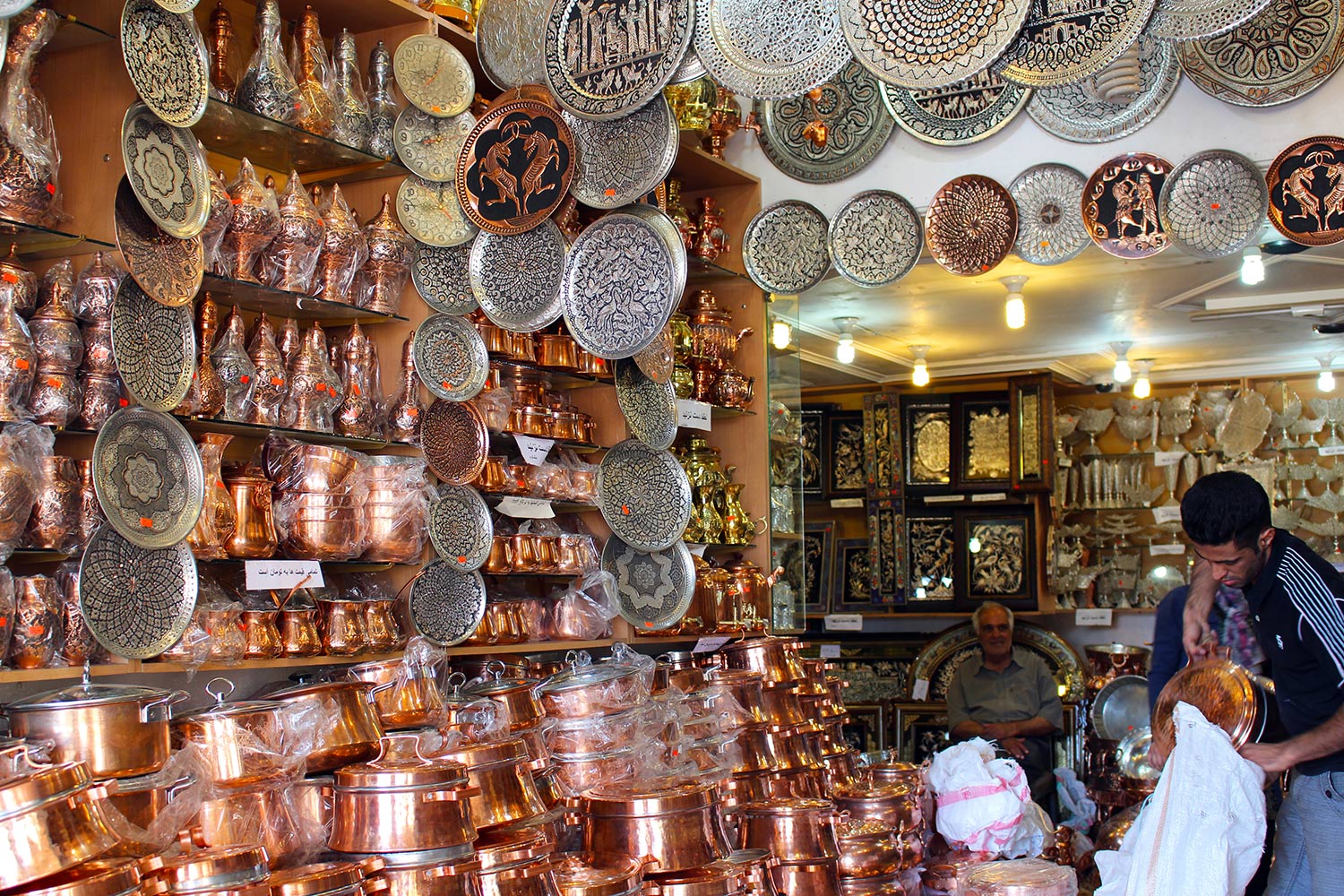
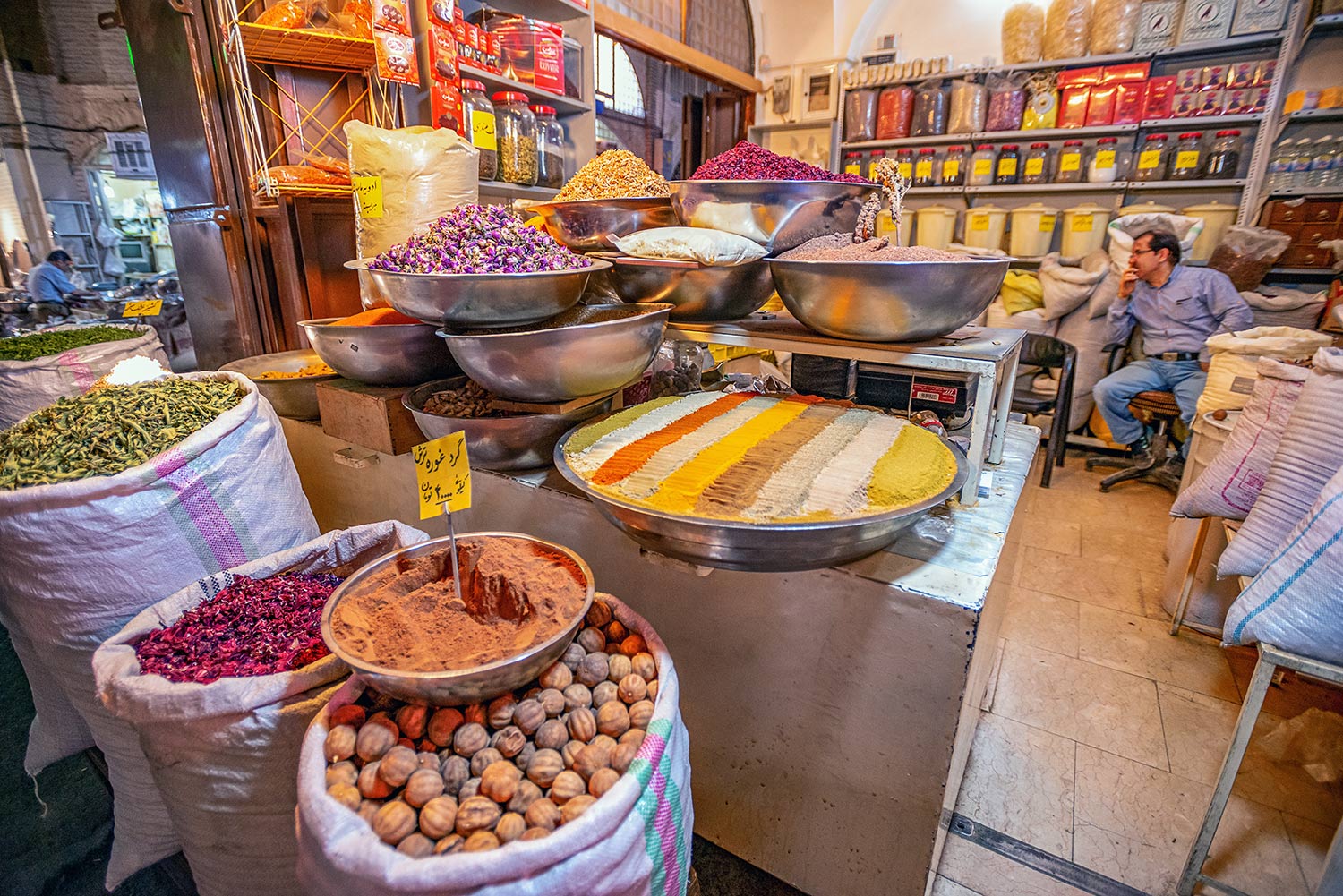
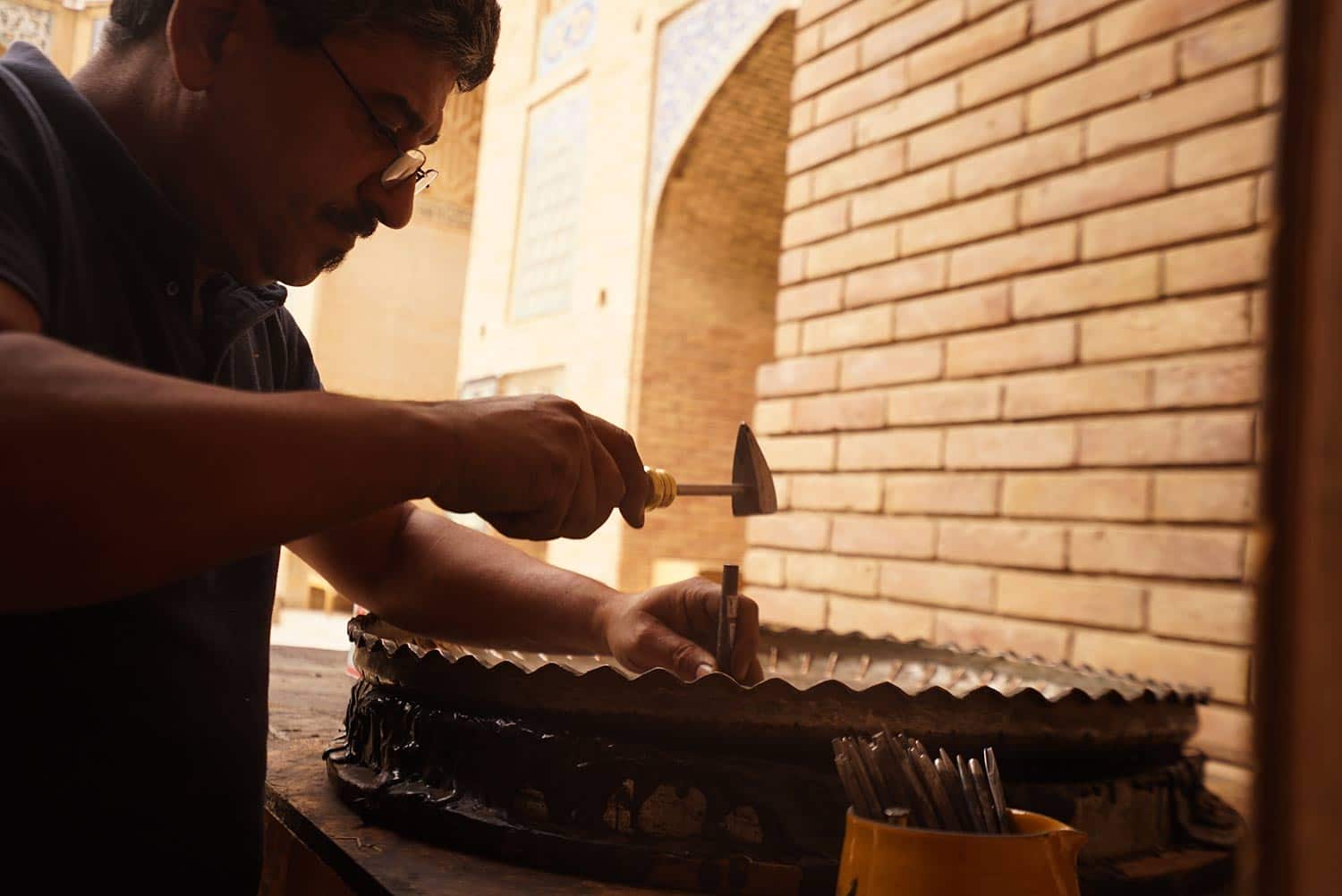
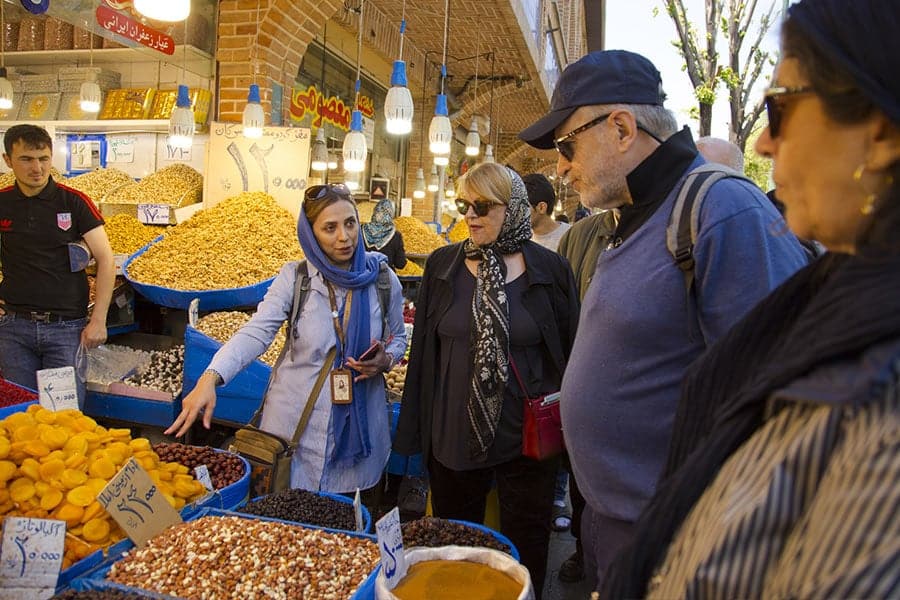
Look for copperware in the Mesgari section, the coppersmiths’ bazaar documented in Encyclopaedia Iranica. Kerman is also known for cumin, pistachios and carpets. At a confectionery, ask about kolompeh, komach-e sahan and qottab, three sweets associated with the province.
Book Train Tickets
How to visit Kerman’s Grand Bazaar
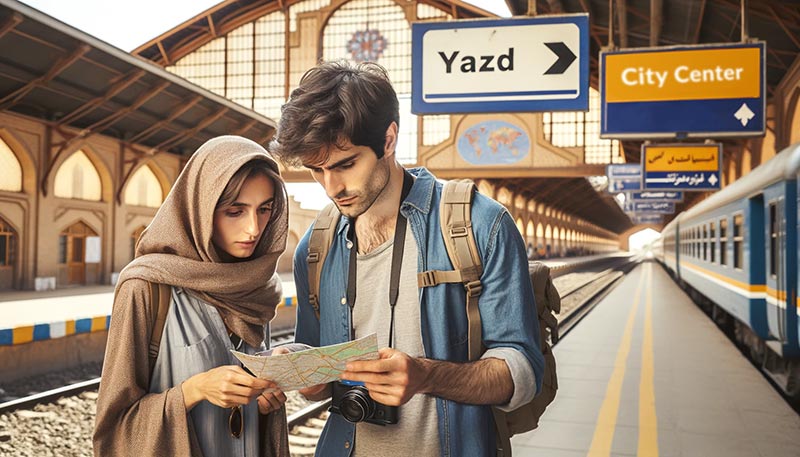
Enter from Arg Square at the west end if you want to follow the main axis in order. Use Ganj Ali Khan Square as a landmark for the bathhouse, mint and side lanes, then continue toward the Friday Mosque at the east end.
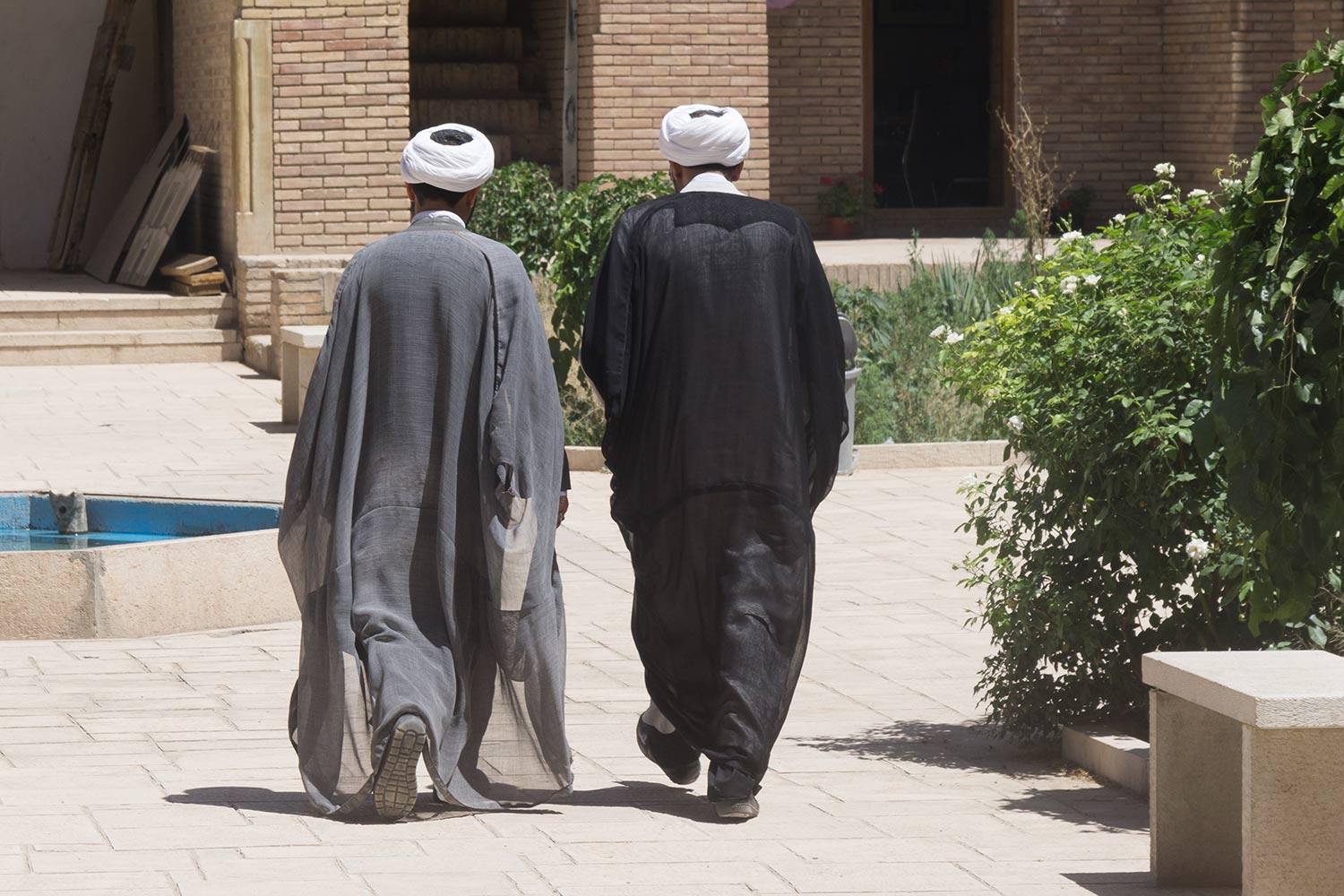
Shops and museums keep separate hours. If you want to go inside the bathhouse museum, make it your first stop in the square and check the posted admission hours there. The main market route still makes sense as a walk if a museum is closed.
IRAN GROUP TOURS
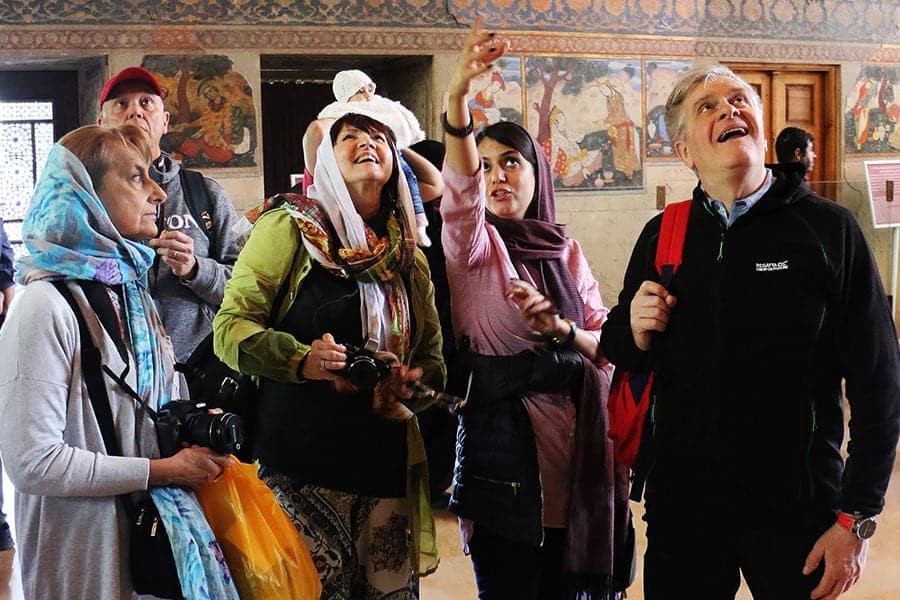
Explore sample small-group routes. Departure dates, availability and final prices are confirmed case by case before booking.
Iran 7-Day Tour
Final price and availability on request
Iran 9-Day Tour
Final price and availability on request
Iran 15-Day Tour
Final price and availability on request
For a short visit, walk from Arg Square to Ganj Ali Khan Square and return along the same lane. To see how the market fits into the old city, continue east to the Friday Mosque and use the Kerman travel guide to plan the rest of your day.
Read More