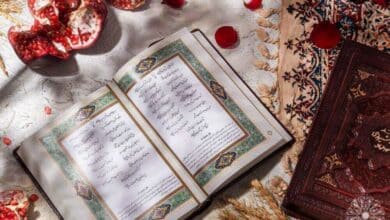
Omar Khayyam: Persian Poet & Mathematician’s Lasting Legacy
Discover Khayyam’s Impact on Persian Culture & History


Omar Khayyam (1048–1131) was a Persian mathematician, astronomer, philosopher and poet from Nishapur (Neyshabur) in northeastern Iran. Readers worldwide know him for the Rubaiyat, the quatrains made famous by Edward FitzGerald’s 1859 English version. In Iran he is also remembered for his work on the Jalali calendar and on cubic equations. This guide covers his life, science and poetry, and how to visit his tomb in Nishapur.
Omar Khayyam (full name: Ghiyath al-Din Abu al-Fath Omar ibn Ibrahim Nishapuri) was more than a man of numbers or rhymes. He was a philosopher grounded in reason, a scientist committed to empirical observation, and a poet whose verses continue to resonate globally.
Today, Khayyam’s legacy represents not only the intellectual height of the Seljuk era but also Iran’s enduring influence on global thought and culture.
Download Rubáiyát of Omar Khayyám
Khayyám, O. (1899). Rubáiyát of Omar Khayyám: The astronomer poet of Persia (E. FitzGerald, Trans.). Macmillan. Read on archive.org
Contents
Where is Khayyam’s Tomb?

Khayyam rests in the same city he loved deeply. He was born there, grew up there, and even when he left at the invitation of Seljuk ruler Malik-Shah for work, he eventually returned. That city is Nishapur—a mysterious place where history runs as deep beneath the earth as it does above. As Khayyam once said:
O earth, if they should split your breast apart,
They’d find rare jewels hidden in your heart.ای خاک اگر سینهٔ تو بشکافند
بس گوهر قیمتی که در سینهٔ توست
Khayyam’s mausoleum lies in a beautiful garden in the southeastern part of Nishapur. The tombs of the poet Attar and the painter Kamal-ol-Molk stand close together a short distance away, near the Shadiyakh archaeological site, so all three are easy to visit together.
Iran in the 11th Century
During Khayyam’s lifetime, Iran was part of the flourishing Seljuk Empire, which stretched across much of Central Asia and the Middle East.

During the rule of Sultan Malek Shah, and with the support of his chief minister Nezam al-Molk (Nizam al-Mulk), science and philosophy were strongly encouraged. Nishapur, Khayyam’s hometown, was a cultural hub rivaling Baghdad, where scholars gathered to discuss geometry, medicine, astronomy, and metaphysics.
Though his name means “tent maker”—likely a reference to his father’s trade—Khayyam’s education elevated him far beyond his origins. He studied mathematics, astronomy, literature, and philosophy. His era, marked by both political upheaval and intellectual renaissance, allowed polymaths like Khayyam to leave lasting marks across multiple disciplines.

Revolutionary Contributions to Mathematics
Khayyam’s work in mathematics demonstrated a level of sophistication that prefigured Renaissance thought by several centuries. His treatise “Risala fi’l-barahin ‘ala masa’il al-jabr wa’l-muqabala” (Treatise on the Demonstration of Problems of Algebra) introduced methods for solving cubic equations using geometric techniques.
By employing conic sections, he approached algebra with visual precision that would not be formally systematized in Europe until the 17th century.
He also explored binomial coefficients and was among the first to systematically present what became known in Europe as Pascal’s Triangle—long recognized in the Islamic world as the “Khayyam Triangle.” His lost treatise on arithmetic likely contained the seeds of combinatorial theory that inspired generations of mathematicians.
Perhaps most profoundly, Khayyam took issue with Euclid’s fifth postulate—the parallel axiom. His “Risala fi sharh ma ashkal min musadarat kitab Uqlidis” (Treatise on the Difficulties in the Postulates of Euclid) displayed early steps toward what modern mathematicians would eventually define as non-Euclidean geometry.

Precision in Astronomy: The Jalali Calendar
In the mid-1070s, Sultan Malik-Shah ordered a reform of the Persian solar calendar, and Khayyam was one of the leading astronomers of the project, based in Isfahan according to most accounts. The result, the Jalali calendar, was inaugurated on 15 March 1079. Its year length was remarkably precise: by a commonly cited estimate it drifts by about one day in 5,000 years, compared with about one day in 3,330 years for the Gregorian calendar.
Later sources also attribute to Khayyam a set of astronomical tables, the Zij-i Malikshahi, named after the sultan and compiled from the same programme of observations. The 12th-century writer Nizami Aruzi, who knew him, noted that Khayyam had little faith in astrological predictions.
The calendar’s accuracy not only served scientific goals but also supported religious observance and administrative planning across the Persian realm.

The Rubaiyat
Khayyam’s most widely known legacy is his Rubaiyat, a collection of quatrains that reflect on fate, mortality, and the search for meaning. Hundreds of quatrains have been attributed to him, but scholars agree that only a fraction can be linked to him with confidence, and they still debate which ones. Even so, the poems carry a philosophical depth rare in medieval literature.
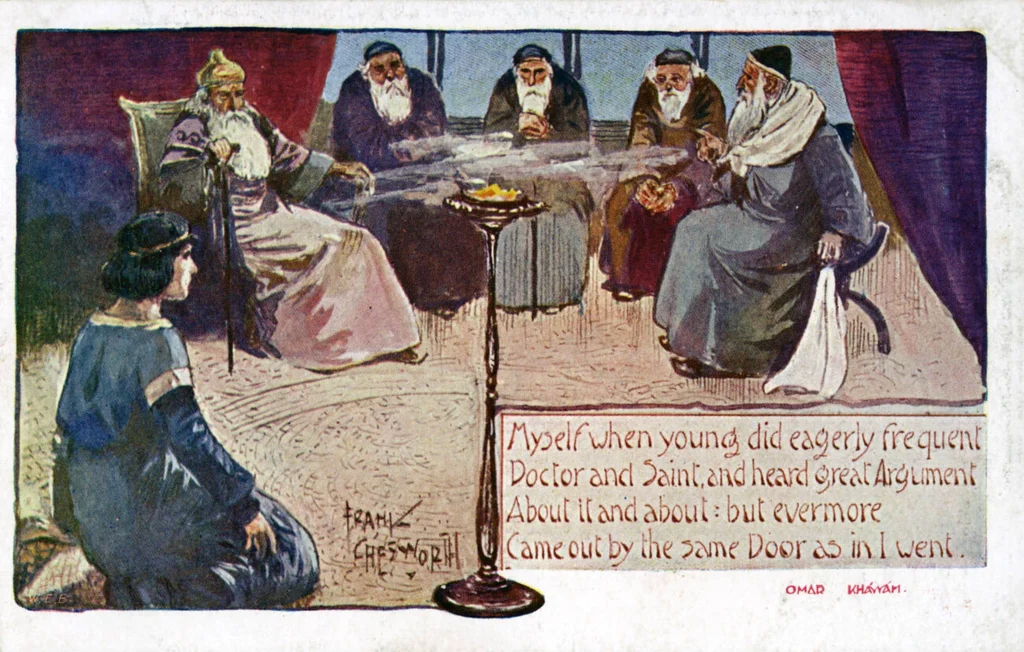
Edward FitzGerald’s 1859 English translation introduced Khayyam to a global audience, casting him as a voice of secular wisdom. “The Moving Finger writes; and, having writ, Moves on…” remains one of the most quoted lines in Persian literature abroad.

Khayyam’s poetry deviated from the mystical leanings of Rumi or the moral didacticism of Saadi. Instead, it examined life’s uncertainties with irony and acceptance. As Iranian scholar Abdulreza Modarreszadeh observed, his quatrains often “whip false ascetics,” targeting hypocrisy and urging readers to find meaning in the present moment.

Thinker, Philosopher, Musician
Beyond his scientific and poetic contributions, Khayyam wrote extensively in philosophy. His works, including Fi al-Wujud (On Existence) and Risala dar ‘ilm kulliyyat wujud (On Universal Science of Being), engaged with Aristotelian logic and Islamic metaphysics.
He followed the intellectual legacy of Avicenna and argued for the existence of a necessary being—God—through rational proof rather than mystical experience.
He also authored treatises on music theory, notably Al-qawl ‘ala ajnas al-ladhi bi’l-arba‘a, which examined the mathematical basis of Persian musical scales. This multi-disciplinary approach embodies the intellectual spirit of medieval Iran, where philosophy, science, and the arts were deeply intertwined.

Anecdotes and Personal Legacy
Khayyam’s wit and humanity are preserved in anecdotes passed down through generations. One popular tale tells of a donkey that refused to enter a school, and of Khayyam joking that the animal must carry the soul of someone who had once belonged there.
Perhaps the most famous (though apocryphal) story places him in a youthful pact with Nizam al-Mulk and Hassan Sabbah. While historically dubious, this narrative portrays Khayyam as someone who chose intellectual freedom over political power.
After the death of Sultan Malik Shah and the decline of Seljuk patronage, Khayyam retreated from public life, focusing on study and writing. He died in Nishapur in 1131. His present mausoleum, designed by the architect Hooshang Seyhoun and completed in 1963, continues to draw visitors.

Khayyam’s Presence in Contemporary Iran
In modern Iran, Khayyam symbolizes the country’s rich intellectual past and enduring cultural pride. His mausoleum sits in a peaceful garden that is one of Nishapur’s main visitor attractions, and his portrait and verses appear across Iranian books, art and crafts.
Nishapur lies west of Mashhad and is often visited on a day trip from the city, together with the tombs of Attar and Kamal-ol-Molk. To plan a visit, see our guide to the top attractions in Mashhad, compare hotels and transport in Mashhad on OrientTrips, or ask SURFIRAN about a tailor-made itinerary through its Iran cultural tours.

International Recognition and Cultural Impact
Khayyam’s reputation extends far beyond Iran. Through FitzGerald’s version, his verses reached writers such as Mark Twain and T. S. Eliot, and Martin Luther King Jr. quoted a Khayyam quatrain in his 1967 speech “Beyond Vietnam”. A lunar crater and the minor planet 3095 Omarkhayyam are named after him.
In 2009, Iran presented a statue of Khayyam to the United Nations Office in Vienna. His figure now stands alongside other Persian scholars, symbolizing Iran’s historic contributions to global knowledge. In 2016, statues of Khayyam were unveiled in several countries, including one at the University of Oklahoma.
Modern interpretations continue to thrive. From Behzad Gharibpour’s puppet opera to Amin Maalouf’s novel Samarkand, artists and scholars explore Khayyam’s legacy in diverse media.

Interpreting the Man Behind the Myths
Khayyam’s legacy has stirred debate for centuries. Some critics have labeled him a skeptic or heretic, citing verses critical of religious formalism. Others argue that these lines reflect literary stylization rather than biographical truth.
Modern scholars like Hossein Masoumi Hamedani view Khayyam as a rationalist deeply engaged with metaphysical questions, not a hedonist. Sadeq Hedayat’s seminal work Taranehaye Khayyam (1934) sifted authentic verses from later additions, attempting to clarify Khayyam’s voice amid a sea of forgeries.
These debates reflect not only the complexity of Khayyam’s character but also the intellectual dynamism of Persian literature itself, which embraces ambiguity and invites continual reinterpretation.
The New Mausoleum of Khayyam
The tomb built for Khayyam in 1934 was widely considered unworthy of his legacy. In 1954, local cultural officials petitioned the Society for National Heritage and the Ministry of Culture to construct a more fitting monument. By 1956, the request was approved, and architect Hooshang Seyhoun was commissioned to design a new mausoleum for Khayyam. Seyhoun also designed the separate tomb of the painter Kamal-ol-Molk, beside Attar’s tomb, which opened in 1963. Seyhoun and engineer Hossein Jodat recommended building the structure in the northeastern corner of the garden of Imamzadeh Mohammad Mahrooq, giving it greater prominence and independence.


In 1958, Seyhoun’s design was approved by the University of Tehran’s Faculty of Fine Arts. The structure combined traditional Iranian architecture with modern materials: a steel frame, concrete shell, granite and travertine, vibrant tiles, and thick stained glass. A formal contract was signed in early 1959, with Seyhoun overseeing the work. Seyhoun, who also designed the Tomb of Nader Shah in Mashhad, saw the new mausoleum completed in 1963.
Reflection at His Resting Place
Standing before Khayyam’s tomb, many visitors recall a line popularly attributed to him: “Be happy for this moment. This moment is your life.” Unlike grand palaces or battlefields, Khayyam’s legacy lives in ideas—numbers calculated, stars observed, and verses pondered in quiet moments.
For those exploring Iran’s cultural landscape, a visit to Nishapur offers not just sightseeing, but thoughtful engagement with one of the Islamic world’s most original thinkers.

Conclusion and Travel Inspiration
Omar Khayyam remains one of Iran’s most impactful figures—a mathematician who decoded equations, an astronomer who mapped time, and a poet who dared to question the cosmos. His work continues to shape how we think about science, philosophy, and art.
Films and Documentaries About Omar Khayyam
Omar Khayyam, the legendary Persian poet, mathematician, and astronomer, has inspired filmmakers around the world. His philosophical quatrains from the Rubáiyát have echoed through time—and cinema brings them to life.
Explore our list of the top films about Omar Khayyam. Watch his story unfold on screen and experience the rich cultural history of Iran.
1. The Keeper: The Legend of Omar Khayyam (2005)
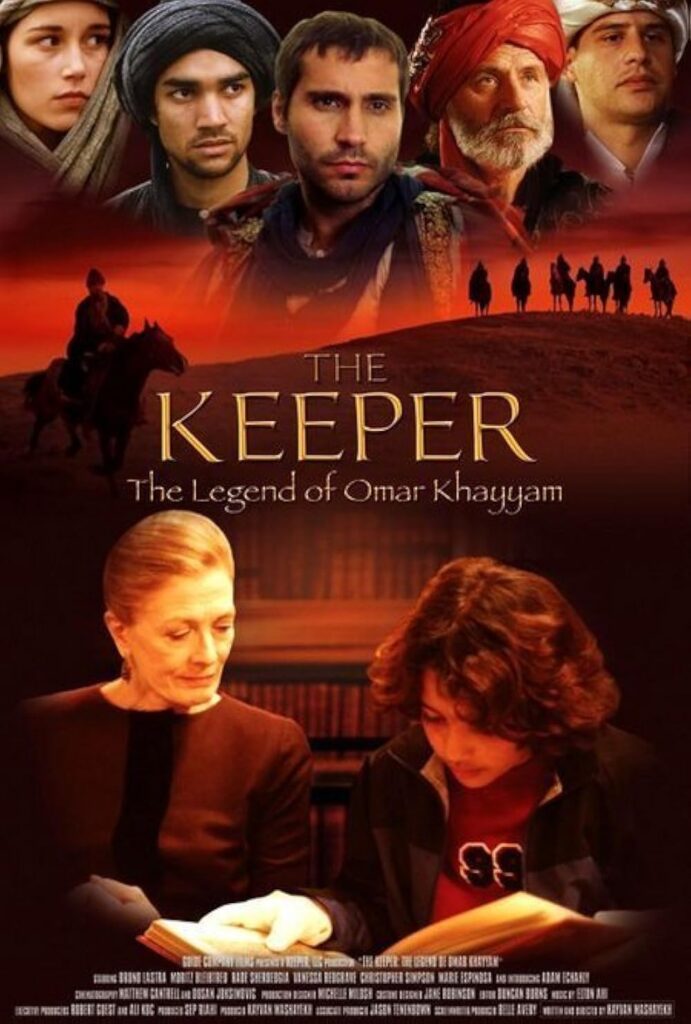
Director: Kayvan Mashayekh
Genre: Drama / Adventure
Language: English
A modern teenager learns he is related to Omar Khayyam. Through flashbacks, we follow Khayyam’s life and his struggles with love, faith, and reason. A story about legacy and destiny.
2. Omar Al-Khayyam (TV series, 2002)
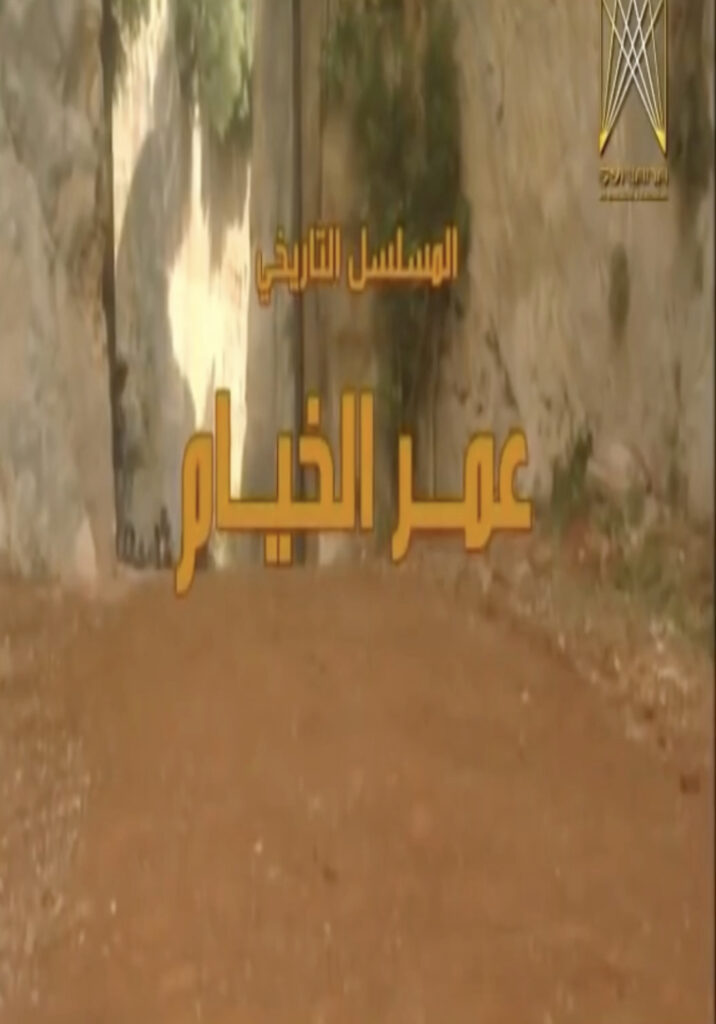
Director: Chawki Mejri (executive director: Bassam Ktaifan)
Genre: Historical drama
Country: Syria
Language: Arabic
3. Omar Khayyam (1957)
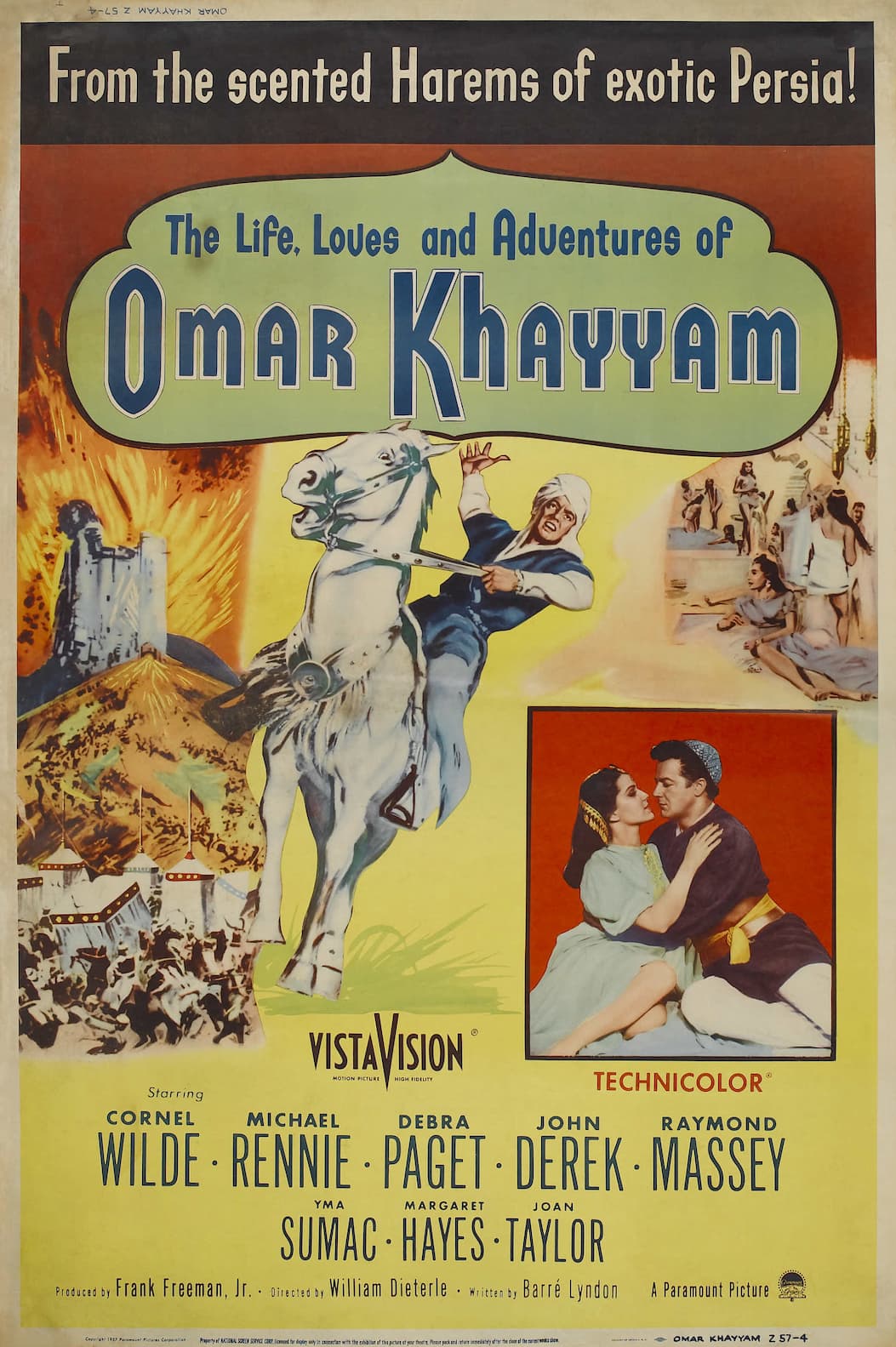
Director: William Dieterle
Studio: Paramount Pictures
Starring: Cornel Wilde, Michael Rennie, Debra Paget
Genre: Historical adventure
Language: English
A Hollywood costume adventure that places a young Khayyam at the Seljuk court, with Michael Rennie as Hassan-i Sabbah. It is entertainment rather than history and takes wide liberties with the facts.
4. The Genius of Omar Khayyam (BBC Four)
Broadcaster: BBC Four
Genre: Documentary
Language: English
Watch on YouTube: Click here
BBC Four’s The Genius of Omar Khayyam explores the Persian poet’s brilliance as a mathematician, astronomer, and philosopher, tracing his enduring influence on science, poetry, and modern Iranian identity.
Sources
Biographical and Scholarly Sources
1. Britannica. (2025). Omar Khayyam. In Encyclopedia Britannica.
2. Stanford Encyclopedia of Philosophy. (2011). Umar Khayyam.
3. O’Connor, J. J., & Robertson, E. F. (n.d.). Omar Khayyam. In MacTutor History of Mathematics Archive. University of St Andrews.
English Translations of the Rubáiyát
4. FitzGerald, E. (1859; 1899 Macmillan edition). The Rubáiyát of Omar Khayyám. Read on archive.org
5. Bowen, J. C. E., & Arberry, A. J. (1961). A New Selection from the Rubaiyat of Omar Khayyam. London: Unicorn Press.
6. Arberry, A. J. (1952). Omar Khayyam: A New Version Based upon Recent Discoveries. London: John Murray.
Additional Scholarly Perspectives
7. Avery, P., & Heath-Stubbs, J. (1979). The Rubaiyat of Omar Khayyam. London: Allen & Unwin.
8. Heron-Allen, E. (1899). Edward FitzGerald’s Rubáiyát of Omar Khayyám with Their Original Persian Sources. London: Bernard Quaritch.
9. O’Malley, A. (n.d.). Khayyam, Omar: iv. English Translations of the Rubaiyat.
FAQs
Who was Omar Khayyam and why is he famous?
Omar Khayyam, a Persian polymath, is renowned for his Rubaiyat poetry, Jalali calendar, and algebraic solutions, shaping Persian culture and global science.
What is the Rubaiyat of Omar Khayyam?
The Rubaiyat is a collection of Khayyam’s quatrains, exploring life, love, and mortality, popularized by Edward Fitzgerald’s English translation.
How did Omar Khayyam contribute to mathematics?
Khayyam classified cubic equations and solved them geometrically using intersecting conic sections. He also analysed Euclid’s parallel postulate.
What is the Jalali calendar created by Omar Khayyam?
The Jalali calendar is the solar calendar introduced in 1079 by a team of astronomers that included Khayyam. Today’s official Iranian calendar is based on it.
Where can I visit Omar Khayyam’s tomb in Iran?
Khayyam’s tomb stands in a garden in southeastern Nishapur, in Razavi Khorasan province. Many visitors combine it with the tombs of Attar and Kamal-ol-Molk on a day trip from Mashhad.