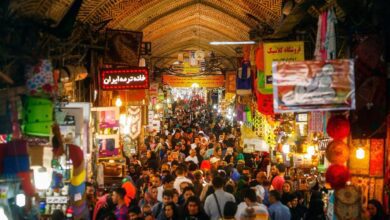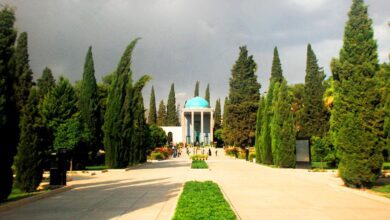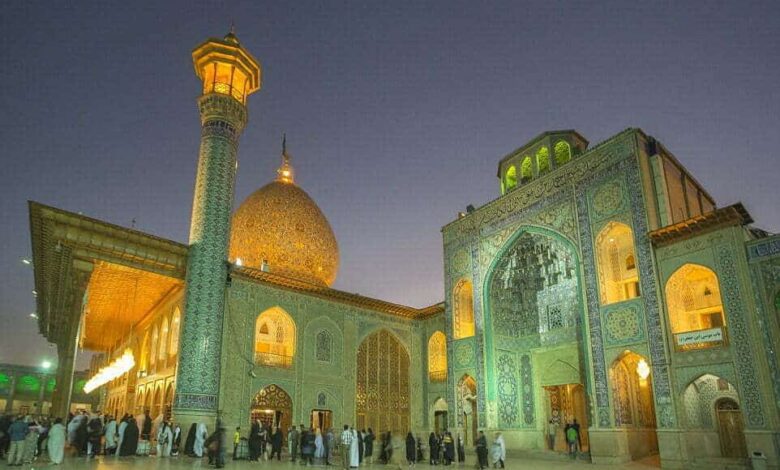
Shah-e Cheragh is one of Shiraz’s most important active pilgrimage sites. The shrine complex is associated with Ahmad ibn Musa, a son of Musa al-Kazim and brother of Ali al-Rida. For visitors, it is both a religious space and a major example of Iranian shrine architecture, known especially for its mirrorwork, tilework, courtyards and illuminated interiors.
Contents
History and religious significance
Traditions surrounding the discovery and development of the tomb have accumulated over centuries, so some details vary between accounts. The site became an established pilgrimage centre and was expanded and restored under successive rulers and patrons. Rather than treating later legends as verified historical fact, it is best understood as a living shrine whose importance has grown through continuous religious use and architectural development.
Architecture and mirrorwork
The complex combines courtyards, prayer and pilgrimage spaces, richly decorated surfaces and extensive mirror mosaics. Small mirrored pieces multiply light across the interior, creating the luminous effect for which the shrine is widely known. Decorative tilework, calligraphy and chandeliers add to the visual character of the complex.
Visiting Shah-e Cheragh
Shah-e Cheragh is an active religious complex rather than a conventional museum. Access arrangements, opening times, security procedures and photography rules can change. Visitors should dress respectfully, follow instructions at the entrance and avoid disrupting worship. Non-Muslim visitors may be asked to use a designated entrance or follow local visitor procedures.
The shrine is in central Shiraz and can be combined with nearby historic areas. For wider planning, see the Shiraz travel guide.
Before you go
Check current access conditions locally before visiting, especially around religious holidays or major ceremonies. Keep the visit flexible and allow extra time for security screening. The complex is most rewarding when approached as a functioning place of worship as well as an architectural landmark.