Shushtar Historical Hydraulic System: A Masterpiece of Engineering
An Engineering Marvel

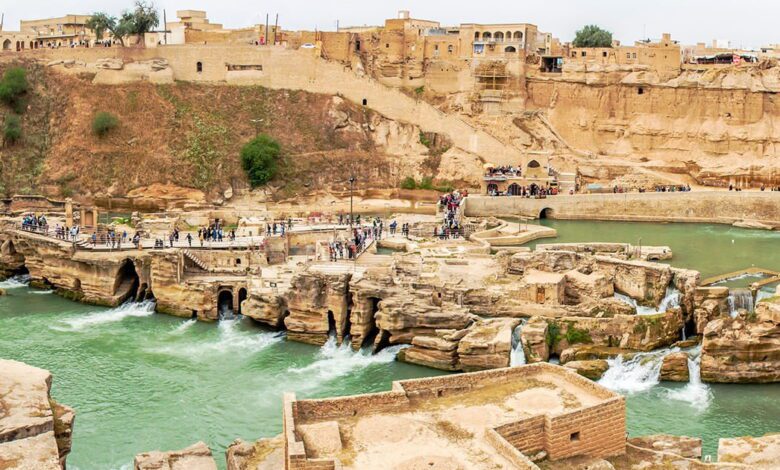
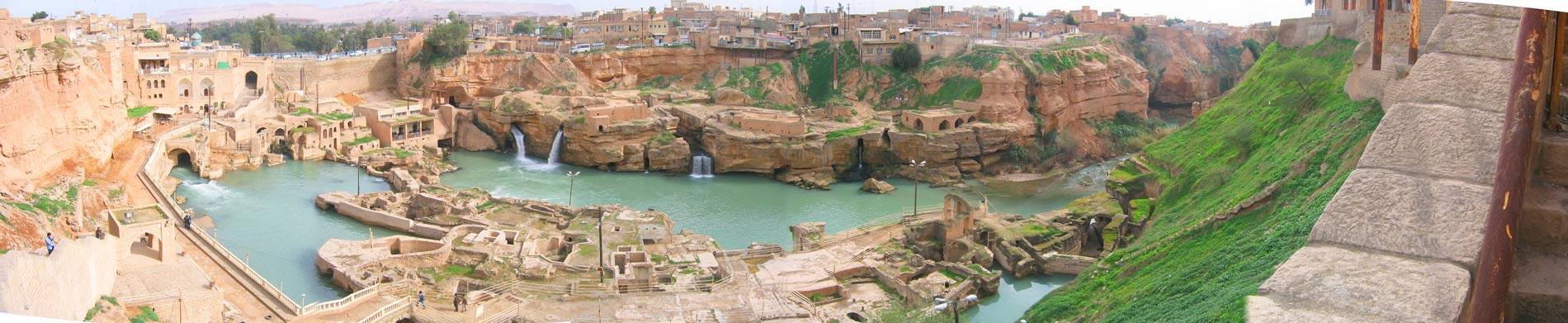
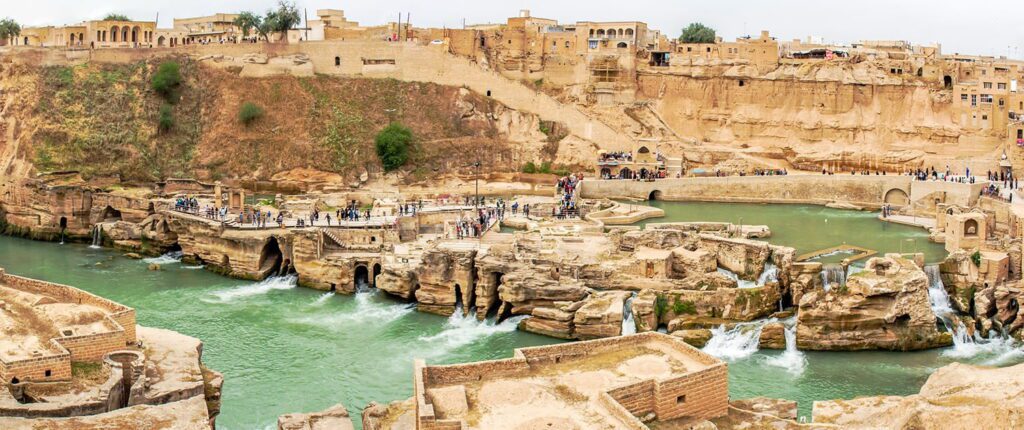
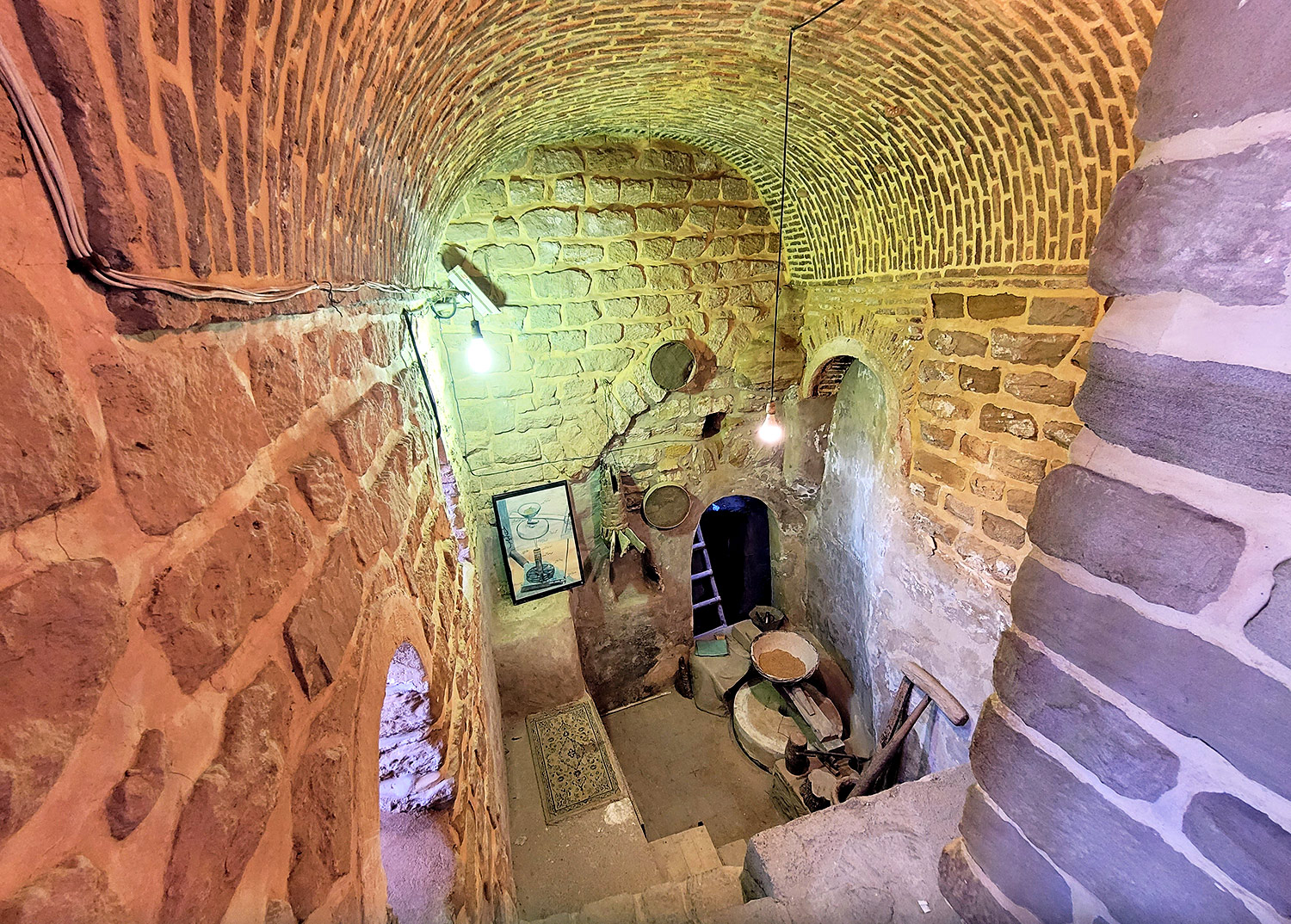
In Shushtar, Khuzestan, the Karun River feeds a network of canals, weirs and watermills. At the Gargar mills, water passes through rock-cut tunnels and drops into a basin below the town. UNESCO inscribed the system in 2009.
Start with the mills and cascades to see what the diverted water did at street level. Salasel Castle and the weirs explain how the town controlled the supply farther upstream.
Contents
What is Shushtar Historical Hydraulic System?
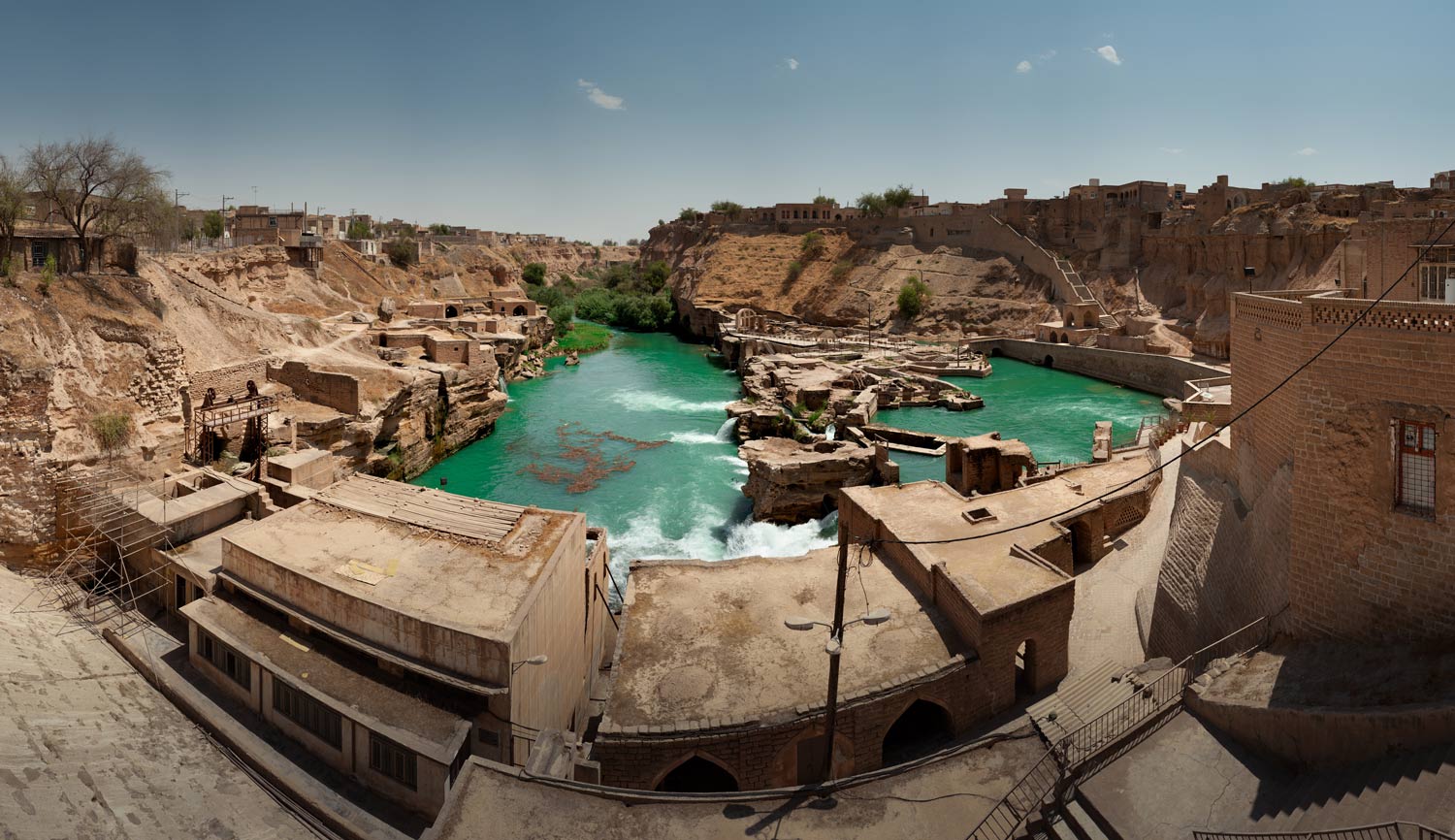
The UNESCO inscription dates the system in its present form to the third century CE, probably built on foundations from the fifth century BCE.
Salasel Castle served as an operations centre. The wider system also included bridges, dams and canals for water supply, irrigation and transport.
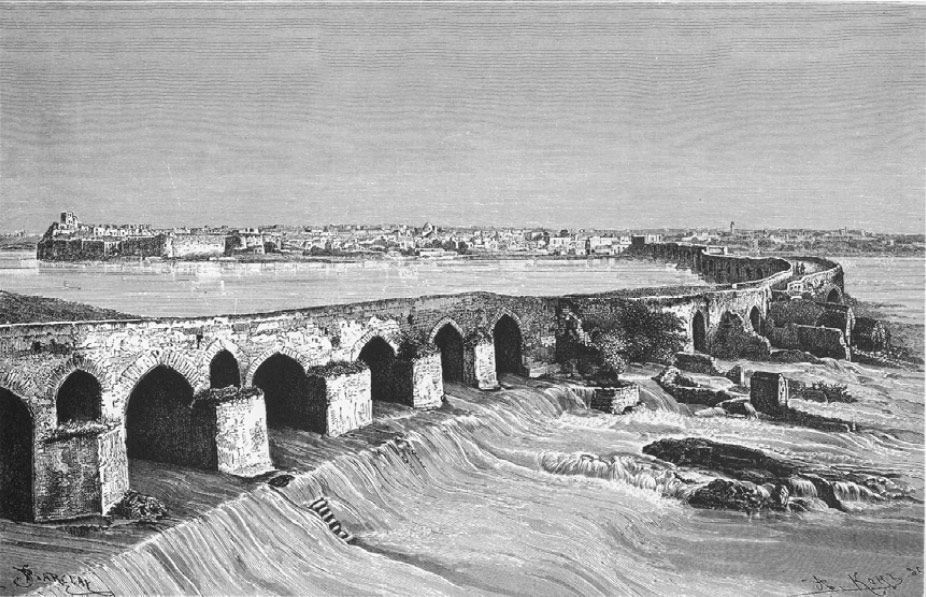
The Mizan weir controls the intake into the Gargar Canal. Downstream, tunnels channel water past the mills before it falls into the basin. The main river branch continues as the Shoteit.
What was the Complex Made for?
The works made a single river serve several purposes. Weirs regulated the water level, while canals and tunnels carried water to the places where it was needed.
Best Hotels in Iran
Water drove mills that ground grain into flour and supplied fields and orchards on the Mianab plain. UNESCO describes an irrigated landscape of about 40,000 hectares.
Eventually, Shushtar Historical Hydraulic System was also a means of transportation, communication and trade.
A UNESCO’s Masterpiece of Creative Genius
UNESCO inscribed the system for the way its structures work together. Follow the water from the river to the intake, then to the tunnels and mills. Farther downstream, the diverted water supported irrigation on the Mianab plain.
The site is exceptional both because of the diversity of its civil engineering structures and because of the diversity of their use. The Shushtar Historical Hydraulic System would indeed provide urban water supply, irrigate lands, power mills, among other functions.
Band-e Mizan divides and regulates the flow of the Karun at the Gargar intake. The system has seen repairs and alterations over time, and the Gargar remains in use.
Iran Tourist Card

From the Achaemenids to the Sassanids
The Shadorvan bridge-weir raised and stabilised the river level, helping divert water into the canals. UNESCO notes Roman influence on the system’s engineering. The Lashkar bridge-weir belongs to the wider network of crossings and water-control structures.
Salasel Castle provided a point from which the waterworks could be managed. Its position helps explain why the fortified site belongs to the hydraulic ensemble alongside the weirs and canals.
The octagonal Kolah Farangi tower overlooks Band-e Mizan. UNESCO describes it as a place for measuring water levels.
When and How to Visit Shushtar Historical Hydraulic System?
For a first visit, start with the watermills and cascades in Shushtar. Use the weirs and Salasel Castle to trace the flow of water through the town.
Shushtar lies north of Ahvaz in southwestern Iran. Ahvaz can serve as a base for a road trip to Shushtar, with separate time for the mills, castle and weirs.

Cooler months are more comfortable for walking between the outdoor structures. Carry water and allow time for stretches with little shade.
You can also combine your visit with two other interesting historical sites nearby. One is Choqa Zanbil, an ancient pyramidal structure built by the Elamite in 1250 BC. And the other one is the historical city of Susa, once one of the most important in the region, which holds the Tomb of Daniel.
Read More