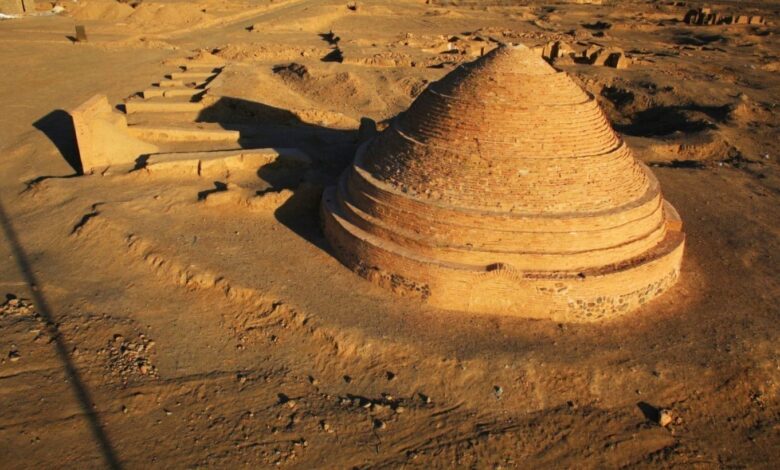
An ab anbar is a covered water cistern, usually built below ground. These reservoirs helped Iranian households and communities store water for dry periods. They are especially revealing features of desert architecture: much of the structure lies out of sight, beneath its entrance and roof.
Contents
How an Ab Anbar Stored Water
An ab anbar stores water; a qanat carries it. The two could work together, with channels feeding a cistern from a qanat. Other reservoirs collected rainfall or seasonal runoff, depending on their location.
Storage mattered when supplies varied through the year. Public cisterns served neighbourhoods and travellers along caravan routes, while private ones supplied individual homes. Their shape and capacity reflected local conditions rather than a single standard plan.
The Reservoir, Roof and Water Access
Builders lined storage chambers with masonry and a waterproof finish. Sarooj, a traditional mixture incorporating lime and clay, helped seal the interior. Keeping water in the tank was as important as bringing it there.
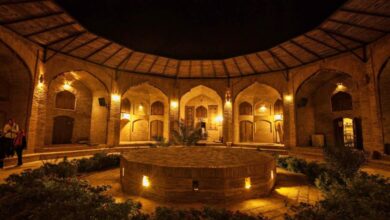
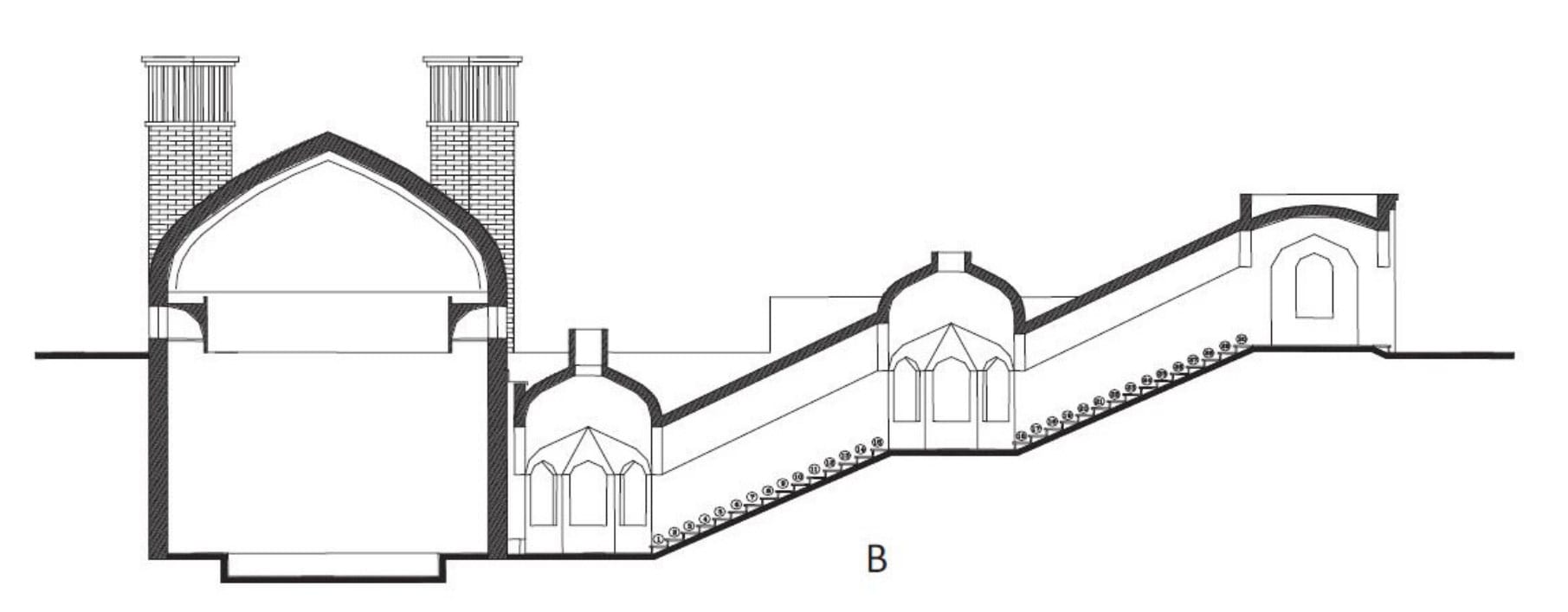
Many public cisterns had domed roofs. Some used a separate stairway descending to taps near the bottom of the reservoir, allowing people to draw water without entering the storage chamber. Other designs provided direct access to the water.
How the Water Stayed Cool
The surrounding ground and thick walls reduced heat gain. Ventilation towers, known as windcatchers or badgirs, helped circulate air in some cisterns. Not every ab anbar had windcatchers, and their designs varied.
The Encyclopaedia Iranica account of cistern construction explains these differences in water supply, ventilation and access.
Reading the Architecture on a Visit
When looking at a surviving cistern, follow the structure from the entrance to the roofline. Where did the water enter? How did people reach it? Does the building have ventilation towers? These questions help connect its visible features with the reservoir below.
In Yazd, water cisterns belong to a wider historic landscape of qanats, courtyards and earthen buildings, described in UNESCO’s account of the historic city. For broader context, explore our guide to Persian qanats and UNESCO’s Persian Qanat listing.
If cisterns are a priority for your itinerary, ask which structures can currently be visited and whether their stairways are accessible. A tailor-made cultural journey can connect these buildings with the water systems and neighbourhoods around them.