Visitor status: The Treasury has had periods of closure and restricted access. Because opening arrangements can change, confirm the latest status with the Central Bank of Iran before travelling to the museum. Do not rely on older opening hours or ticket prices.
Tehran’s Treasury of National Jewels, administered by the Central Bank of Iran, preserves royal regalia, gemstones and ceremonial objects associated with several periods of Iranian history. The collection includes crowns, thrones, jewellery and gem-set objects that once formed part of the royal treasury.
Contents
History of the National Jewels
The collection reflects centuries of royal collecting, diplomacy, warfare and craftsmanship. Safavid rulers assembled gemstones and luxury objects from Iran and beyond. After the fall of the Safavid state, parts of the treasury were dispersed. Nader Shah’s eighteenth-century campaigns in India later brought major gemstones and objects into the Iranian royal treasury.
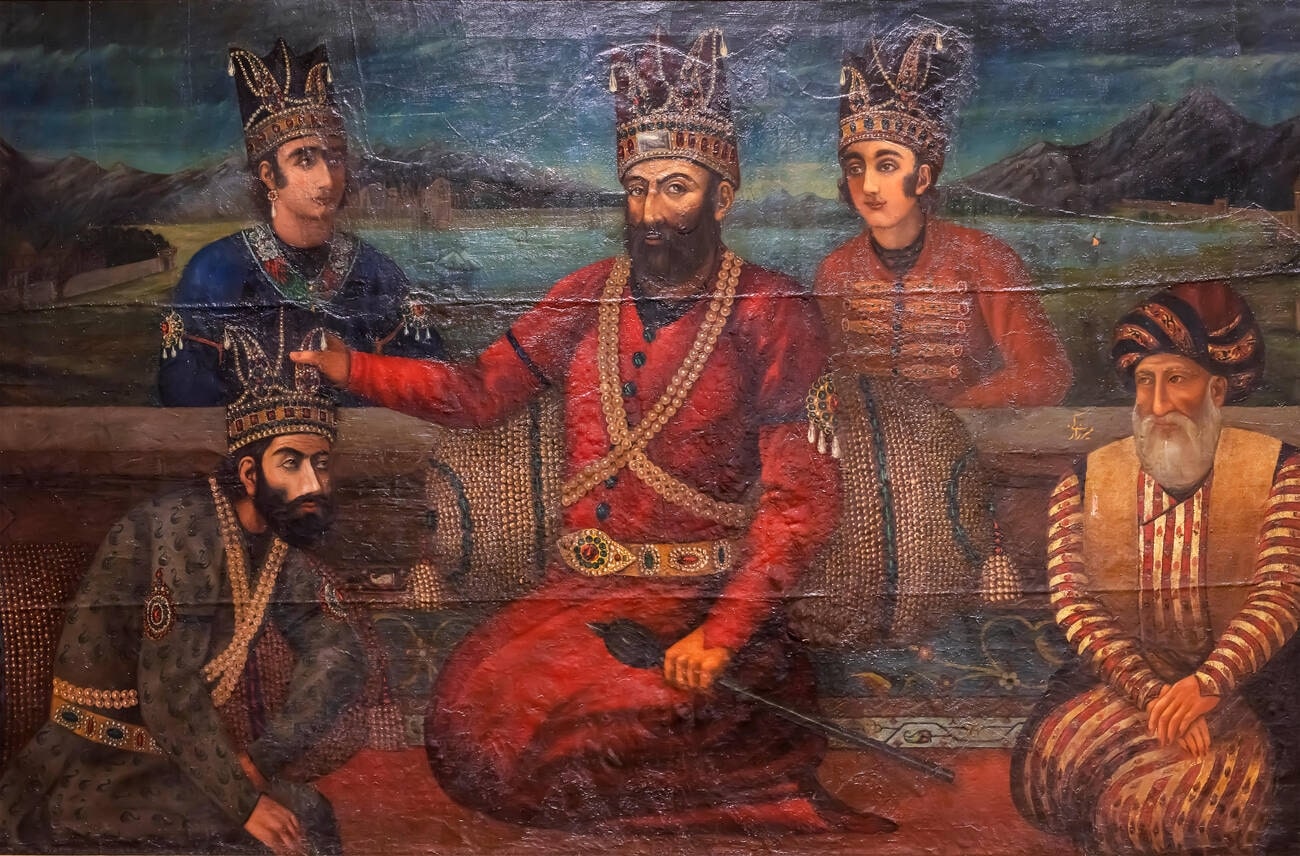
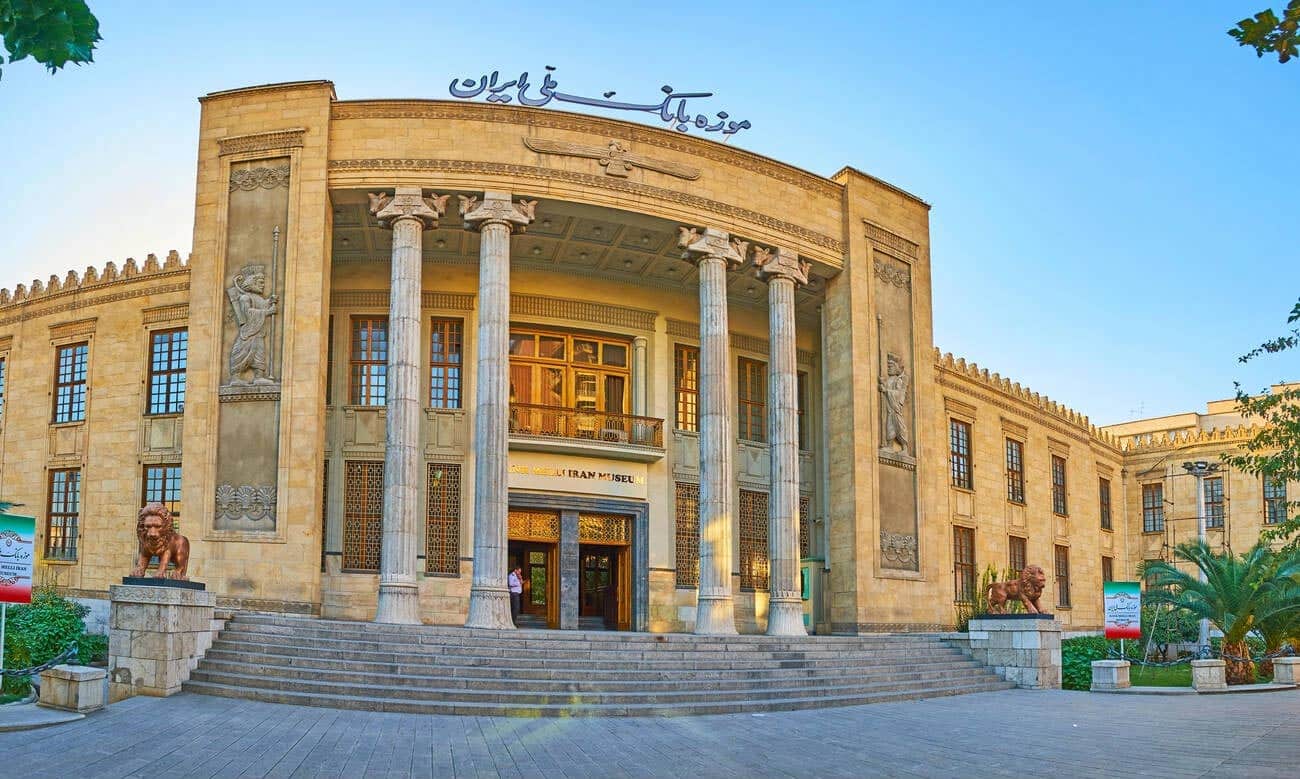
Qajar and Pahlavi rulers continued to use and expand the collection. Visit Iran records the transfer of most of the jewels to Bank Melli, the National Bank of Iran, in 1937 as collateral for banknotes and government debt. Custody passed to the Central Bank after its establishment in 1960.
Highlights of the Collection
Darya-ye Noor Diamond
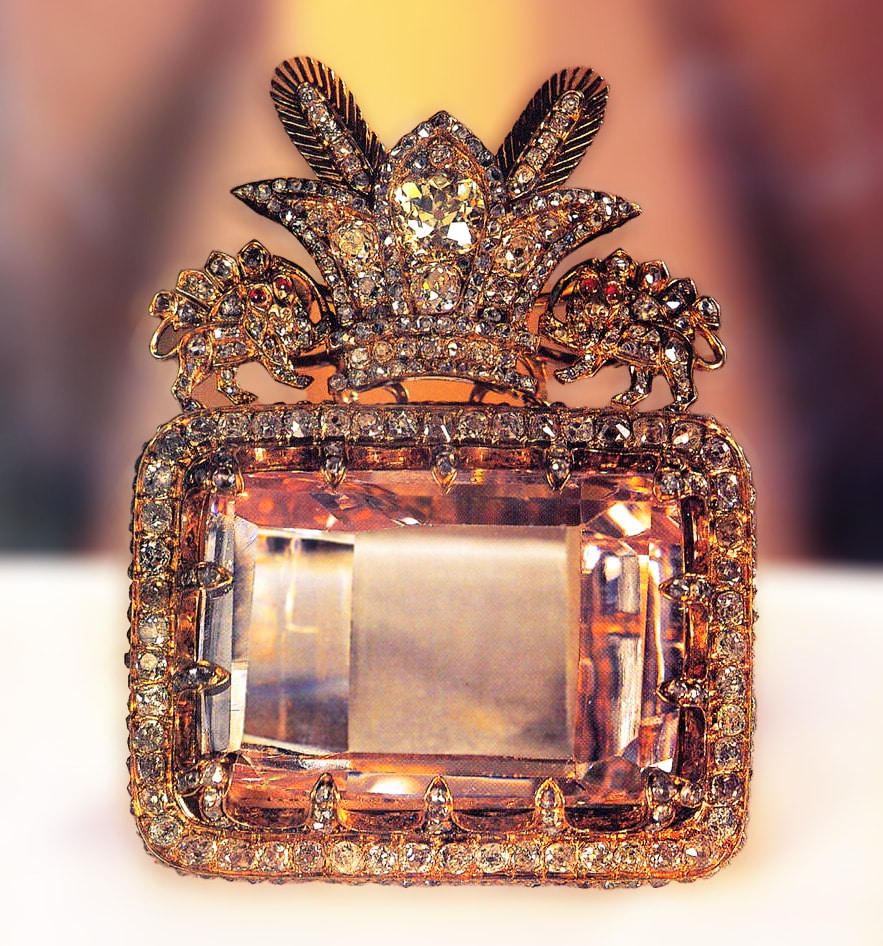
The pale-pink Darya-ye Noor, or “Sea of Light,” is a rectangular, step-cut diamond from the Golconda fields of southern India. Yahya Zoka’s account in Encyclopaedia Iranica traces its arrival in Iran to Nader Shah’s Indian campaign in 1739. It is a different stone from the Koh-i Noor in the British crown jewels.
Look for its broad, flat face and the Qajar frame with lions, suns and a crown motif. One facet bears Fath-Ali Shah’s name and the date 1250 AH. Published weight estimates vary; Zoka reports 182–186 carats, so a single exact weight should not be treated as certain.
Samarian Spinel
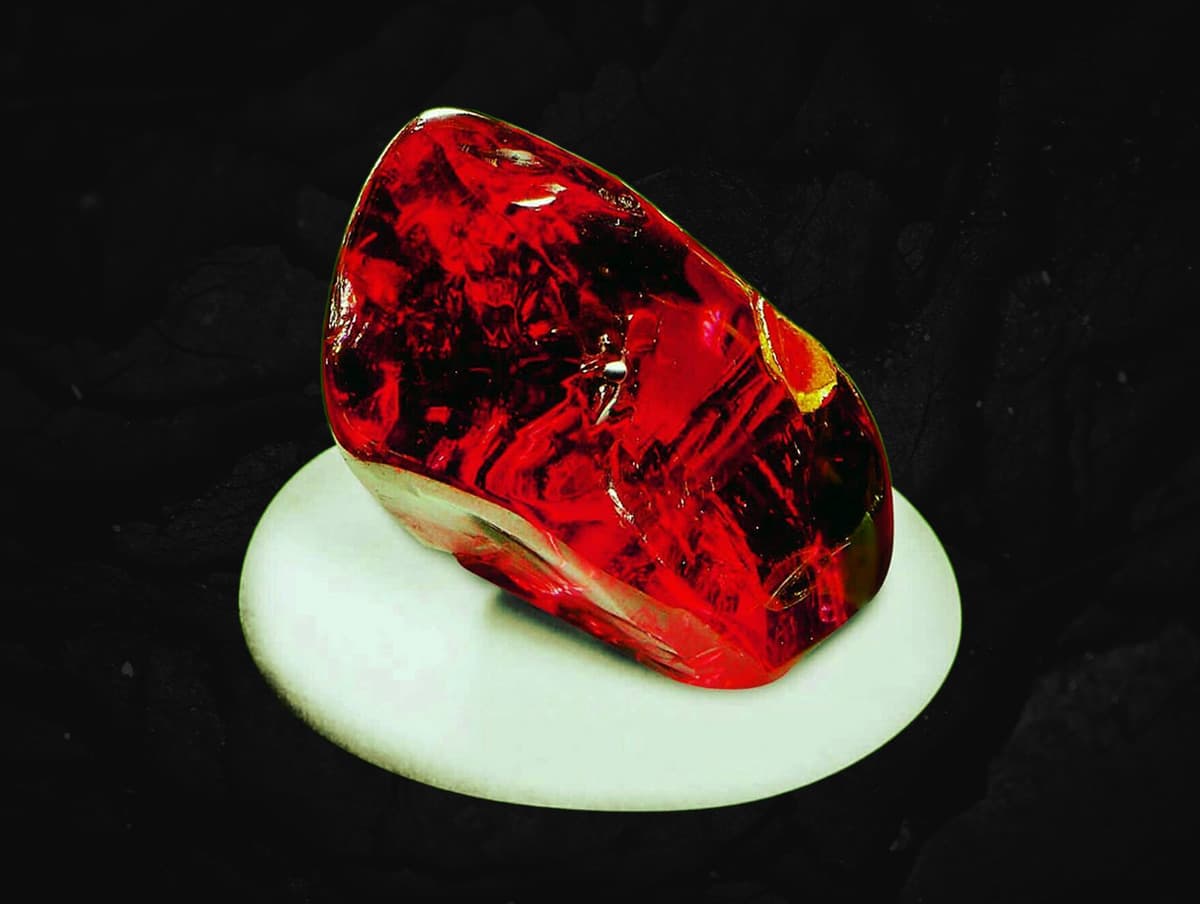
The Samarian Spinel is a deep-red, drilled gemstone of about 500 carats. Do not confuse it with the collection’s smaller spinel inscribed with the Mughal emperor Jahangir’s name: they are separate stones.
Sun Throne
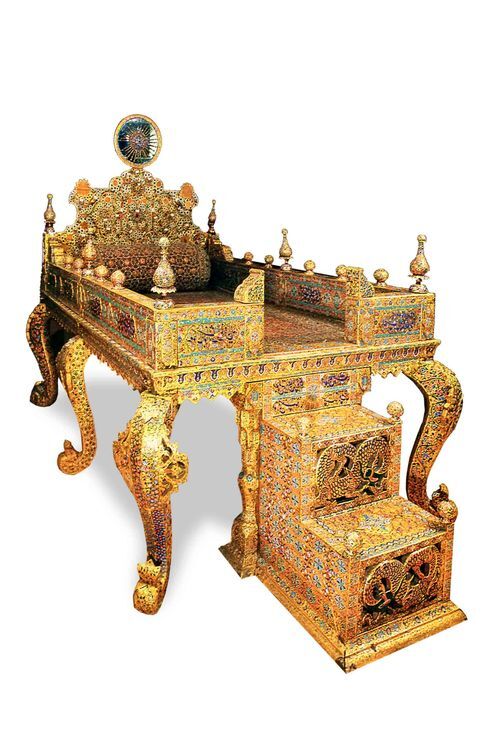
The Qajar-era Sun Throne was made for Fath-Ali Shah and takes its name from the radiant sun motif on its back. Assef Ashraf’s study of early Qajar gift exchange explains that its later name, Peacock Throne, honours the shah’s wife Tavus Khanum. This is a different object from the Mughal Peacock Throne associated with Shah Jahan and taken from India by Nader Shah.
Noor-ul-Ain Tiara
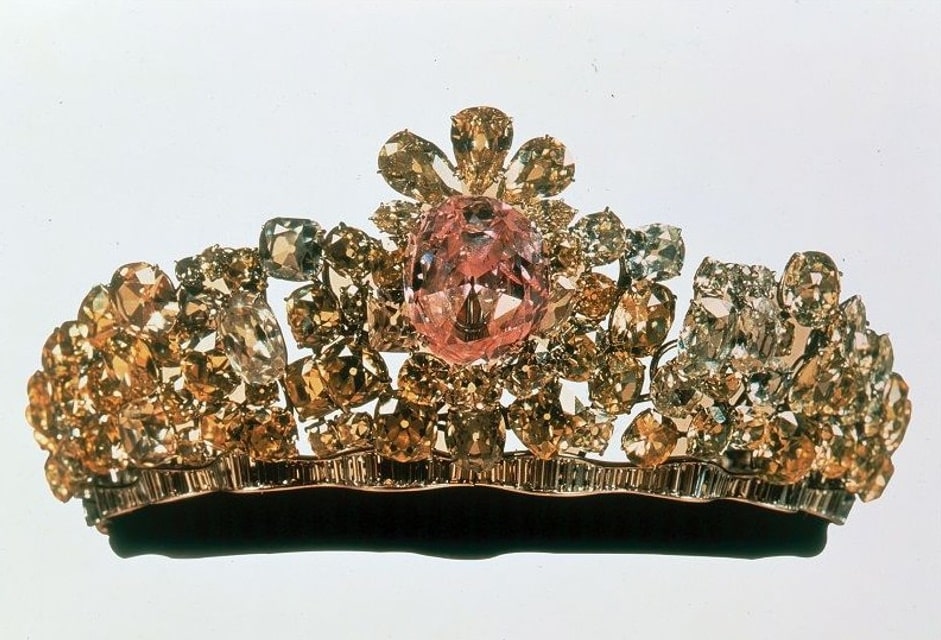
The Noor-ul-Ain pink diamond sits above an undulating band of diamond baguettes in a tiara by Harry Winston. The setting distinguishes it from the broad, flat Darya-ye Noor and from Farah Pahlavi’s coronation crown.
Kiani Crown
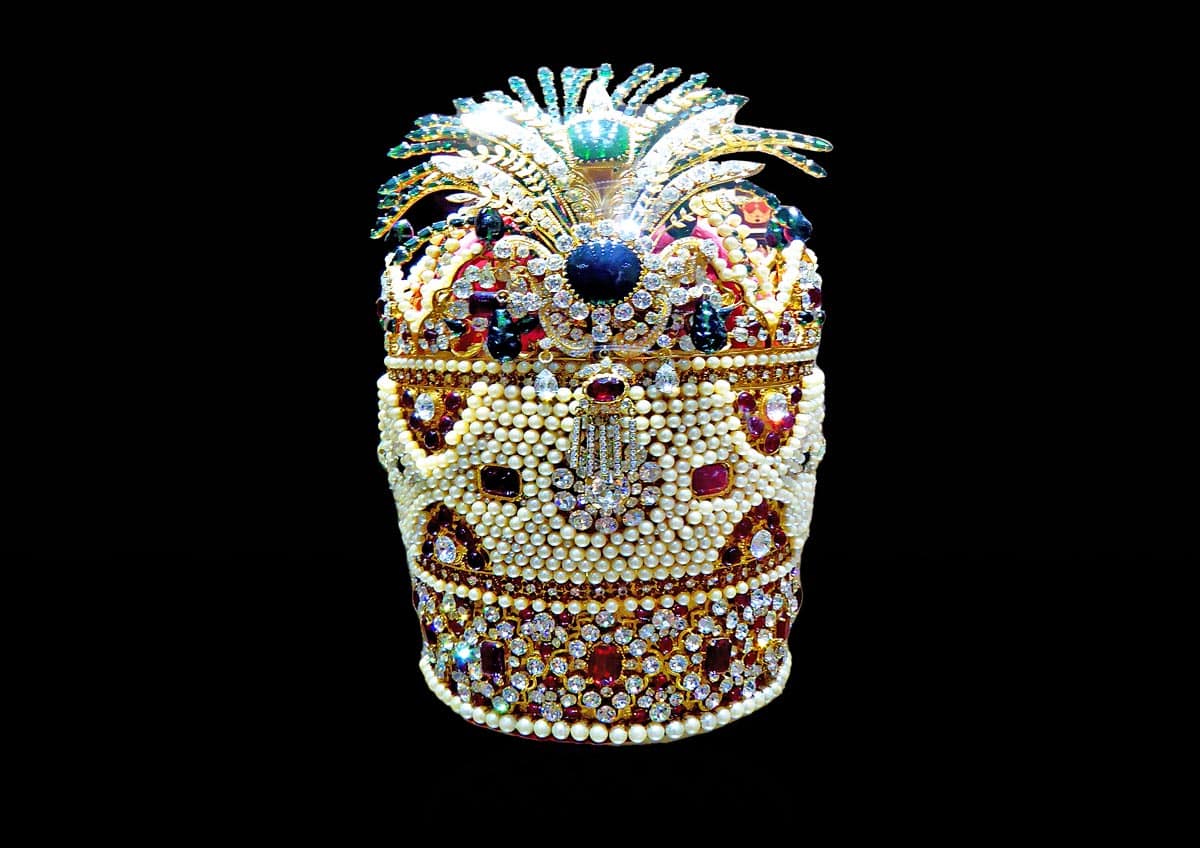
Fath-Ali Shah commissioned the Kiani Crown, with eight peaks above a red velvet cap. Yahya Zoka’s account identifies it as the crown subsequently worn by the Qajar kings. Its appearance changed over time: some gemstones were rearranged under Naser al-Din Shah, and the original plume ornament was replaced.
Pahlavi Crown
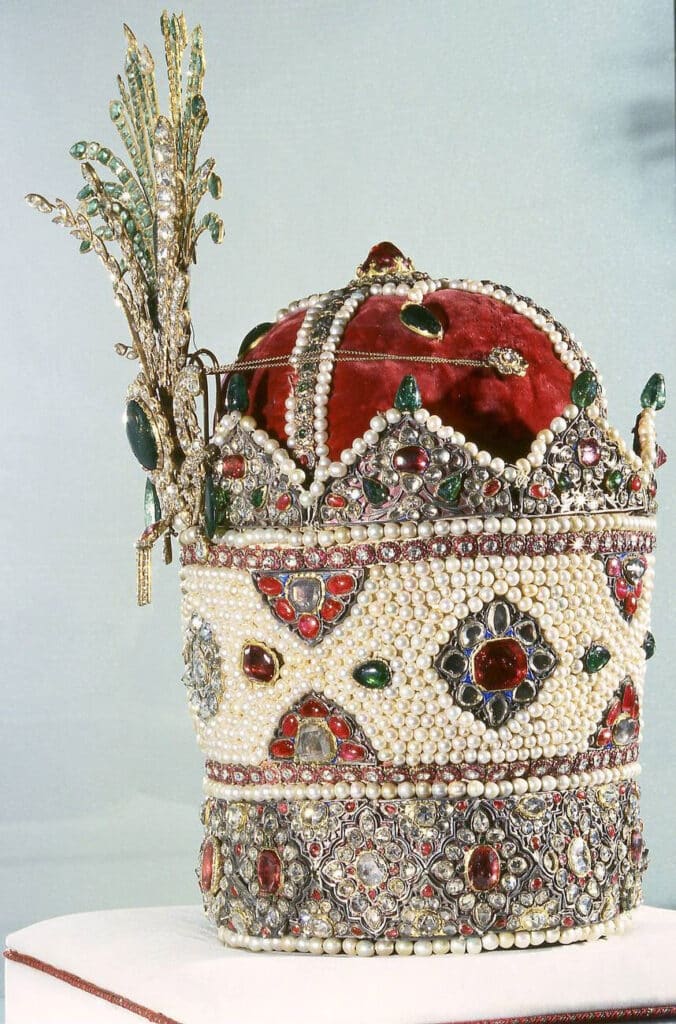
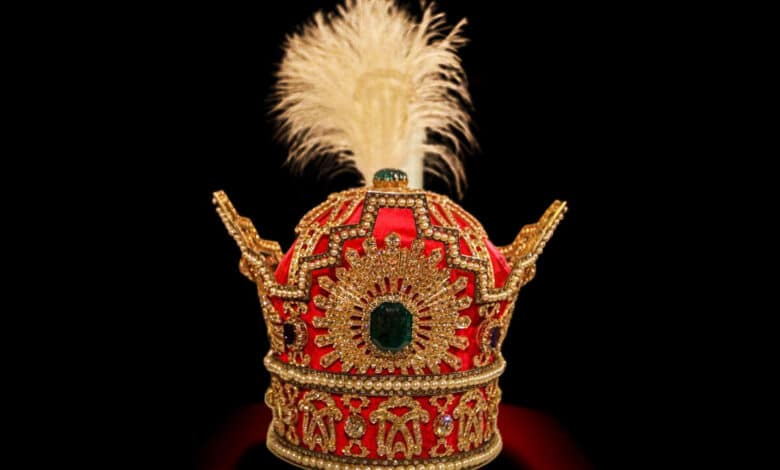
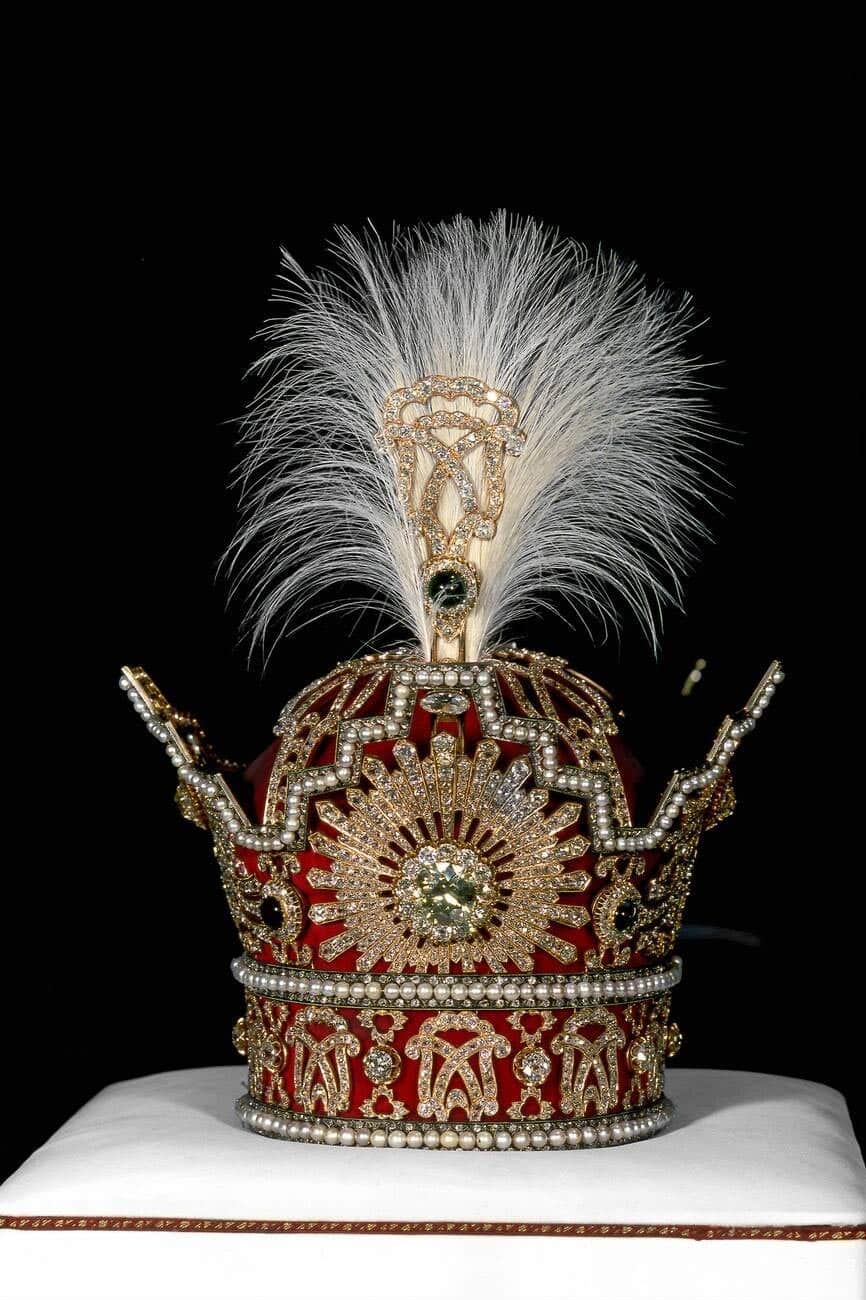
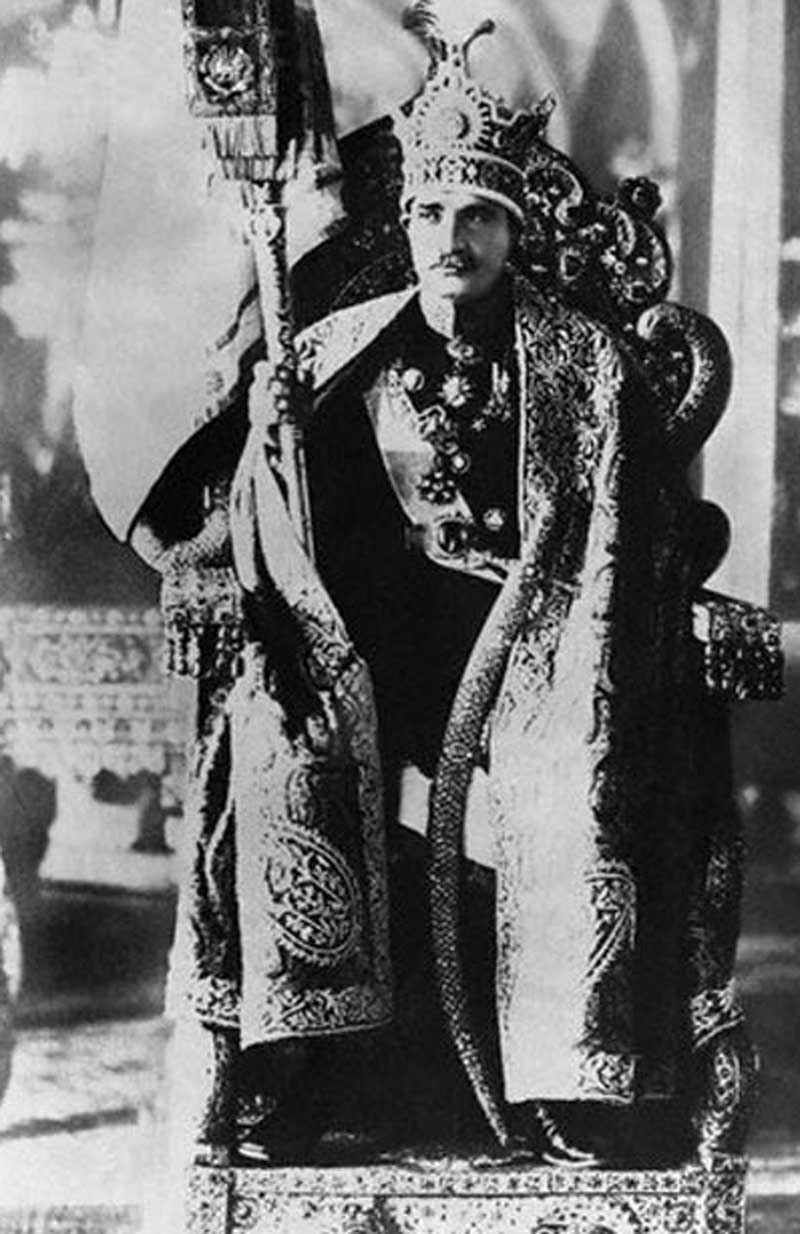
Reza Shah commissioned the Pahlavi Crown in 1925 from Iranian craftsmen supervised by Seraj al-Din Javaheri. It was used at his 1926 coronation, giving the new dynasty its own regalia in place of the Qajar Kiani Crown. Mohammad Reza Pahlavi also wore it at his 1967 coronation.
Empress Farah’s Crown
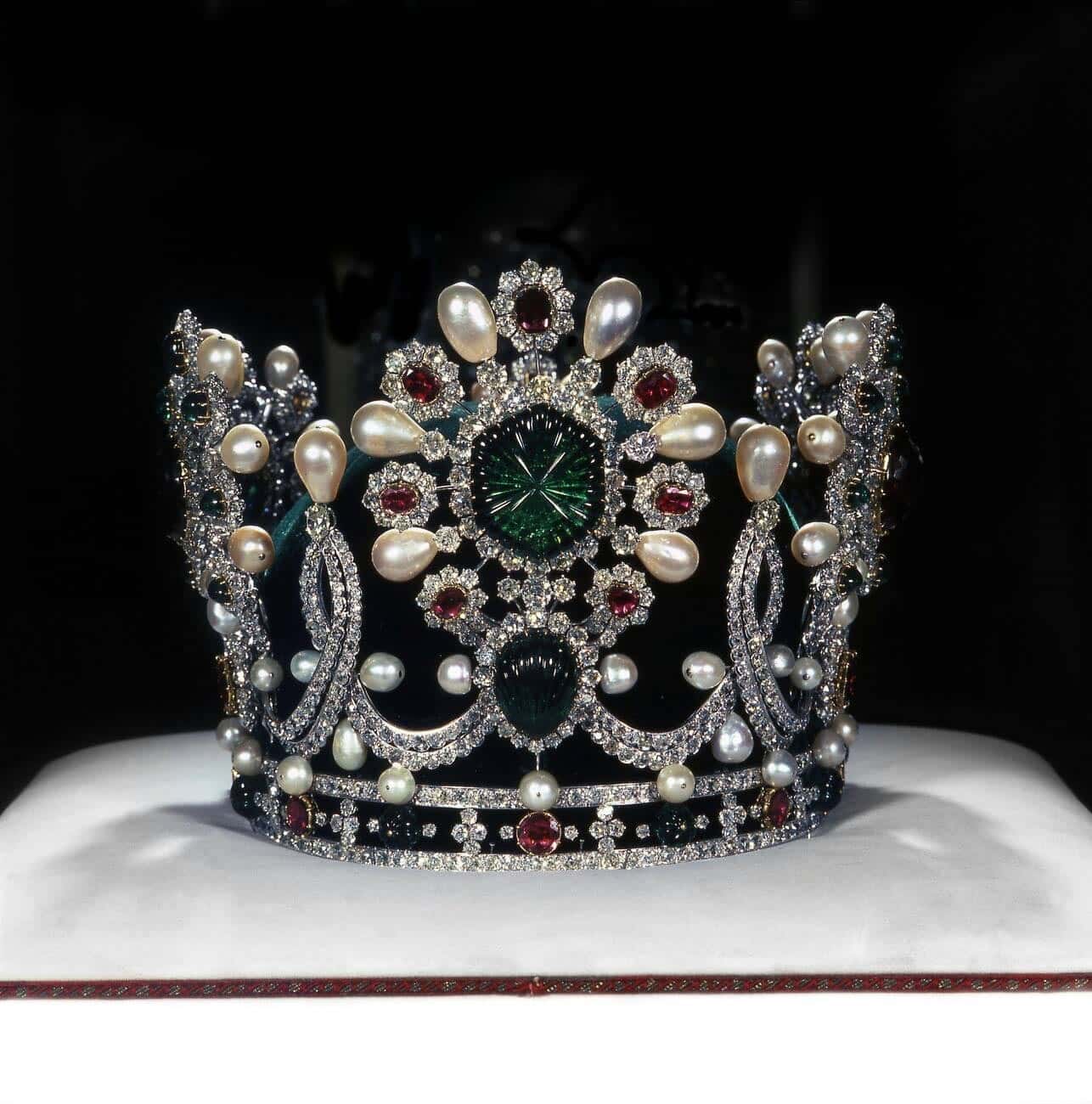
Farah Pahlavi’s coronation crown was made by Van Cleef & Arpels for the 1967 ceremony. The jeweller’s own account describes Pierre Arpels selecting stones from the national treasury and establishing a temporary workshop in the Treasure Chamber in Tehran.
Van Cleef & Arpels records 36 emeralds, 36 spinels and rubies, 105 pearls and 1,469 diamonds in the crown. It formed part of a coronation ensemble that also included a necklace and earrings. This is a separate commission from the Harry Winston tiara shown above.
Golden Belt
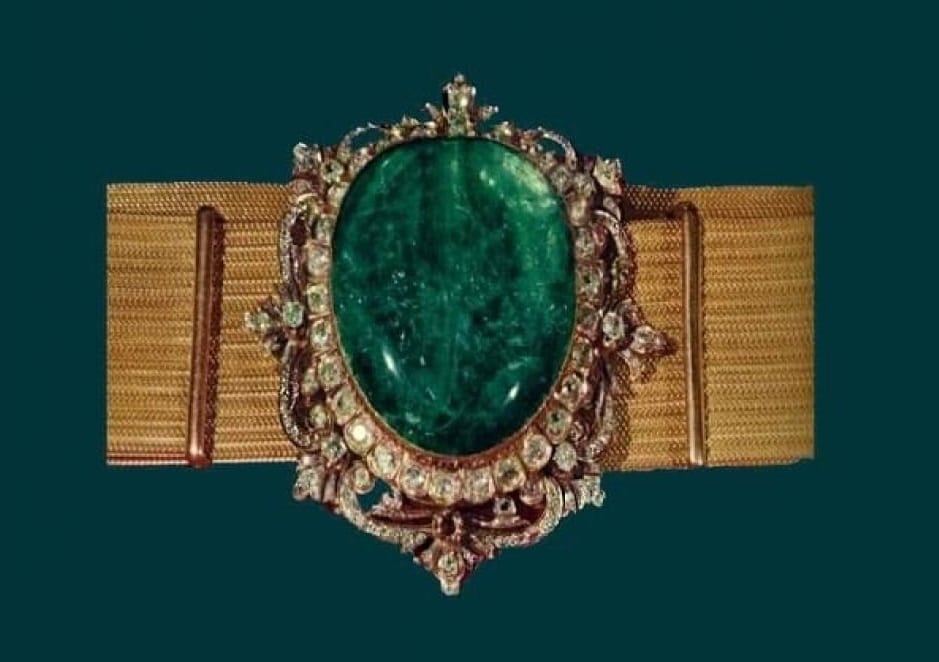
The Golden Belt, associated with Naser al-Din Shah Qajar, is distinguished by a large emerald set into its buckle and surrounded by diamonds.
Jeweled Globe
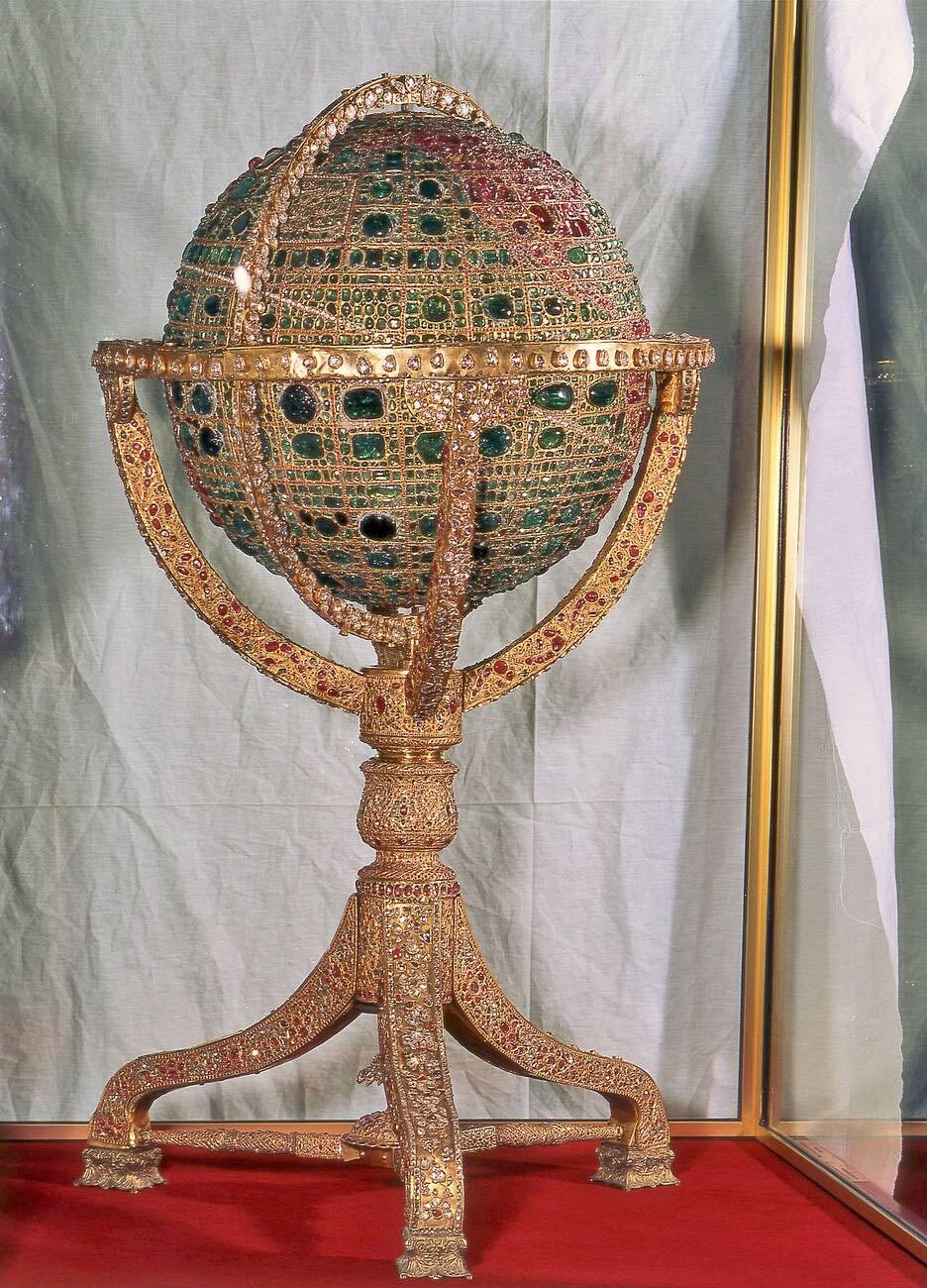
The nineteenth-century Jeweled Globe was commissioned by Naser al-Din Shah. Approximately 51,000 gemstones cover the globe and its elaborate support. Look at the whole object as a piece of court craftsmanship as well as a jewelled map.
Naderi Throne
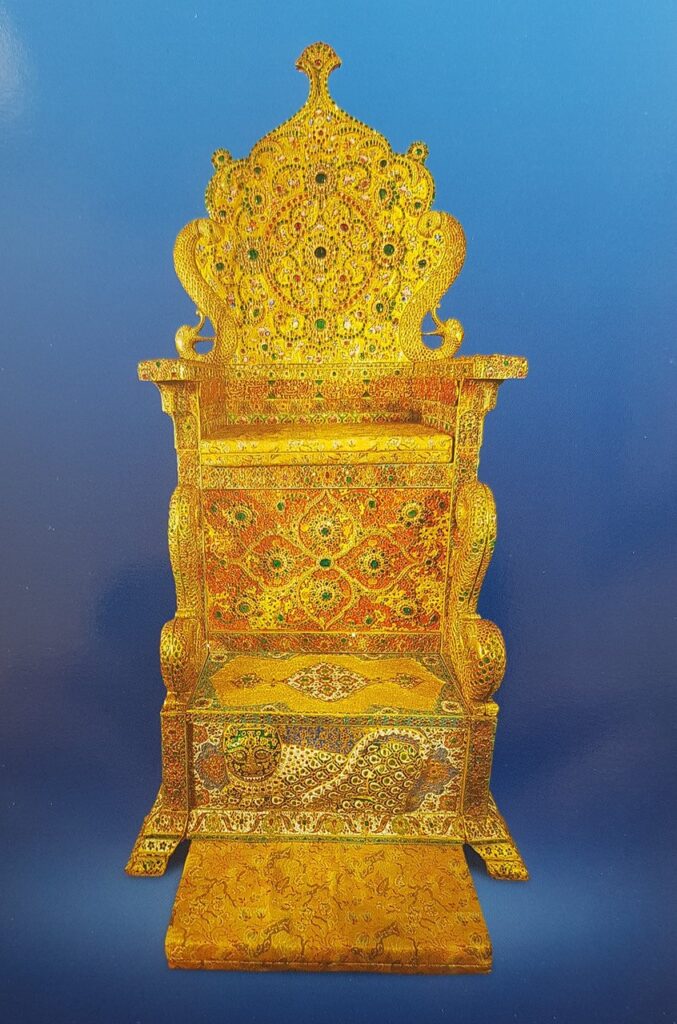
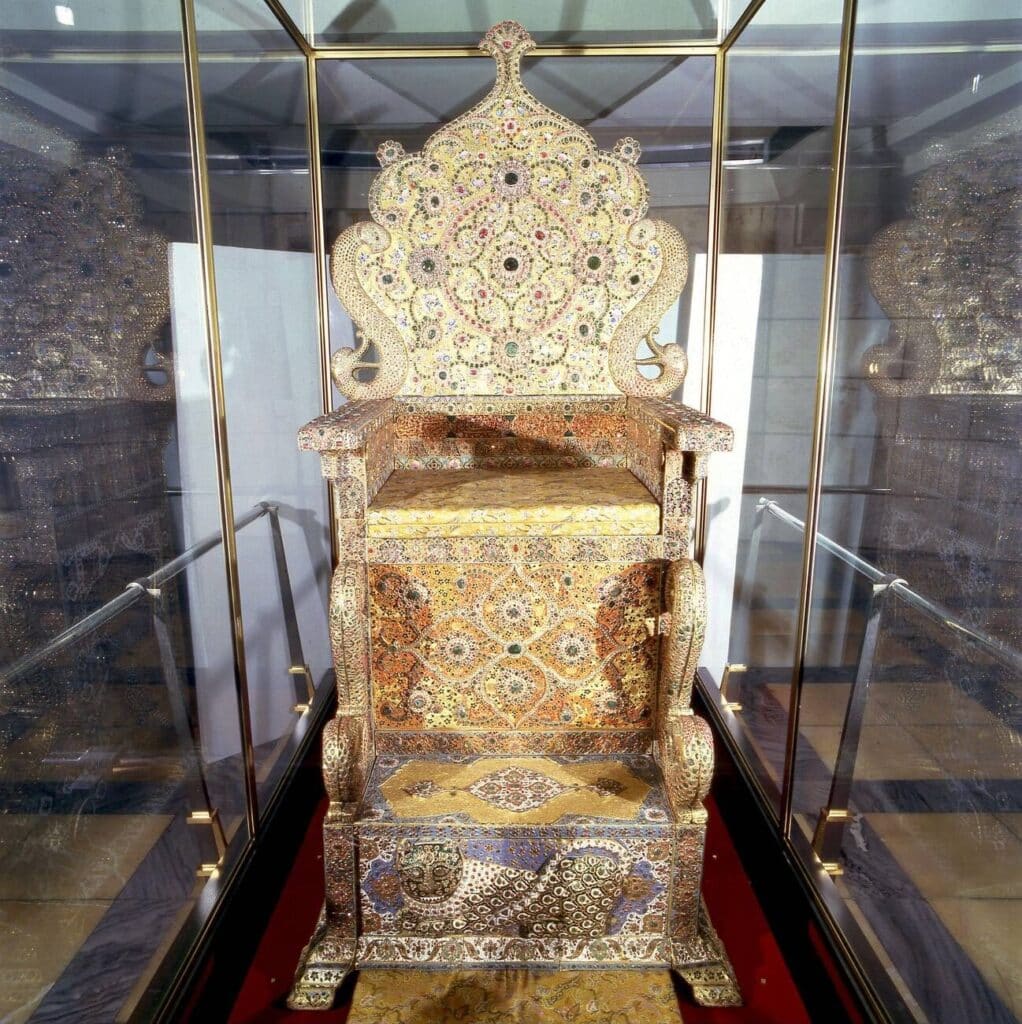
The Naderi Throne carries inscriptions attributing it to Fath-Ali Shah, despite the association suggested by its name. Its wooden framework separates into twelve sections. The gem-covered chair was used at Mohammad Reza Pahlavi’s 1967 coronation.
Planning a Visit
The Treasury’s published address is No. 140, Ferdowsi Avenue, Tehran. Visit Iran’s official profile gives the following admission arrangements. They are useful for planning, although they do not by themselves confirm that the Treasury is open on a particular date.
- Age and groups: the published minimum admission age is 12. Groups of more than ten need an appointment.
- Tickets: the profile specifies on-site purchase rather than online tickets. A third-party tour booking should not be mistaken for a museum admission ticket.
- Bags and photography: phones, smartwatches, cameras and other personal belongings must be left at the depository counter. Entry includes a security inspection.
- Access: the profile describes three staircases and no lift or escalator. This is a material limitation for visitors who cannot use stairs.
Opening hours and ticket prices are omitted here because a current Central Bank notice could not be verified on 2 November 2026. The tourism profile’s afternoon schedule differs from older reopening notices; use a direct confirmation from the Treasury for your intended date.
For nearby cultural sites, see our Tehran travel guide and guide to Golestan Palace.
Sources
Visit Iran (n.d.), Treasury of the National Jewels, for the address and published admission arrangements; Zoka, Y. (1994, updated 2013), Darya-ye Nur, and Jellicoe, P. (1993, updated 2013), Crown Jewels of Persia, Encyclopaedia Iranica, for the historic objects; and Van Cleef & Arpels (n.d.), Empress Farah Pahlavi’s parure: a historic commission, for its own crown commission. Consulted on 2 November 2026. Further historical evidence checked on 7 November 2026: Zoka, Y. (1993, updated 2013), Crown v. In the Qajar and Pahlavi Periods; Ashraf, A. (2016), The Politics of Gift Exchange in Early Qajar Iran, 1785–1834, especially note 69.