Minakari, also written mina-kari or meenakari, is a traditional Iranian form of painted enamelwork. Artisans fuse a glass-like coating to metal, then decorate it with detailed patterns. The brilliant blues, turquoise tones and fine floral designs of Isfahan’s enamelled plates and vases make this craft instantly recognisable.
Contents
What is minakari?
Minakari is a form of vitreous enamelling: powdered glass is heated until it bonds with a prepared surface. In Isfahan, makers commonly use copper for decorative plates, bowls and vases, although other metals can also be enamelled. The finished colour is part of the fired surface, not simply a layer of ordinary paint.
The Persian word mina is associated with enamel and the blue of the sky. This connection helps explain why deep blue and turquoise are so prominent in many contemporary designs, alongside white, red, yellow and green.
How is Iranian minakari made?
A craftsperson first shapes and cleans the metal. The object receives a base coat of enamel and is fired in a kiln. After the surface cools, an artist adds fine motifs by hand, often using delicate brushes. Further firing fixes the decoration. The precise sequence and temperature depend on the materials and workshop method; published descriptions commonly place enamel firing in the region of 750–850°C.
Successful enamelling requires both controlled heat and careful painting. The glassy surface can be durable in everyday display, but a sharp impact may still chip it.

Patterns, colours and the artistic tradition
Many Isfahan pieces feature symmetrical floral scrolls, stylised blossoms and geometric borders. A single object may combine dark cobalt blue with lighter turquoise, white and small touches of warm colour. The pattern is an important part of the craft: close inspection often reveals subtle differences between pieces painted by hand.
Enamelling has a long history across several cultures, including Iran. The exact origin of the modern Isfahan style cannot be assigned confidently to one dynasty or inventor. The craft is documented in accounts of Isfahan’s artistic life during the Safavid period, and it remains part of the city’s living handicraft tradition.

Where to find minakari in Isfahan
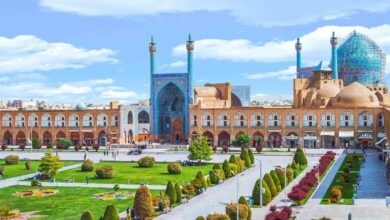
Visitors can compare enamelled metalwork in craft shops and, where access is permitted, workshops around Naqsh-e Jahan Square and in other traditional shopping areas. The city has been part of the UNESCO Creative Cities Network for Crafts and Folk Art since 2015. That designation recognises Isfahan’s wider creative economy; it is not a separate UNESCO World Heritage listing for minakari itself.
For more places to explore alongside the craft markets, see the Isfahan travel guide.
How to choose and care for enamelwork
When buying a piece, examine the painted details, the finish around the rim and any visible chips or cracks. Ask which workshop made it, what metal it uses and whether the decoration was kiln-fired. Request the maker’s details or a receipt if provenance matters to you. Do not assume that an enamelled bowl or plate is food-safe unless the maker confirms it.
To protect the surface, avoid dropping the object, abrasive cleaners and sudden temperature changes. A soft cloth is usually the safest starting point for dusting; follow the maker’s care instructions for cleaning.
Sources and further reading
For background on the technique and Isfahan’s craft culture, consult Iran Cultura’s introduction to minakari, Garland Magazine’s account of Isfahan enamelwork and the UNESCO Creative Cities profile for Isfahan. Historical claims are presented cautiously where the evidence does not establish a precise date or origin.