
Iran has a rich tradition of tea, herbal infusions, fruit drinks and yogurt-based refreshments. Alcoholic beverages are generally prohibited under Iranian law, so travelers should not assume they can buy or consume them legally. Here are the non-alcoholic drinks worth knowing by name.

Contents
Iranian Tea, Herbal Infusions and Sharbat
Chai, Iranian black tea, is a familiar part of hospitality in homes, shops and cafés. It is commonly served hot in small glasses, sometimes with sugar cubes or nabat, crystallized sugar on a stick. Sweeten it to your taste.
Two other useful terms are damnoosh, a herbal infusion, and sharbat, a sweet drink usually diluted with water and served chilled.
Common herbal infusions include chamomile (babouneh), hibiscus, mint, lemon verbena (beh-limoo), orange blossom (bahar narenj), cardamom, cinnamon and saffron. Blends and ingredients vary by café. Herbal drinks are foods and beverages, not proven treatments; check ingredients if you are pregnant, take medication or have allergies.

Sharbat is especially associated with warm weather. Cafés and homes make it with fruit syrups, floral waters, seeds and chilled water, with sweetness adjusted to taste.
Sharbat-e albaloo uses sour cherries and has a sweet-tart flavor. Other fruit versions may feature mulberry (shahtoot) or berries. Availability depends on the season and the establishment.
Floral and herbal flavors include orange blossom, rosewater and saffron. Sekanjabin is a sweet-and-sour syrup traditionally made with vinegar and a sweetener, sometimes paired with mint or grated cucumber. These are culinary traditions rather than medical recommendations.
Tokhm-e sharbati usually refers to soaked basil seeds, which swell in water; chia seeds are sometimes used as a substitute. Khakshir is a different drink made with flixweed seeds. Both are enjoyed for their texture. For a basil-seed preparation, see this Persian recipe.

Fresh Juices and Fruit Drinks
Ab-havij is carrot juice. Order it plain (sadeh) or try havij bastani, carrot juice served with a scoop of traditional ice cream. Ask about dairy if you have dietary restrictions.
Ab-anar is pomegranate juice, offered in sweet (shirin), sour (torsh) or mixed sweet-sour (malas) styles depending on the fruit.
Other juice-shop favorites include melon (ab-talebi), orange (ab-porteghal), apple (ab-sib) and celery (ab-karafs). Fresh-juice stalls are often called vitaminsara. Choose vendors with good hygiene and ask whether ice is made from safe drinking water.
Milkshakes and Smoothies
Juice bars also serve milk-based drinks such as shir-moz (banana milkshake), shir-nargil (coconut milkshake) and shir-pesteh (pistachio milkshake). These may contain milk, nuts or added sugar, so check ingredients before ordering.

Drinks Served with Meals
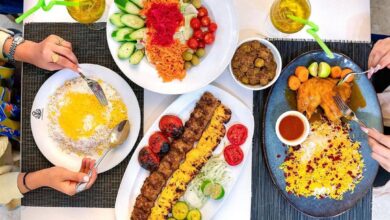
Doogh is a savory yogurt drink, often served chilled with kebabs and rice dishes. It may be salted, carbonated or flavored with mint. It contains dairy unless the vendor specifically offers an alternative.
Delester is a common name used for malt-based non-alcoholic drinks, sometimes sold in fruit flavors. Read the label if you need to avoid alcohol completely or have dietary restrictions; formulations differ.
Nooshabeh is the everyday Persian word for a soft drink. International and local brands are available. Some customers refer to sodas by color, but naming and selection vary by shop.
Related articles:
- 10 BEST PERSIAN FOODS THAT YOU’VE GOT TO TRY
- 8 UNUSUAL FOODS YOU MUST TRY IN IRAN
- IRAN ON A PLATE: IRAN FOOD AND TRAVEL GUIDE
Coffee in Iran
Specialty cafés in Tehran and other major cities may serve espresso, cappuccino, latte, filter coffee and other styles. Instant coffee remains available in many casual settings. In parts of southern Iran, including Khuzestan and the Persian Gulf region, visitors may also encounter Arabic-style coffee served as part of local hospitality. Ask about preparation, sweetness and caffeine strength.



It was amazing to find out all of these stuff about drinks in a country in which drinking alcohol is not allowed.