A Culinary Journey Through Tehran’s Grand Bazaar
A great meal is awaiting you here!


Lunch at Tehran’s Grand Bazaar is an opportunity to discover classic Iranian dishes in the middle of one of the capital’s busiest historic districts. Here is what to expect when choosing a restaurant and ordering a meal.
A visit to the Grand Bazaar of Tehran combines covered shopping lanes, traditional trades and historic buildings. After exploring the market, many visitors head to one of the well-known local restaurants for rice dishes, kebabs or a hearty stew. The official Visit Iran guide also highlights the bazaar’s food culture.

Contents
Where to Eat at Tehran Grand Bazaar

If you are visiting nearby Golestan Palace, the bazaar makes a convenient next stop. The busiest lunch period can bring queues, especially at popular establishments. Allow extra time and check each restaurant’s current opening hours before travelling.
Moslem, Sharaf ol-Eslami and Shamshiri are established names associated with dining in or around the Grand Bazaar. Menus and opening arrangements can change, but the area is well known for traditional Iranian food and lively lunchtime service.
What Food Can You Try?
While kebab restaurants are a familiar part of Iranian dining, the country’s cuisine offers far more than grilled meat. Depending on the restaurant, you may find rice specialities, stews, soups and seasonal dishes.
Iranian home cooking includes a wide range of slow-cooked khoresh (stews), often served with rice. Restaurant menus vary by kitchen and neighbourhood, so it is misleading to suggest that traditional stews are never eaten outside the home.
At the bazaar, choose according to the dishes actually available that day. Some kitchens specialise in a small selection, while others offer several kinds of rice, kebab and stew. Ask staff about ingredients, portion sizes and daily specials before ordering.
Kebab, Tahchin and Baghali Polo
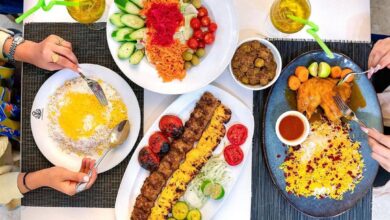
Three popular choices are kebab, served with bread or rice; tahchin, a baked saffron-rice dish often prepared with yoghurt, egg and chicken; and baghali polo, rice cooked with broad beans and dill, sometimes served with lamb shank. Recipes and accompaniments vary.

These dishes also feature at family gatherings and celebrations. Moslem is especially associated with tahchin, while other restaurants are known for kebabs or rice dishes. Rather than assuming that a particular combination is always on the menu, check the current selection and ask for a recommendation.
Queues, Portions and Practical Tips
Queues are common at popular lunchtime restaurants in the bazaar. Waiting times depend on the day, season and number of diners, so avoid relying on fixed estimates. Arriving a little before the busiest lunch period may help, but there is no guaranteed short wait.
Portions can be generous, particularly when rice and side dishes are included. Check the serving size before ordering for one person or a group, and ask whether takeaway is available if you prefer not to wait for a table.
Many bazaar restaurants prioritise traditional food and quick service over elaborate décor. That informal atmosphere is part of the appeal. Pair lunch with a walk through the market, then use our Tehran travel guide to plan the rest of your day.