Iranian Dynasties: A Timeline From Elam to Pahlavi
Iranian Dynasties: The Guardians of Civilization

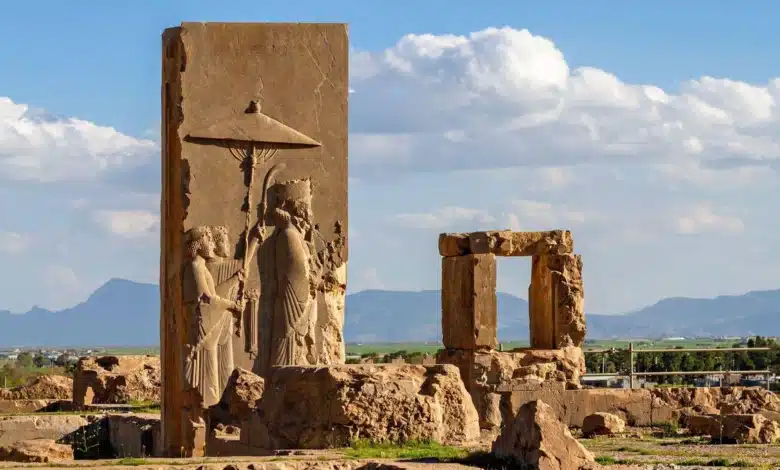
Iran has been ruled from Susa, Pasargadae, Ctesiphon, Isfahan, Shiraz and Tehran. Its rulers were Elamite kings, Persian shahs, Macedonian generals, Turkic sultans and Mongol khans, and most of them left something you can still walk into. This page puts the Iranian dynasties in order, from Elam in the third millennium BCE to the end of the monarchy in 1979.
Use the table for quick dates. Each section below gives the short story of one era, the places where you can see it, and a link to our longer article where we have one.
A note on dates. Early dates are approximate, and historians still argue over some of them, the Medes above all. Where Encyclopaedia Britannica or UNESCO give a figure, we use it. The sources are listed at the end.
Jump to an era
- Ancient Iran: prehistory, Elam, Medes, Achaemenids, Seleucids, Parthians, Sasanians
- Medieval Iran: Arab conquest and the first Iranian Muslim dynasties, Seljuks, Mongols and Ilkhanids, Timurids and Turkmen
- Early modern and modern Iran: Safavids, Afsharids and Zands, Qajars, Pahlavis
Contents
Iranian Dynasties at a Glance
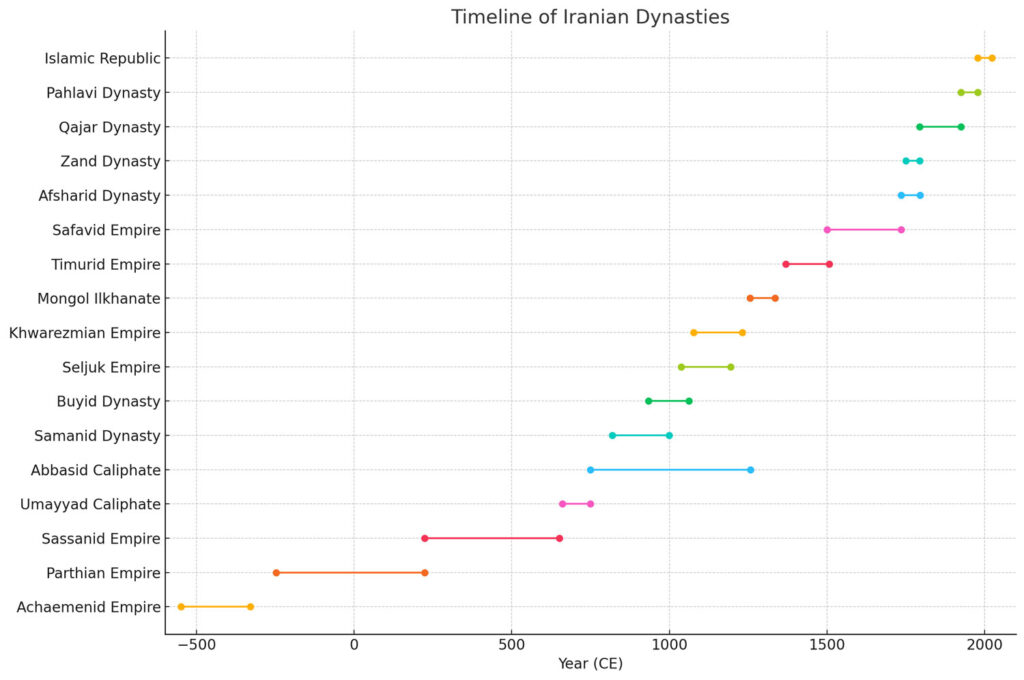
| Dynasty or era | Dates | Main centres | Where to see it today |
|---|---|---|---|
| Elam | 3rd millennium to 6th century BCE | Susa, Anshan | Susa, Chogha Zanbil |
| Medes | c. 7th century to 550 BCE | Ecbatana (Hamadan) | Hegmataneh |
| Achaemenids | 550 to 330 BCE | Pasargadae, Persepolis, Susa | Persepolis, Pasargadae, Naqsh-e Rostam, Bisotun |
| Seleucids | 312 to 64 BCE (in Iran until the 2nd century BCE) | Seleucia on the Tigris | Finds in the National Museum of Iran |
| Parthians (Arsacids) | 247 BCE to 224 CE | Ctesiphon | National Museum of Iran |
| Sasanians | 224 to 651 CE | Ctesiphon, Firuzabad, Bishapur | Taq-e Bostan, Takht-e Soleyman, Shushtar |
| Tahirids, Samanids, Buyids | 821 to 1055 (overlapping) | Nishapur, Bukhara, western Iran and Baghdad | Earliest parts of the Jameh Mosque of Isfahan |
| Ghaznavids | 977 to 1186 | Ghazni | Ferdowsi’s Shahnameh, finished in their reign |
| Seljuks | 1040 to 1194 | Isfahan, Rey | Jameh Mosque of Isfahan, Alamut (their Ismaili rivals) |
| Ilkhanids (Mongols) | 1256 to 1335 | Maragheh, Tabriz, Soltaniyeh | Soltaniyeh |
| Timurids | c. 1370 to 1507 | Samarkand, Herat | Goharshad Mosque, Mashhad |
| Qara Qoyunlu and Aq Qoyunlu | 15th century | Tabriz | Blue Mosque, Tabriz |
| Safavids | 1501 to 1736 | Tabriz, Qazvin, Isfahan | Naqsh-e Jahan Square, Sheikh Safi Shrine |
| Afsharids | 1736 to 1747 (Nader Shah) | Mashhad | Tomb of Nader Shah |
| Zands | 1750 to 1794 | Shiraz | Karim Khan Citadel, Vakil Bazaar |
| Qajars | 1794 to 1925 | Tehran | Golestan Palace |
| Pahlavis | 1925 to 1979 | Tehran | Sa’dabad, Azadi Tower |
Iran in Prehistoric Times
Long before any king, people were living in the caves and valleys of the Zagros. Some of the first farming villages on the Iranian plateau grew up here.
Early villages in the Zagros
At Ganj Dareh, near Harsin in Kermanshah province, and at Tepe Asiab and Sarab nearby, archaeologists have found mud-brick houses, storage pits and goat bones that show people were herding goats here about 10,000 years ago. Further north, south of Lake Urmia, Hajji Firuz Tepe was a farming village where a jar of about 5400 to 5000 BCE held what was long the oldest chemically confirmed wine in the world.
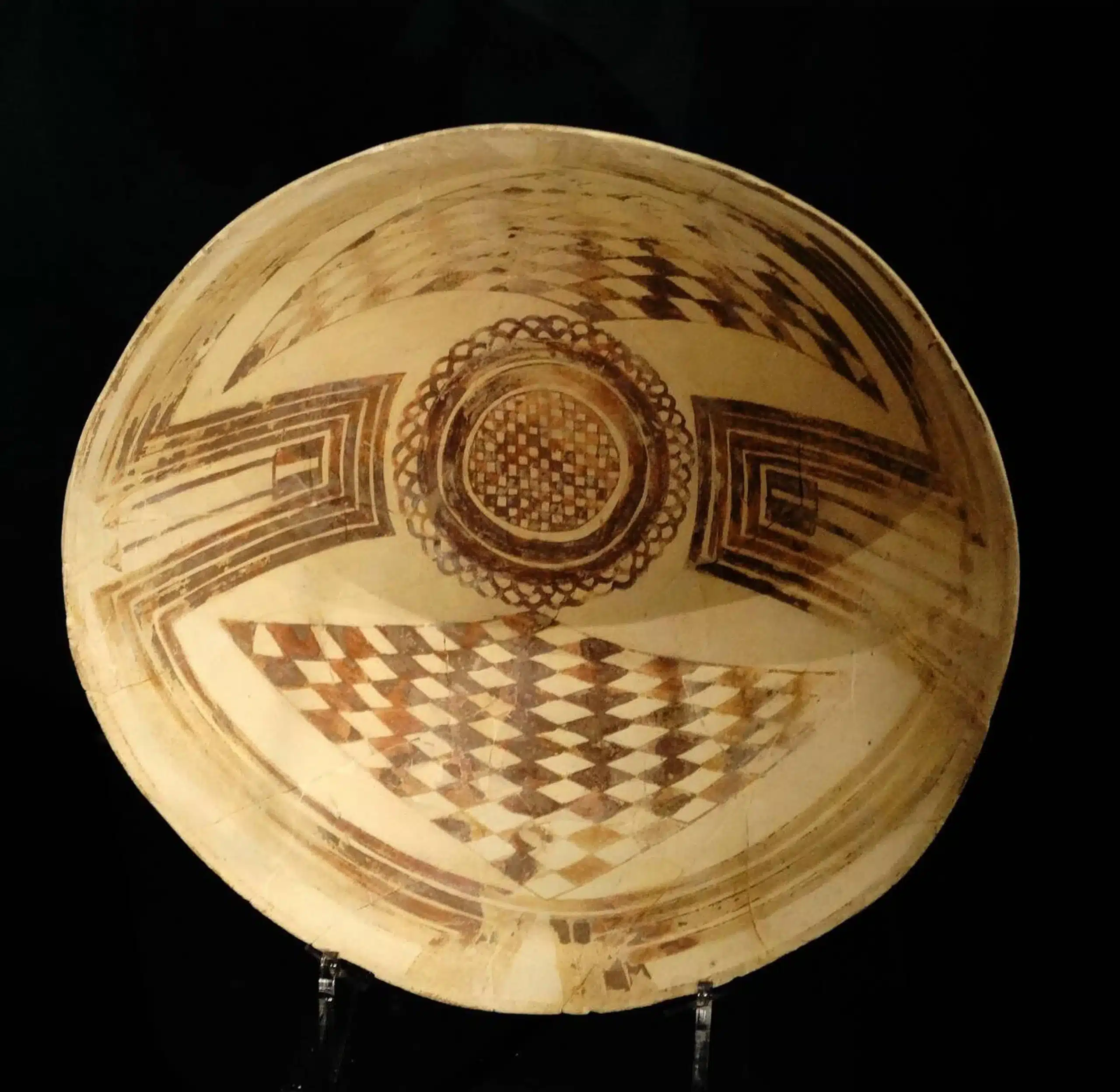
Painted pottery is the thread that ties these sites together. At Susa, at Tepe Sialk outside Kashan and at Tepe Yahya in Kerman province, potters were drawing goats, birds and geometric bands on their jars thousands of years before writing arrived.
The Proto-Elamite period and the first cities
By the late fourth millennium BCE, towns in the lowlands of Khuzestan and the highlands of Fars were keeping accounts on clay tablets. Their script, called Proto-Elamite, has still not been fully deciphered. Susa was one centre. Another was Tal-e Malyan north of Shiraz, the ancient city of Anshan, which later gave its name to the kingdom Cyrus the Great inherited.
In the far east, Shahr-e Sukhteh, the “Burnt City” in Sistan, was founded around 3200 BCE and lived through four main phases until about 1800 BCE, according to UNESCO. It sat on Bronze Age trade routes that linked the plateau with Mesopotamia, Central Asia and the Indus Valley.
Elam: The First Kingdom in Iran (3rd Millennium to 6th Century BCE)
Elam covered roughly today’s Khuzestan and reached up into the Fars highlands. Its capital was Susa. Elamite was its own language, unrelated to Persian or to the Semitic languages of Mesopotamia, but the Elamites borrowed cuneiform from their neighbours and fought, traded and married with them for two thousand years.
Elam and Babylon
Britannica dates Elam’s great age of conquest to the late 13th century BCE. Its best-known king of that age, Shutruk-Nahhunte, raided Mesopotamia and carried war trophies back to Susa. One of them was the basalt stele of the Code of Hammurabi. French archaeologists dug it up at Susa at the start of the 20th century, which is why it now stands in the Louvre and not in Iraq.
Babylon struck back: Nebuchadrezzar I captured Susa at the end of the 12th century BCE. Elam recovered, but in 640 BCE the Assyrian king Ashurbanipal sacked Susa and deported part of its population. What was left of Elam was later absorbed into the Persian empire, and Susa became one of the Achaemenid capitals.
Where to see Elam
The ziggurat of Chogha Zanbil, south-east of Susa, is the one Elamite monument most travellers see. UNESCO dates it to the reign of King Untash-Napirisha (1275 to 1240 BCE), who founded it as the religious centre of Elam. Bricks in its walls still carry his cuneiform inscriptions. The mound of Susa itself is close by, along with the French-built Shush Castle, and our article on the Dieulafoys at Susa tells the story of the first excavations.
The Medes: The First Iranian Kingdom (c. 7th Century to 550 BCE)
The Medes were Iranian-speaking tribes in the north-west of the plateau, in what is now Hamadan, Kurdistan and Kermanshah. Assyrian texts mention the land of “Mada” from the 9th century BCE.
Deioces, Cyaxares and the fall of Nineveh
Herodotus credits a ruler called Deioces with founding the kingdom and building its capital at Ecbatana, modern Hamadan. Modern historians are more cautious. Britannica suggests the Median tribes were probably not united into a kingdom before about 625 BCE, under Deioces’ grandson Cyaxares.
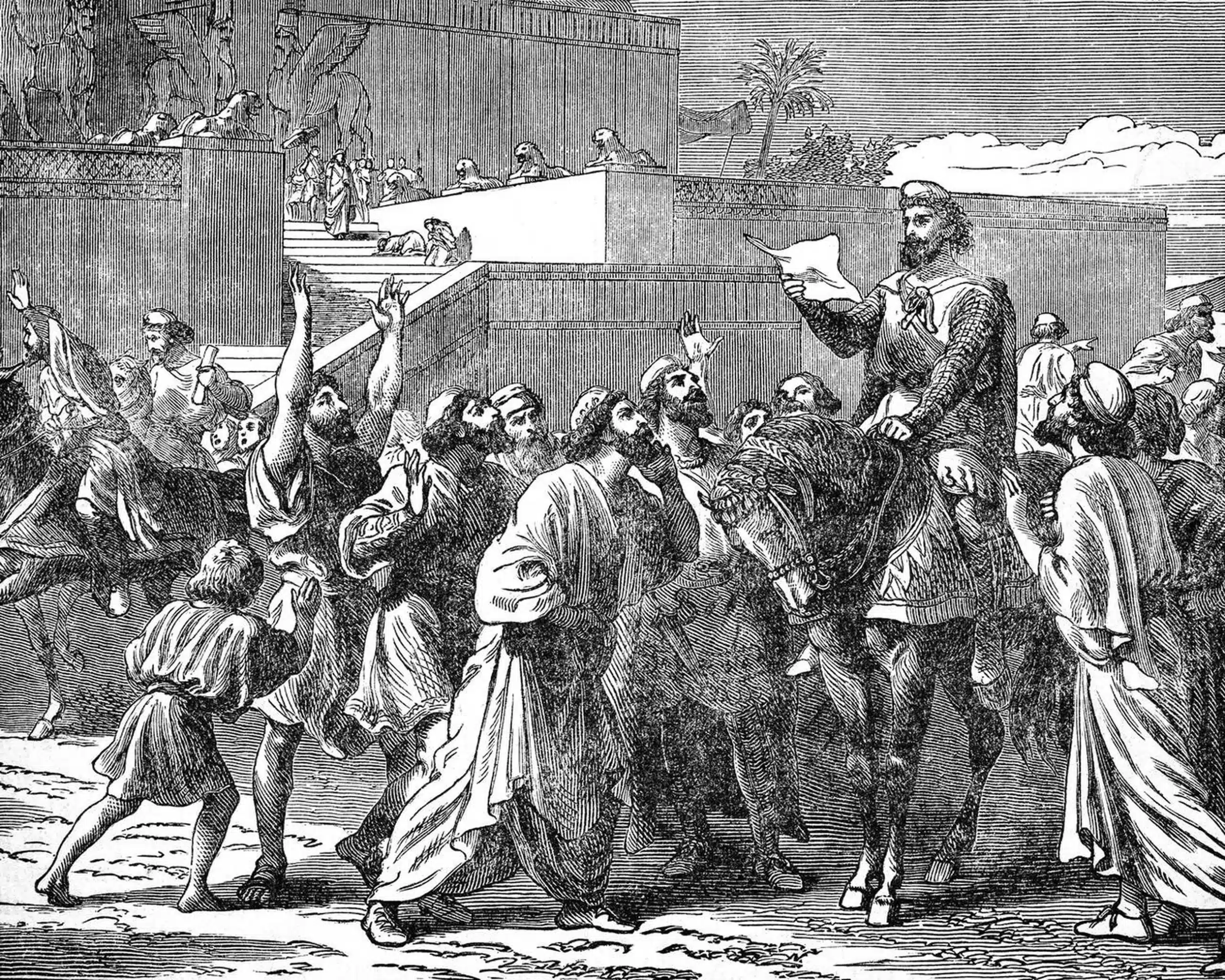
Cyaxares is the Median king with firm dates. He took Ashur in 614 BCE and, allied with Babylon, stormed Nineveh in 612 BCE. That ended the Assyrian empire, which had dominated the region for centuries.
Astyages and Cyrus
The last Median king, Astyages, went to war with his Persian vassal, Cyrus of Anshan. In 550 BCE the Median army deserted Astyages and Cyrus took Ecbatana. The Medes were not wiped out. They became the second people of the new empire, and Greek writers often used “Mede” when they meant “Persian”.
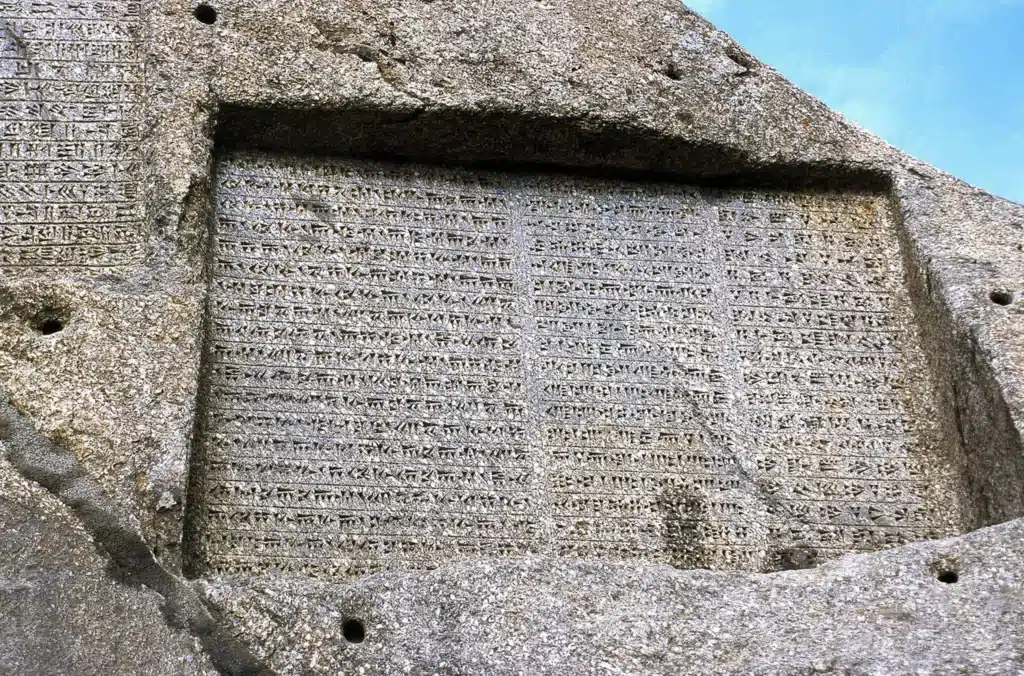
In Hamadan, the mound of Hegmataneh is the site of ancient Ecbatana and is now on the UNESCO World Heritage list. Our Hamadan travel guide covers the town around it, including the Ganjnameh inscriptions and the Tomb of Esther and Mordechai.
The Achaemenid Empire (550 to 330 BCE)
The Achaemenid Empire was the first state to rule from the Aegean to the Indus. Britannica dates it from 559 BCE, when Cyrus inherited the throne of Anshan, to 330 BCE. Most timelines start it in 550, the year he took the Median crown.
Cyrus the Great
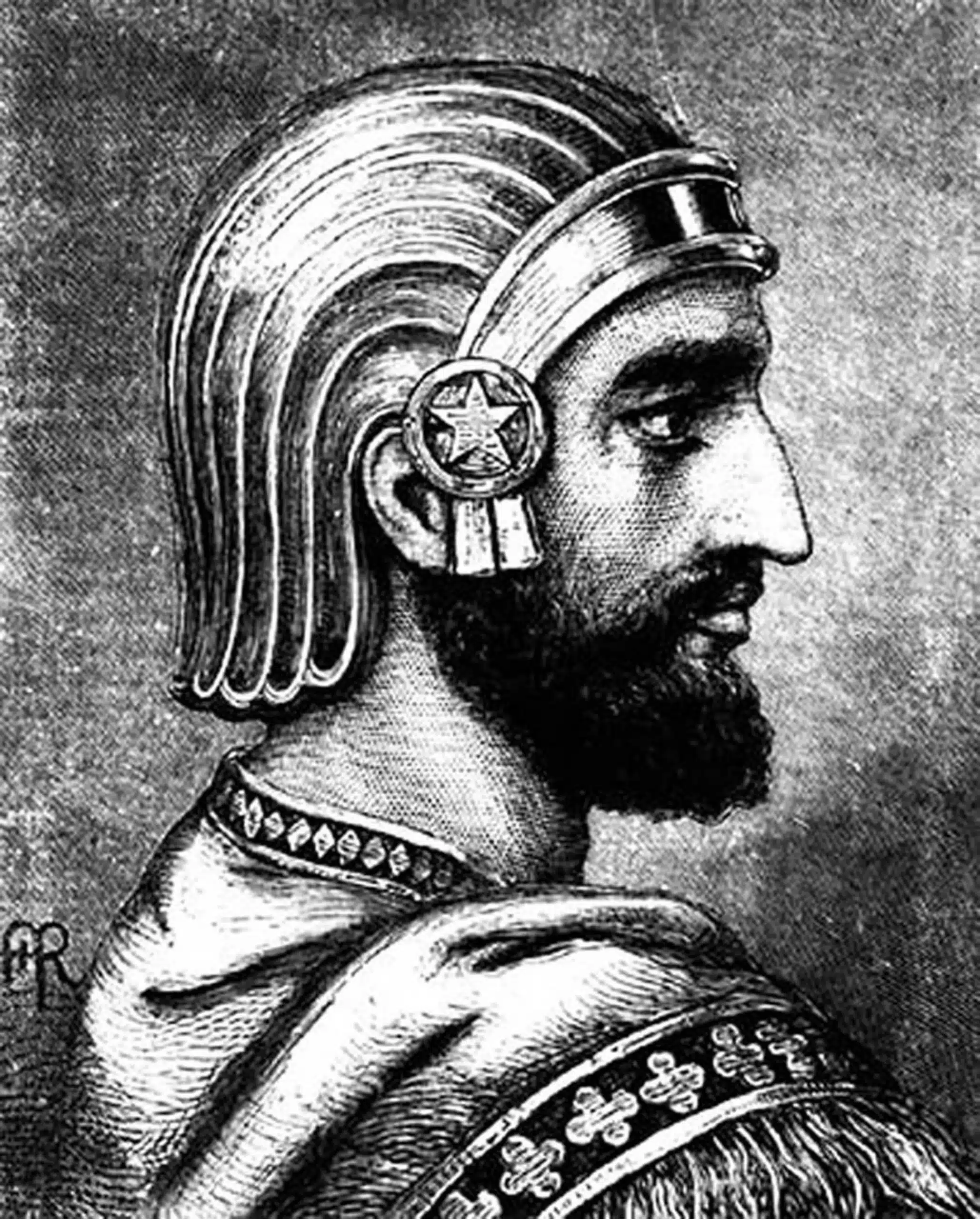
Cyrus beat the Medes, then Lydia, then Babylon. He entered Babylon in the late summer of 539 BCE and presented himself as a Babylonian king, not a foreign conqueror. The clay Cyrus Cylinder, now in the British Museum, records that conquest and his return of temple statues and deported peoples to their homes. It is often called the first charter of human rights. The British Museum describes it more plainly, as a Babylonian account of the conquest, Both descriptions are worth keeping in mind.
Cyrus built his capital at Pasargadae in the plain north of Shiraz. UNESCO calls it the first dynastic capital of the empire and treats its four-part garden as the prototype of the Persian garden, and the plain stone tomb of Cyrus still stands alone in the fields.
Darius I and Persepolis
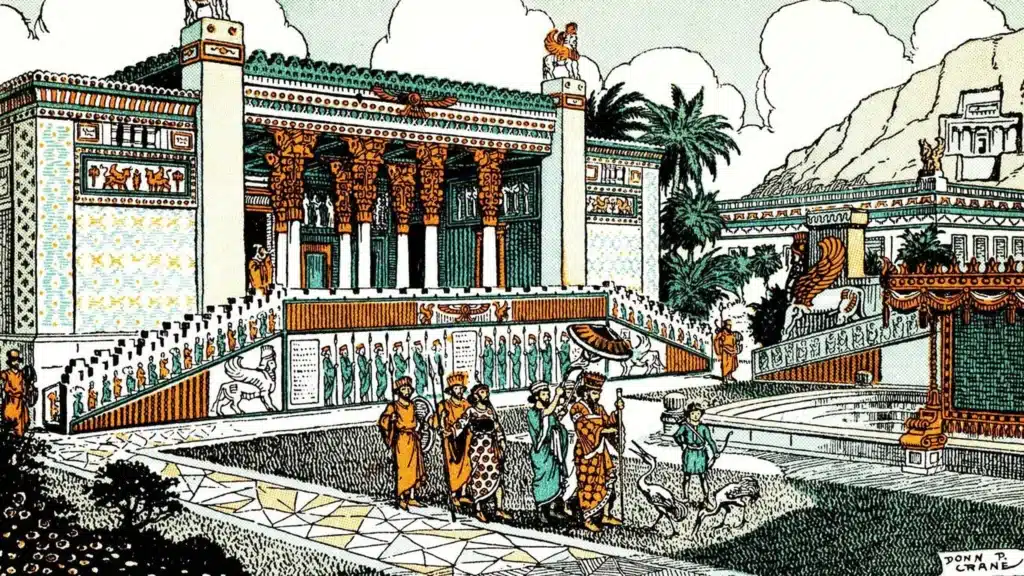
Darius I organised the empire into provinces, or satrapies, each with a governor and a fixed tribute. Herodotus describes the Royal Road from Susa to Sardis in Anatolia, with staging posts for royal messengers. Darius told his own version of how he came to power on the cliff at Bisotun near Kermanshah. UNESCO dates the inscription to 521 BCE. It is written in Old Persian, Elamite and Babylonian, and it was the key that let 19th-century scholars read cuneiform.
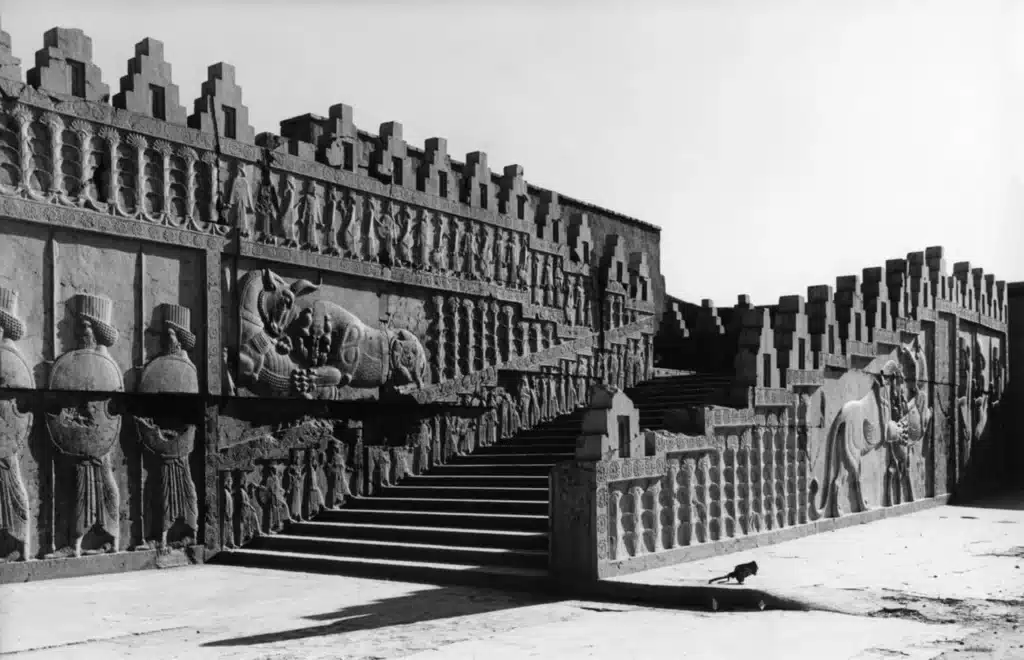
In 518 BCE, according to UNESCO, Darius founded Persepolis. It was built on a terrace against the Kuh-e Rahmat hill, and the stairways of its audience hall carry reliefs of delegations from across the empire bringing gifts, among them a Bactrian leading a two-humped camel. A few kilometres away, Darius and three of his successors are buried in rock-cut tombs at Naqsh-e Rostam.
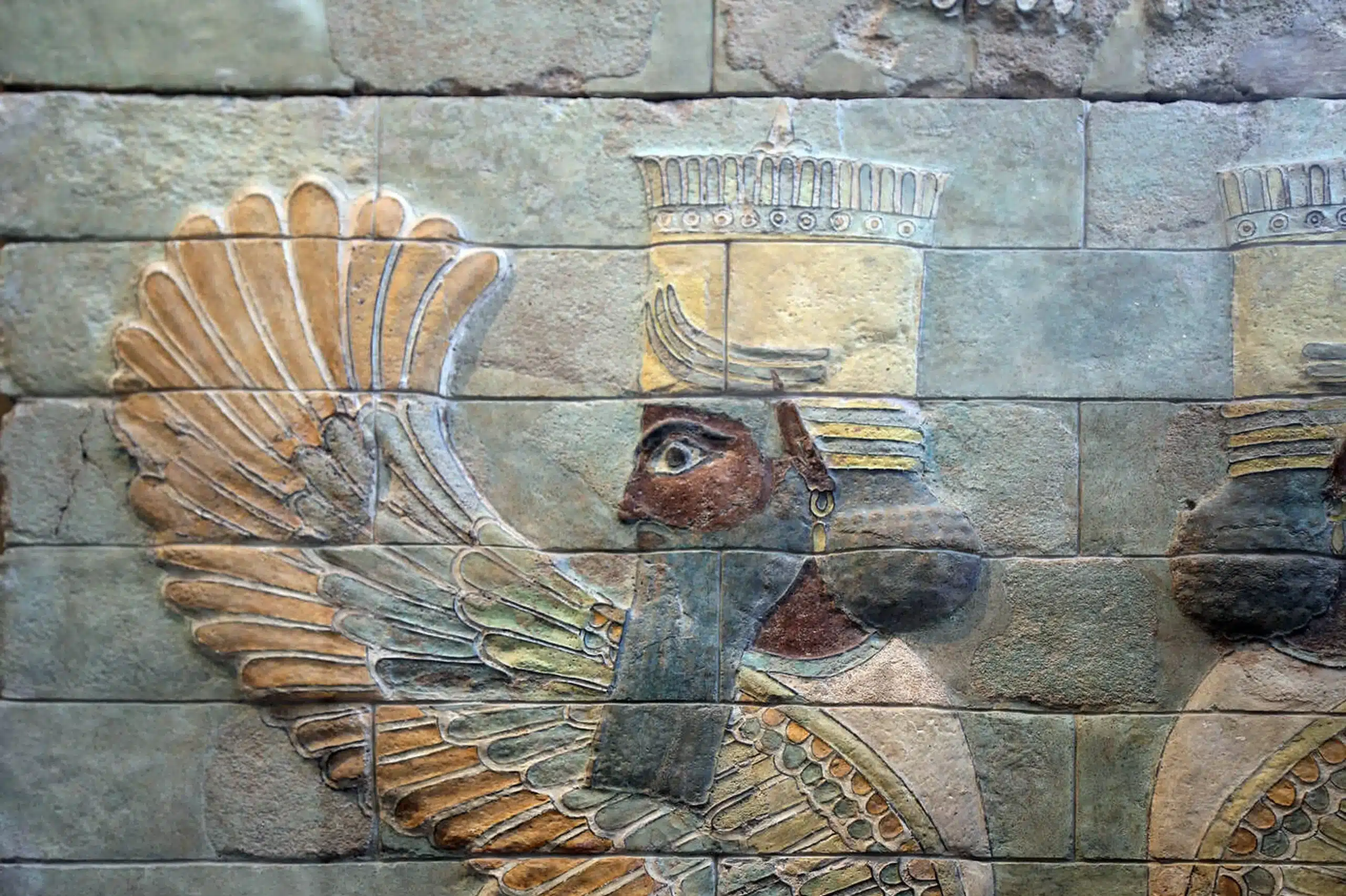
Xerxes and the wars with Greece
Xerxes I, Darius’ son, is remembered in Europe for Thermopylae and Salamis, and for failing to conquer Greece. In Iran he is remembered for building. He finished much of Persepolis, including the Gate of All Nations that visitors walk through today.
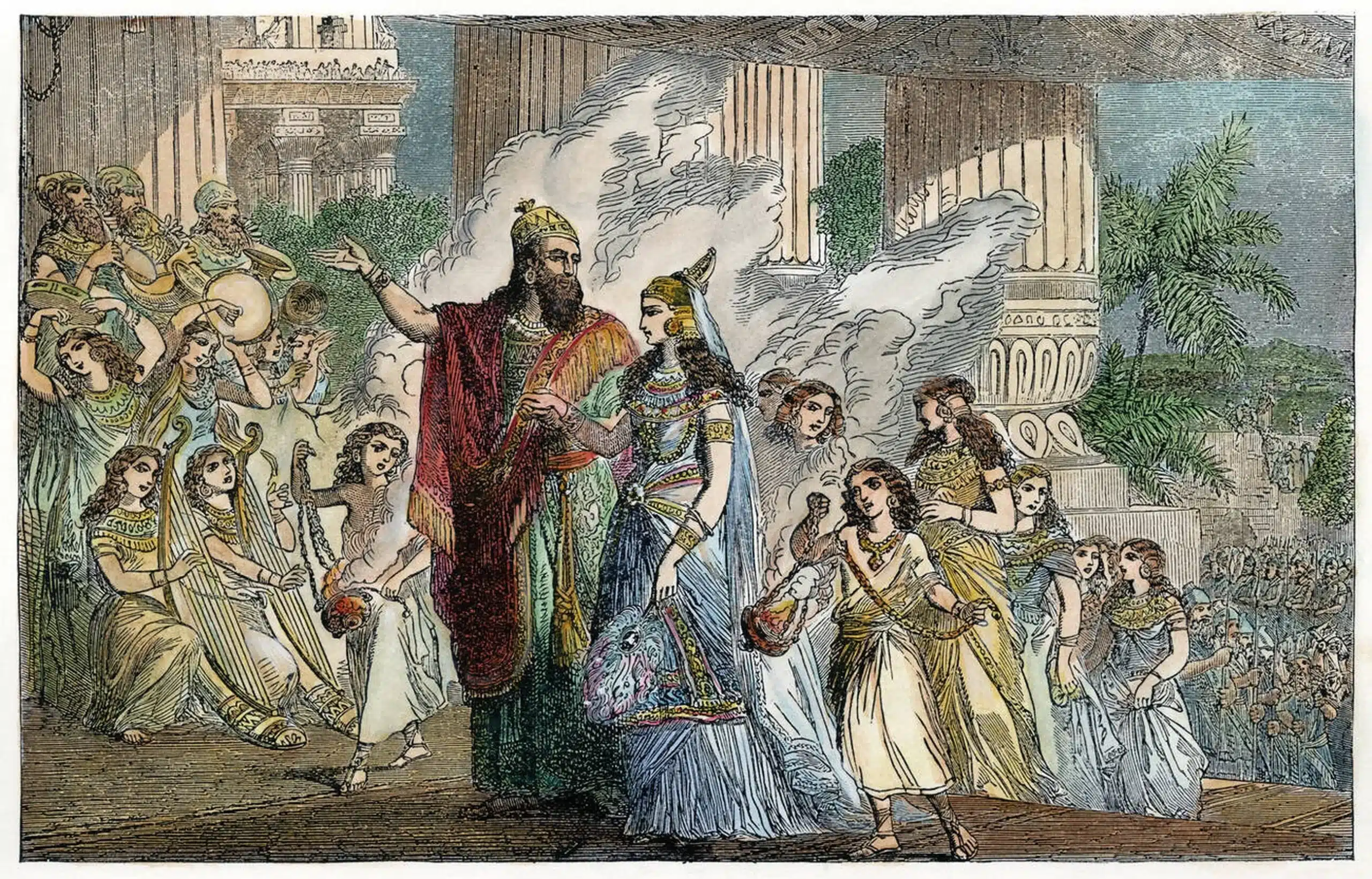
How the empire worked, and how it ended
The Achaemenids ruled through local elites and let subject peoples keep their languages and gods, as long as tribute arrived. Aramaic served as a common language of administration. Persian art drew on Assyria, Egypt and the Greek cities of Anatolia, and the Persepolis reliefs show craftsmen from all of them.
The end came fast. Alexander of Macedon crossed into Asia in 334 BCE. Persepolis fell to him in April 330 BCE and was burned, and Darius III was murdered by his own officers that summer while fleeing.
Alexander and the Seleucids (330 to the 2nd Century BCE)
Alexander died in Babylon in 323 BCE, and his generals divided his empire. In 312 BCE Seleucus I Nicator seized Babylonia and founded the Seleucid kingdom, which at its height reached from Thrace to the borders of India. Britannica dates it from 312 to 64 BCE, but by then it had long lost Iran.
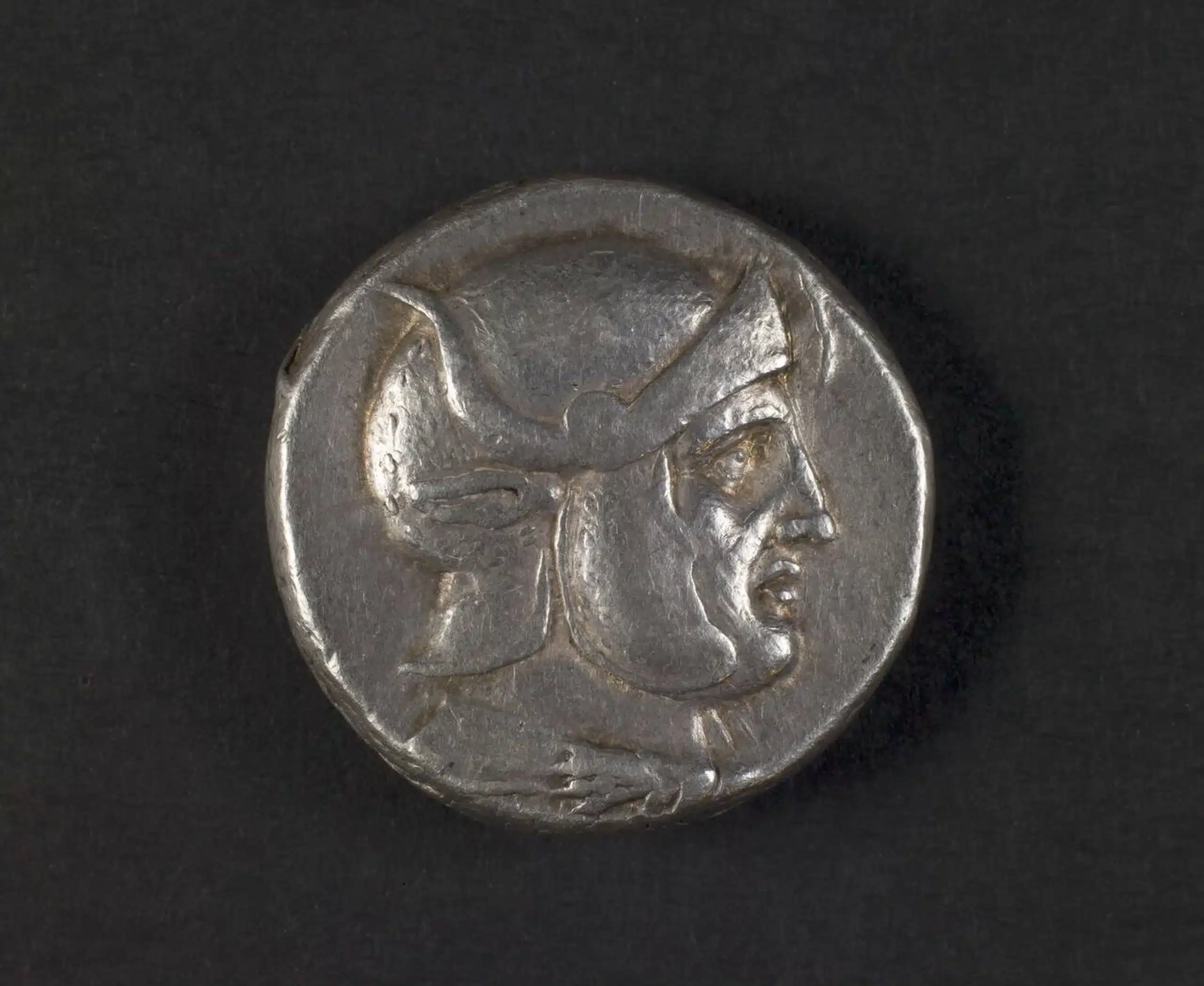
The Seleucids founded Greek cities such as Seleucia on the Tigris, used Greek for government and kept the old Persian satrapies. Greek coins, statues and inscriptions spread across the plateau. In the countryside, Iranian languages and gods carried on.
Their hold on the east did not last. Bactria broke away, and in the 3rd century BCE a governor’s revolt in Parthia, roughly modern Khorasan, gave rise to a new Iranian dynasty. By the middle of the 2nd century BCE the Parthians had taken most of Iran and Mesopotamia.
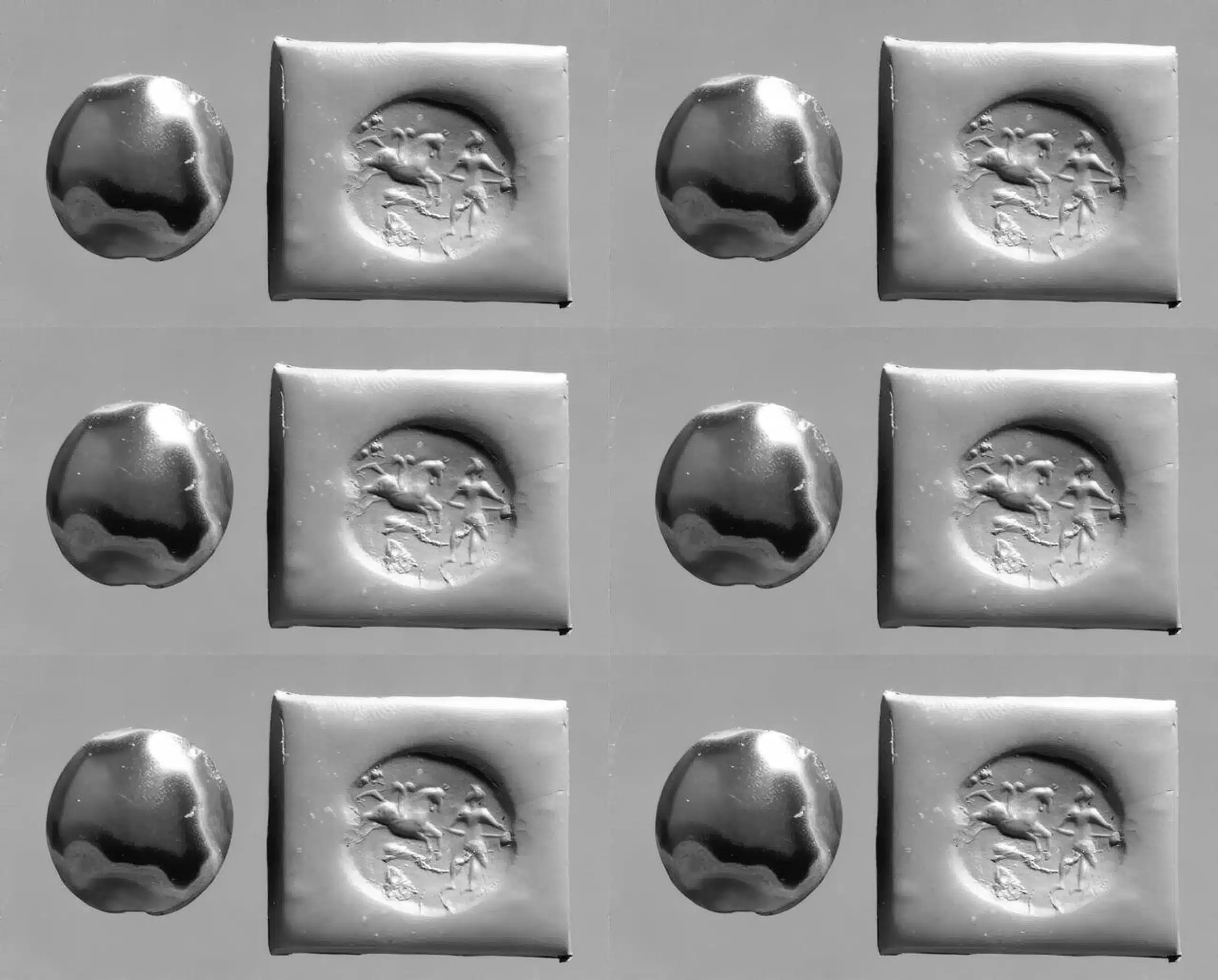
The Parthian Empire (247 BCE to 224 CE)
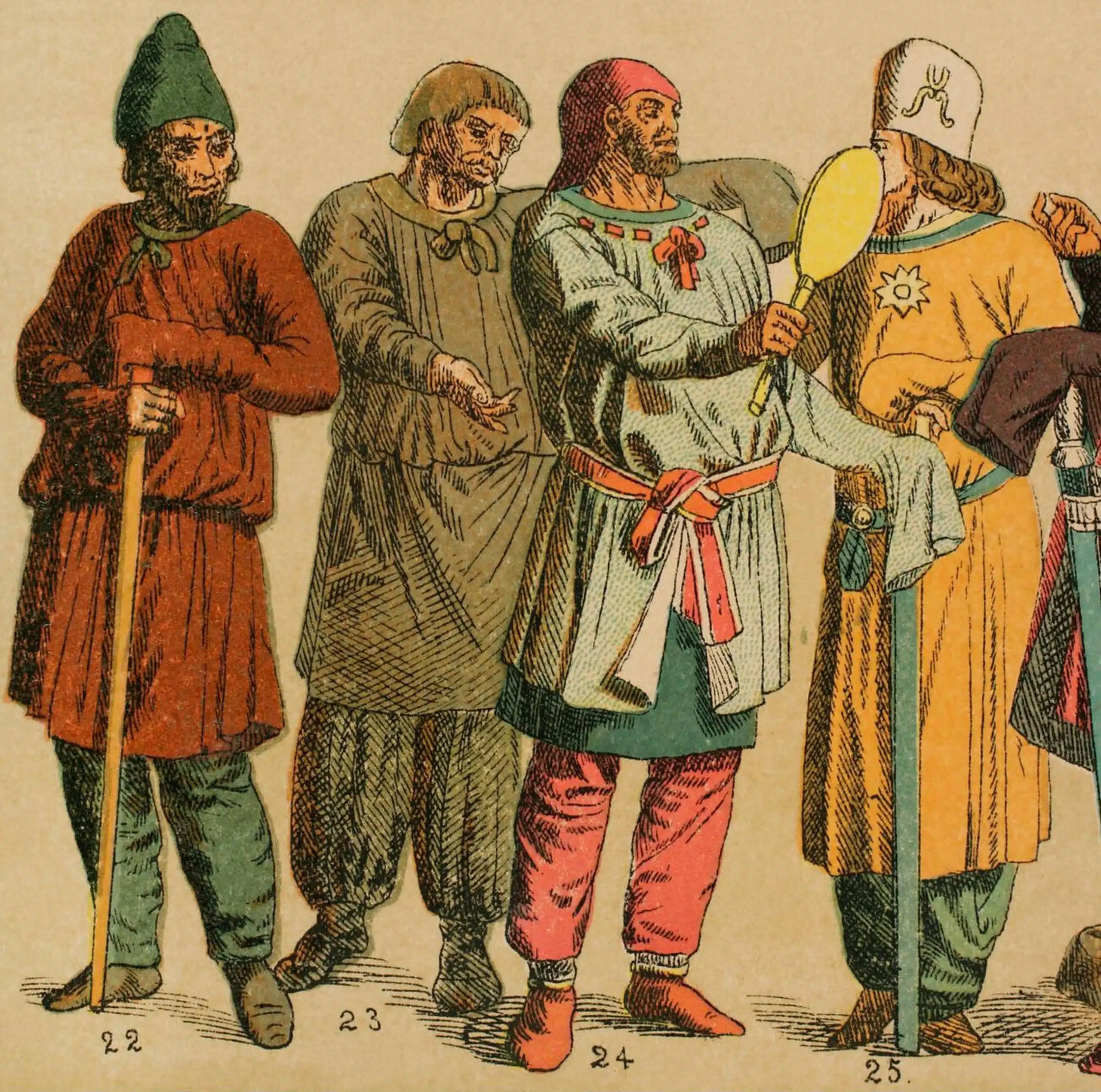
The Parthians, or Arsacids, take their dynastic name from Arsaces I. Britannica dates their empire from 247 BCE to 224 CE, which makes it the longest-lived of the ancient Iranian dynasties.
A loose empire on the trade routes
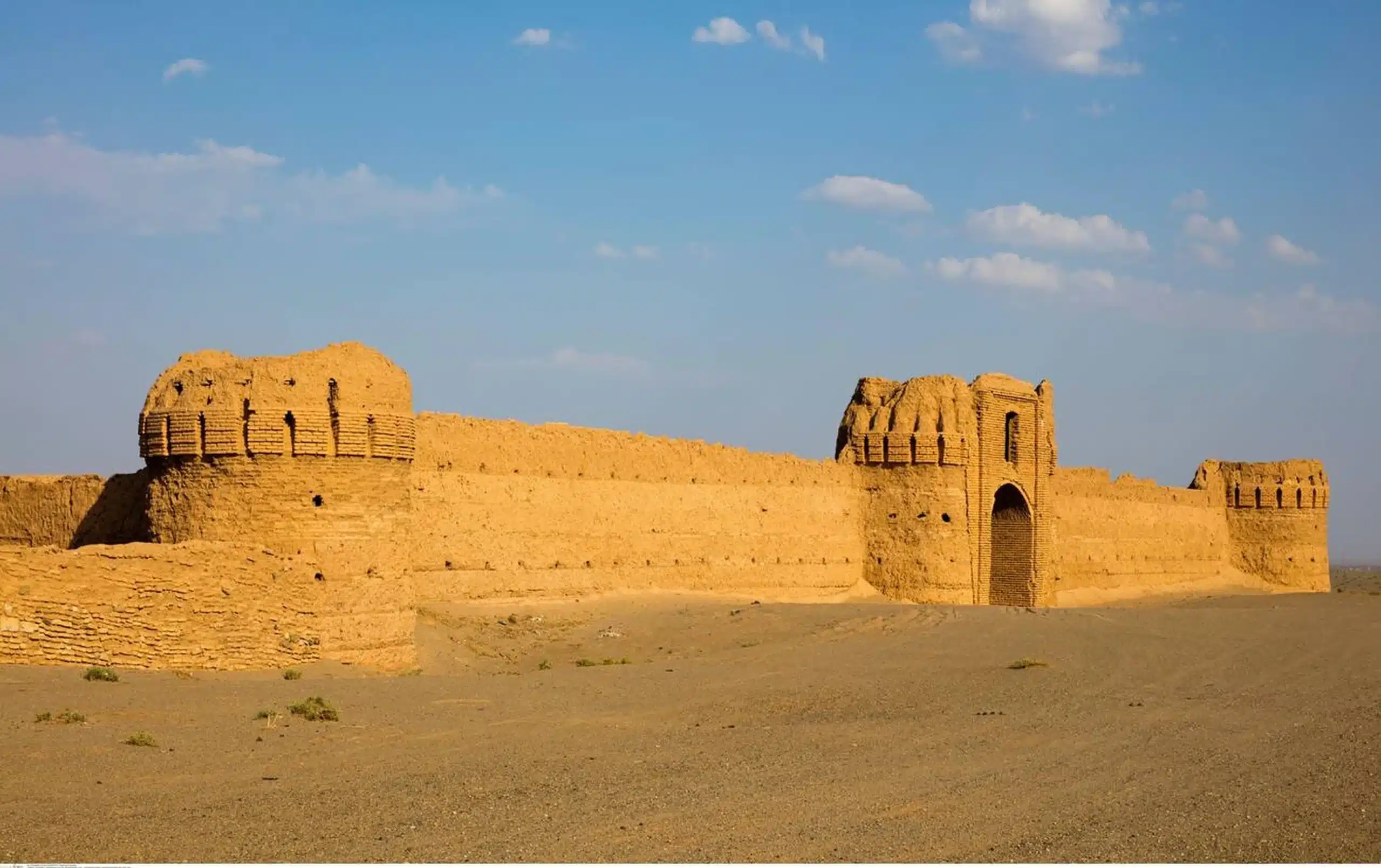
Parthian kings ruled through powerful noble families and semi-independent local kings. Their winter capital was Ctesiphon on the Tigris, near today’s Baghdad. They grew rich by controlling the land routes between the Roman world, India and China, the roads later called the Silk Road.
Parthia and Rome
Rome was the great rival. In 53 BCE the triumvir Crassus marched into Mesopotamia and was routed at Carrhae by Parthian horse archers and armoured cavalry. For the next two and a half centuries the two powers fought over Armenia and Mesopotamia, and sometimes made treaties.
Few Parthian buildings survive inside Iran. The best place to meet the Parthians is the National Museum of Iran in Tehran, which displays the bronze statue of a Parthian nobleman found at Shami in the Bakhtiari mountains.
The Sasanian Empire (224 to 651 CE)
Ardashir I, a local ruler from Fars, fought his way to power between 208 and 224 CE, defeated the last Parthian king, Artabanus IV, and founded the Sasanian Empire. The dynasty is named after Sasan, one of his ancestors. It lasted until the Arab conquest in the 7th century.
Kings on the rock face
The Sasanians liked to carve their victories into cliffs. At Naqsh-e Rostam, under the Achaemenid tombs, a relief shows the Roman emperor Valerian submitting to Shapur I on horseback. At Taq-e Bostan outside Kermanshah, a carved arch shows a royal boar hunt in the reed beds, with elephants driving the game and women musicians in boats.
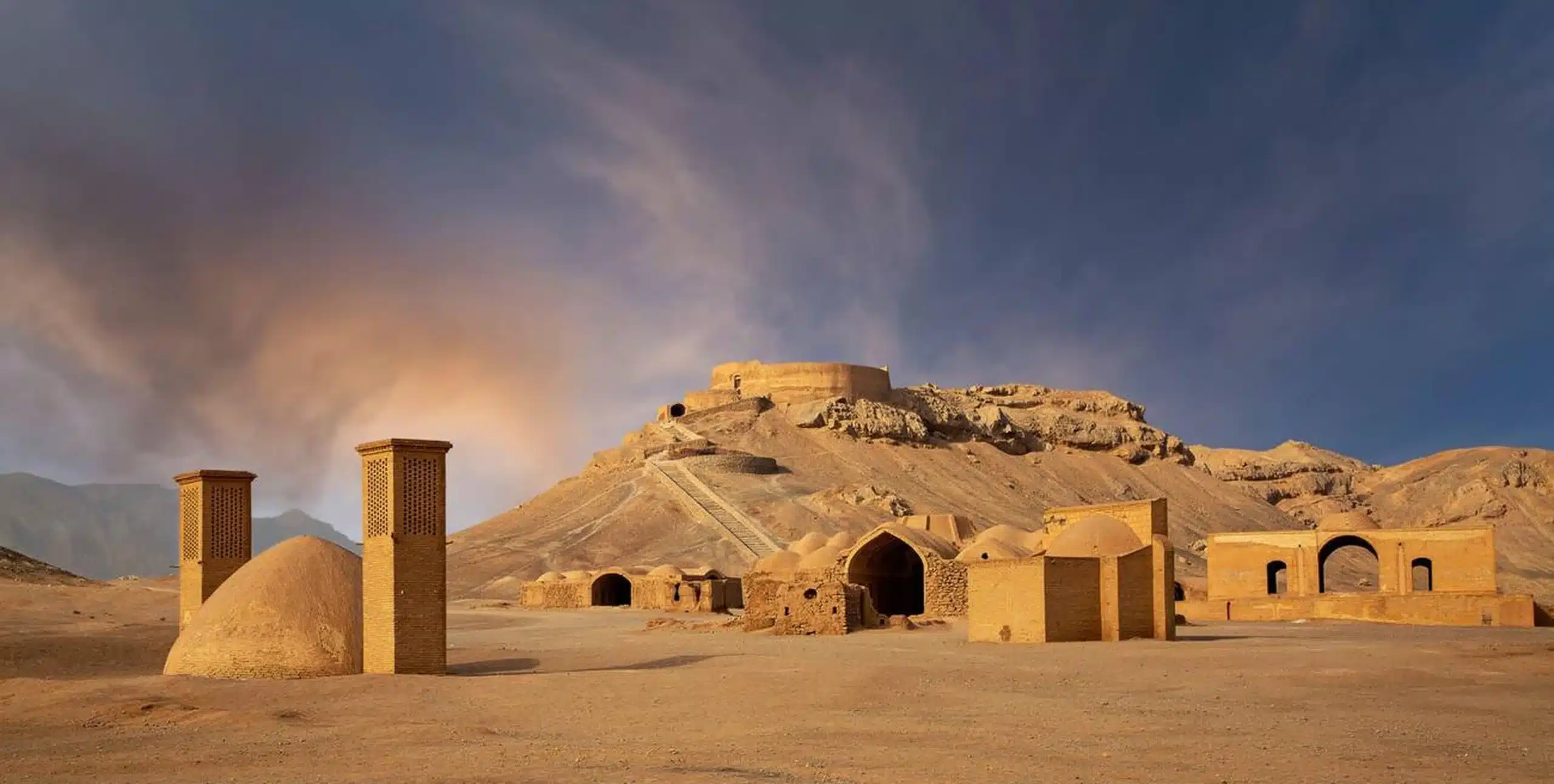
Zoroastrianism was the state religion. One of the empire’s great sacred fires burned at Takht-e Soleyman in West Azerbaijan, a sanctuary built around a deep spring-fed lake. UNESCO notes a Sasanian temple of the 6th and 7th centuries there, dedicated to Anahita, the goddess of the waters.
Palaces, dams and cities
Sasanian builders worked on a large scale. Their domed palaces at Firuzabad and Sarvestan, and the city of Bishapur, together form the Sasanian Archaeological Landscape of Fars, now a UNESCO World Heritage site. In Khuzestan, the weirs and canals of Shushtar date in their present form from the 3rd century CE, probably on older Achaemenid foundations. The old bridge at Dezful and the ruined city of Seimareh in Ilam province are also traditionally dated to this period.
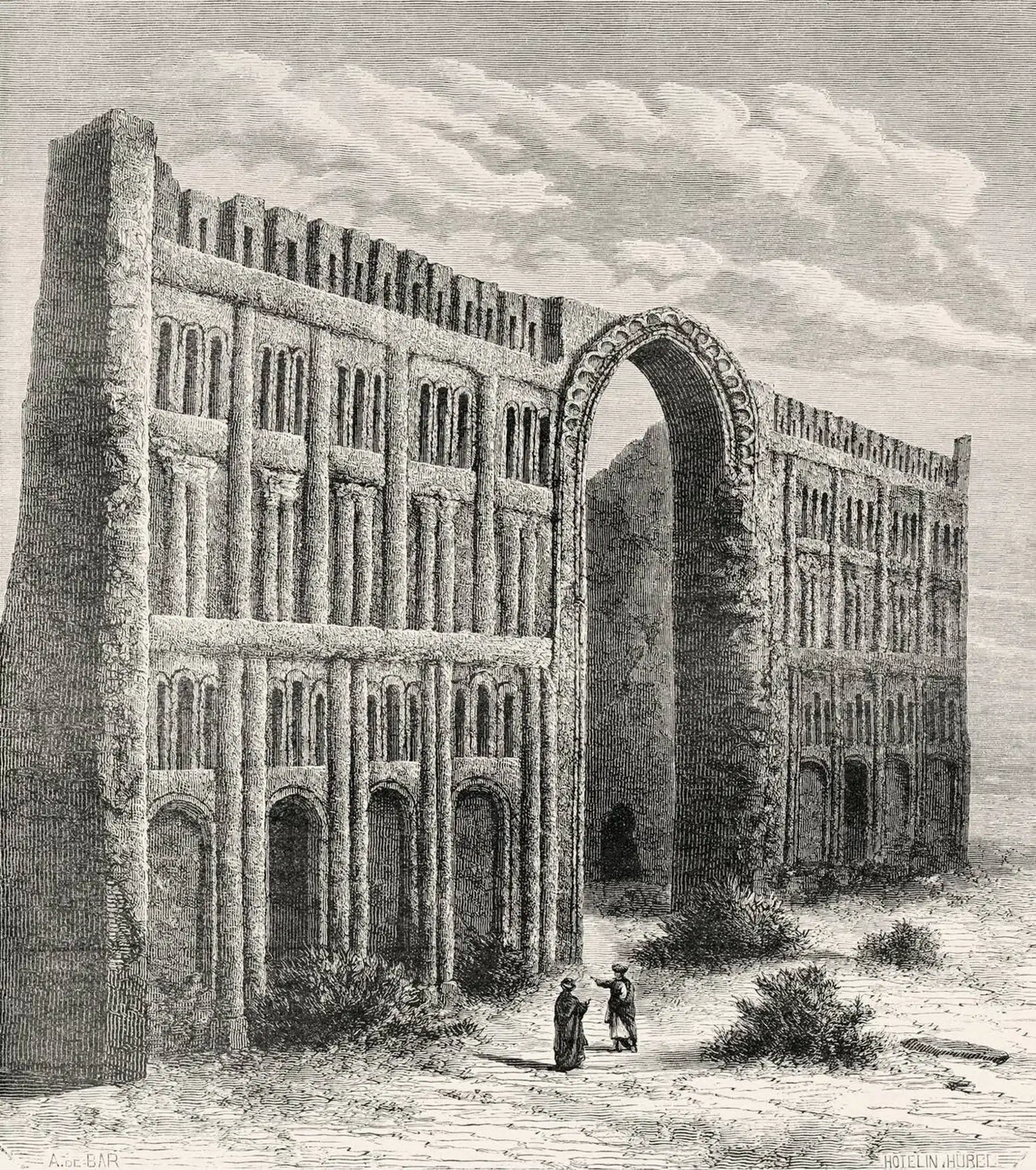
The best-known Sasanian building stands outside Iran. Taq Kasra, the great brick arch of the palace at Ctesiphon, is in Iraq, south of Baghdad.
Rome, Byzantium and the long war
For four centuries the Sasanians fought Rome and then Byzantium on the Euphrates frontier. The last great round of that war, under Khosrow II in the early 7th century, exhausted both empires just before the armies of Islam arrived from Arabia.
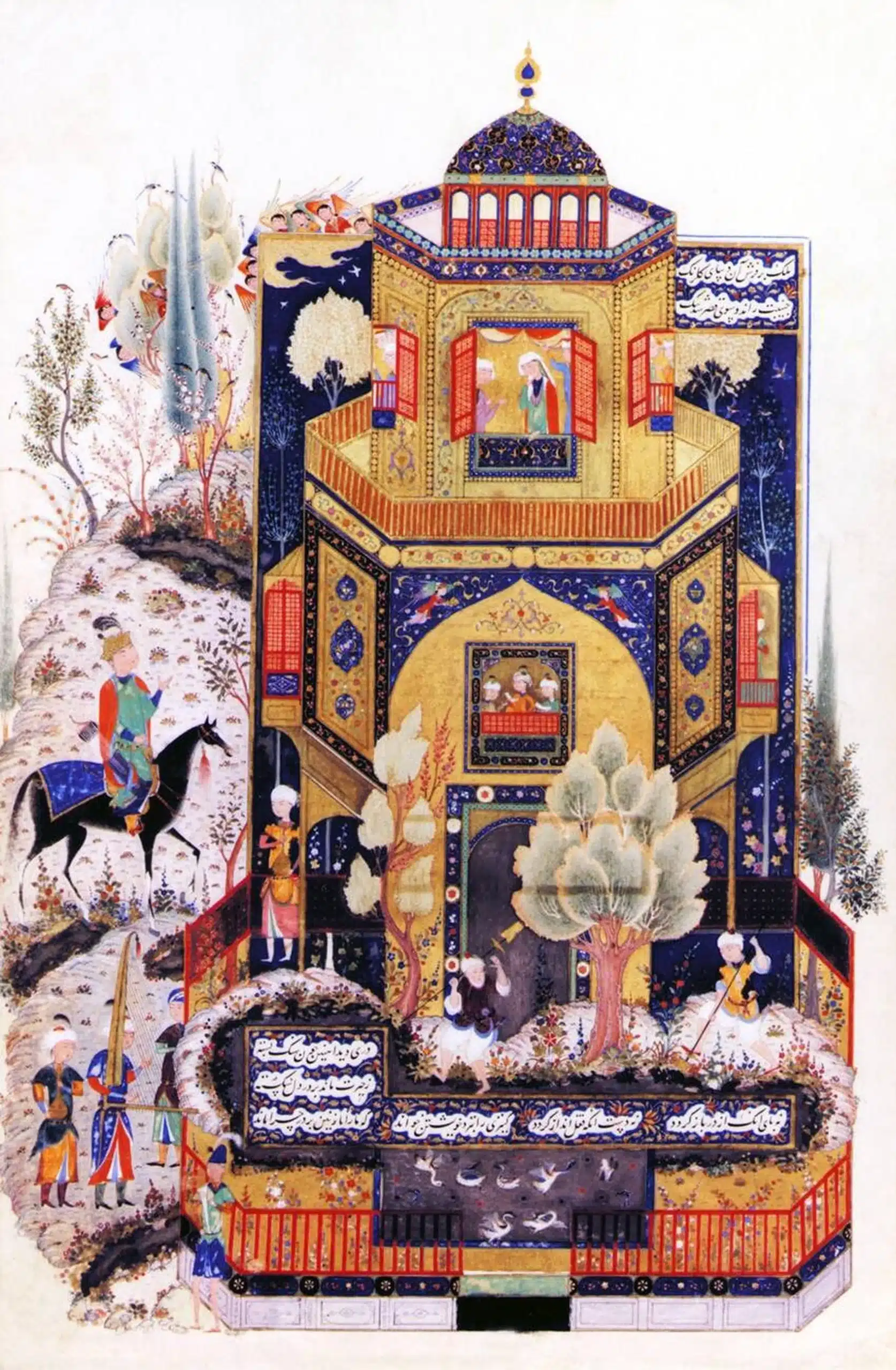
The Arab Conquest and the First Iranian Muslim Dynasties (7th to 11th Centuries)
The fall of the Sasanians
The Arab army defeated the Sasanians at al-Qadisiyyah, near al-Hira in today’s Iraq, in 636 or 637 CE. Ctesiphon fell soon after. The last king, Yazdegerd III, retreated east across the plateau and was killed near Merv in 651. Our article on the Islamic conquest of Persia follows the campaign in detail.
Conversion to Islam was slow and took centuries. Arabic became the language of religion and scholarship, but Persian survived in speech. When it came back as a written language, it was written in Arabic script and full of Arabic words. That is the Persian Iranians speak today.
Local dynasties under the caliphs
As the Abbasid caliphs in Baghdad lost their grip, Iranian families took power in the provinces while still naming the caliph in Friday prayers:
- The Tahirids (821 to 873) governed Khorasan for the caliphs, with Nishapur as their main seat.
- The Samanids (819 to 999) ruled Khorasan and Transoxania from Bukhara. Their court backed poets such as Rudaki and gave New Persian literature its start.
- The Buyids (945 to 1055), a Shia family from Daylam on the Caspian, held western Iran and in 945 took Baghdad itself, keeping the caliph as a figurehead.
- The Ghaznavids (977 to 1186), Turkic rulers based at Ghazni in Afghanistan, took over the Samanid lands in Khorasan. Ferdowsi finished the Shahnameh, the Persian national epic, in 1010 and presented it to Mahmud of Ghazna.
This was also the age of the great Persian scholars who wrote mostly in Arabic. Avicenna (Ibn Sina) wrote his medical and philosophical works in this period, and his mausoleum in Hamadan is also in Hamadan.
The Seljuks (1040 to 1194)
The Seljuks were the ruling family of the Oghuz Turks, who had settled near the Syr Darya and converted to Sunni Islam. In 1040 they beat the Ghaznavids at Dandanqan, near Merv, and took Khorasan. By the death of Tughril Beg in 1063 their empire included western Iran and Mesopotamia. Under Alp Arslan and Malik Shah it reached Syria and, after the battle of Manzikert in 1071, opened Anatolia to Turkish settlement.
The sultans were Turkish, but their government was Persian. The vizier Nizam al-Mulk ran the empire for both Alp Arslan and Malik Shah and founded colleges, the Nizamiyyas, across the empire. He was murdered in 1092, a killing blamed on the Nizari Ismailis, whose mountain stronghold at Alamut above Qazvin held out until the Mongols arrived. Omar Khayyam worked on the calendar reform for Malik Shah in this same period.
To see Seljuk Iran, go to the Jameh Mosque of Isfahan. UNESCO traces its building history back to 841 CE and through the Buyid, Seljuk, Ilkhanid, Timurid and Safavid periods, with the Seljuk work the most prominent. Its two domed chambers, and the four-iwan courtyard plan, became the model for later Iranian mosques. The last Seljuk sultan in Iran died in 1194.
The Mongols and the Ilkhanids (1256 to 1335)
Genghis Khan’s armies devastated the cities of Khorasan in the early 13th century. A generation later his grandson Hulagu came back to stay. He founded the Ilkhanid dynasty in 1256, destroyed the Ismaili castles, and in 1258 captured Baghdad and ended the Abbasid caliphate.
The Ilkhans began as outsiders and ended as Persian kings. Ghazan (reigned 1295 to 1304) converted to Islam, and his vizier Rashid al-Din wrote a history of the known world. His brother Oljeitu (1304 to 1316) built a new capital at Soltaniyeh, between Zanjan and Qazvin.
Oljeitu’s mausoleum at Soltaniyeh was built between 1302 and 1312, according to UNESCO, and is the main Ilkhanid monument in Iran. The Ilkhans also partly rebuilt the old Sasanian sanctuary at Takht-e Soleyman. The dynasty broke up after 1335 into rival local states.
Timurids and the Turkmen Dynasties (Late 14th Century to 1507)
Timur (Tamerlane) conquered Iran from his base in Samarkand in the late 14th century. After his death in 1405 his son Shah Rokh (reigned 1405 to 1447) ruled from Herat, which became a centre of Persian painting, poetry and book-making. Britannica dates the end of Timurid rule in Herat to 1507.
Shah Rokh’s wife, Goharshad, paid for the Goharshad Mosque in Mashhad in the early 15th century. It is part of the Imam Reza Shrine complex today, and it is the main Timurid monument you can visit inside Iran.
In the west, two Turkmen confederations, the Qara Qoyunlu (“Black Sheep”) and the Aq Qoyunlu (“White Sheep”), fought over Azerbaijan and ruled from Tabriz. The Blue Mosque in Tabriz, completed in 1465 under the Qara Qoyunlu ruler Jahan Shah, survives from their time, damaged by earthquakes but with patches of its tile work intact.
The Safavid Dynasty (1501 to 1736)
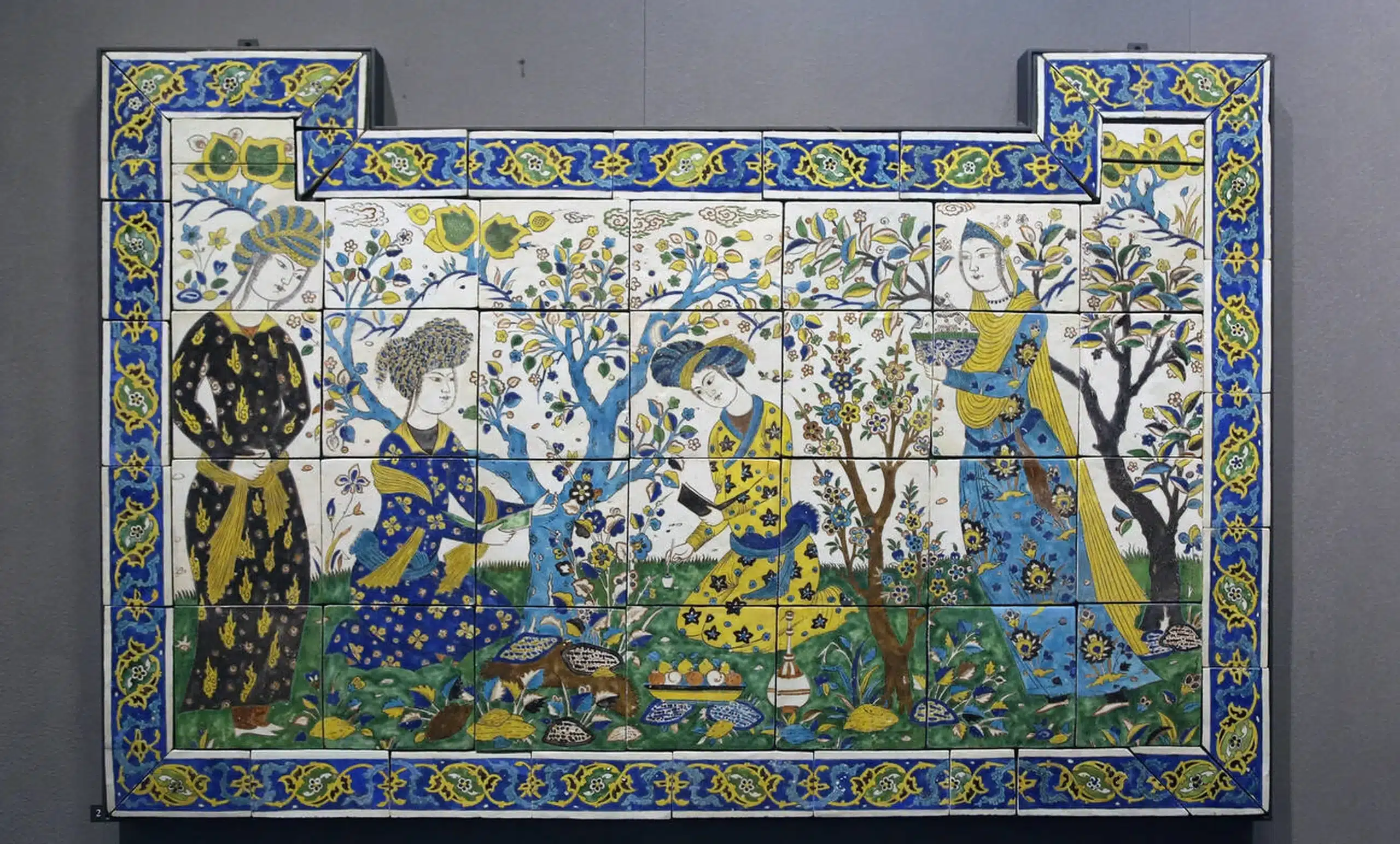
From Sufi order to Shia state
The Safavids began as a Sufi order in Ardabil, founded by Sheikh Safi al-Din in the 14th century. In 1501 the young Ismail I, backed by Turkmen tribal warriors known as the Qizilbash, took Tabriz, crowned himself shah and declared Twelver Shia Islam the state religion. Britannica counts the dynasty from 1501 to 1736.
Making Shia Islam official set Iran apart from the Sunni Ottomans to the west and the Uzbeks to the east. It took generations, and pressure on Sunni communities, before most Iranians were Shia. The Safavid shrine at Ardabil, where Sheikh Safi and Shah Ismail are buried, is a UNESCO site and worth the detour on a northern route.
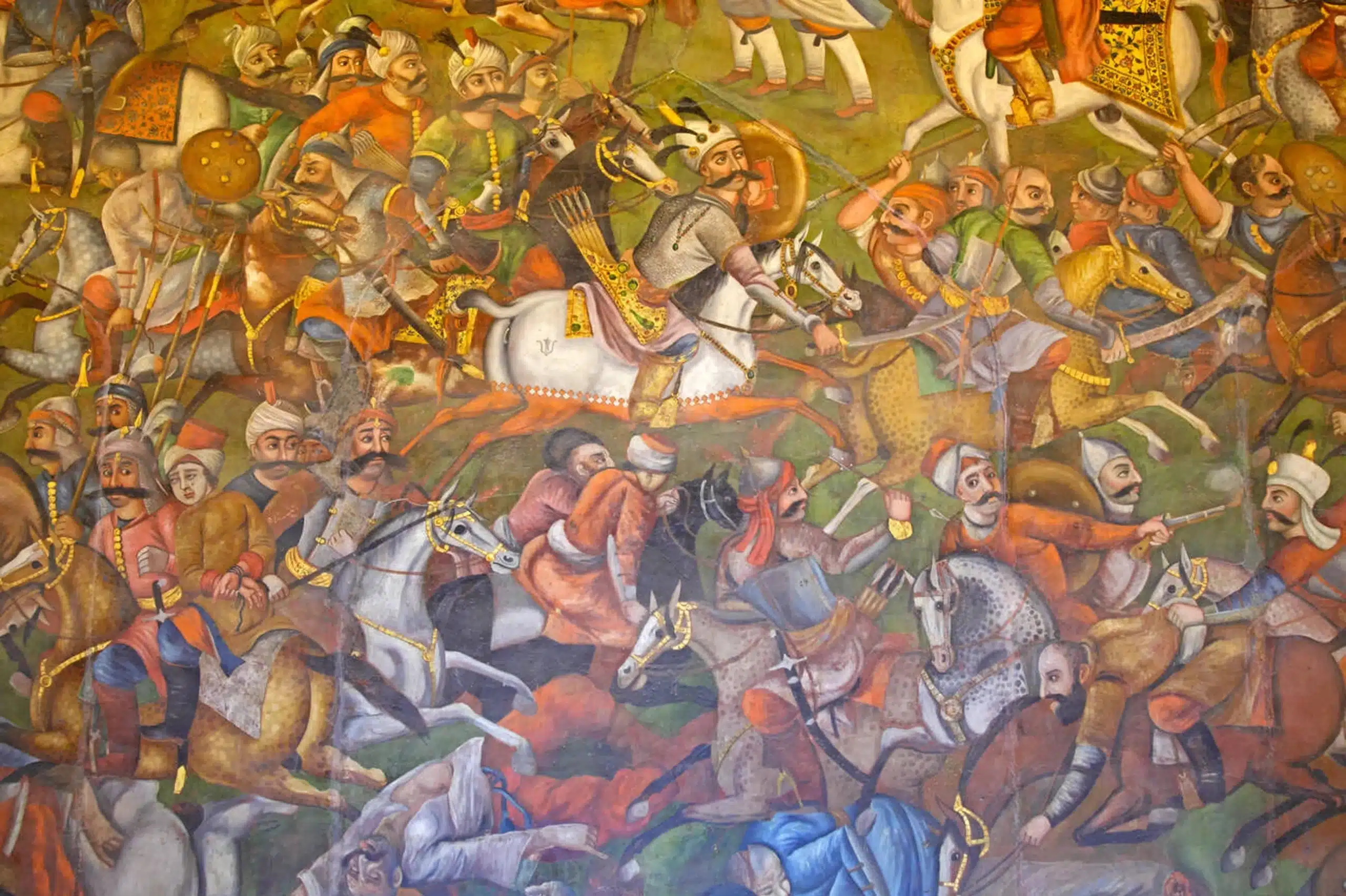
Shah Abbas I and Isfahan
Shah Abbas I (ruled 1588 to 1629) pushed back the Ottomans and the Uzbeks, built a standing army loyal to himself rather than to the Qizilbash chiefs, and moved his capital to Isfahan. There he laid out the great square, Naqsh-e Jahan, at the beginning of the 17th century.
Stand in the middle of the square and you can see the Safavid state at a glance: the Shah Mosque on the south side, turned to face Mecca; Sheikh Lotfollah, the court’s private mosque, on the east; the Ali Qapu palace gate on the west; and on the north the portal to the bazaar. Behind Ali Qapu are the garden palaces of Chehel Sotoun and Hasht Behesht, and to the south the river bridges, Si-o-se Pol and Khaju.
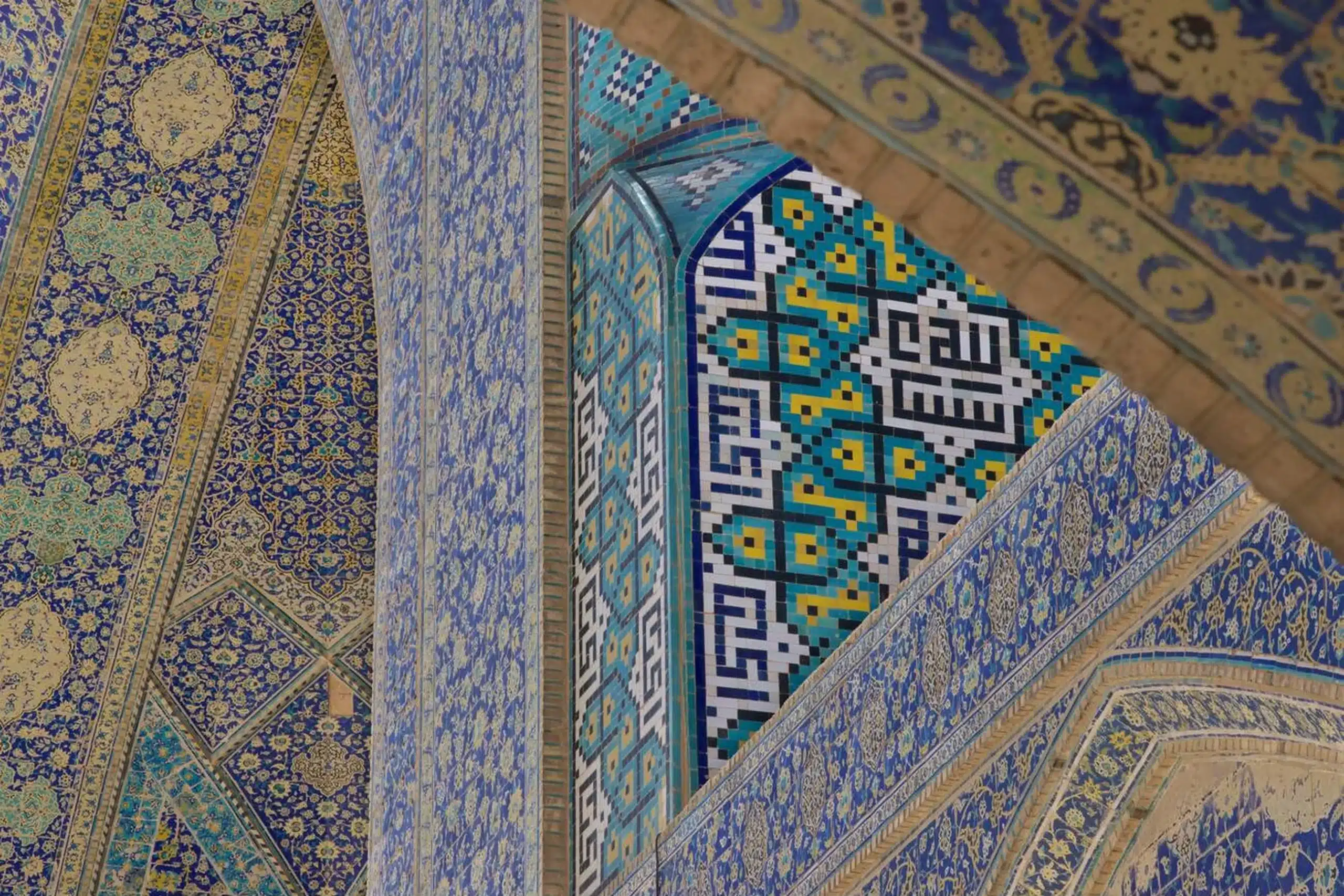
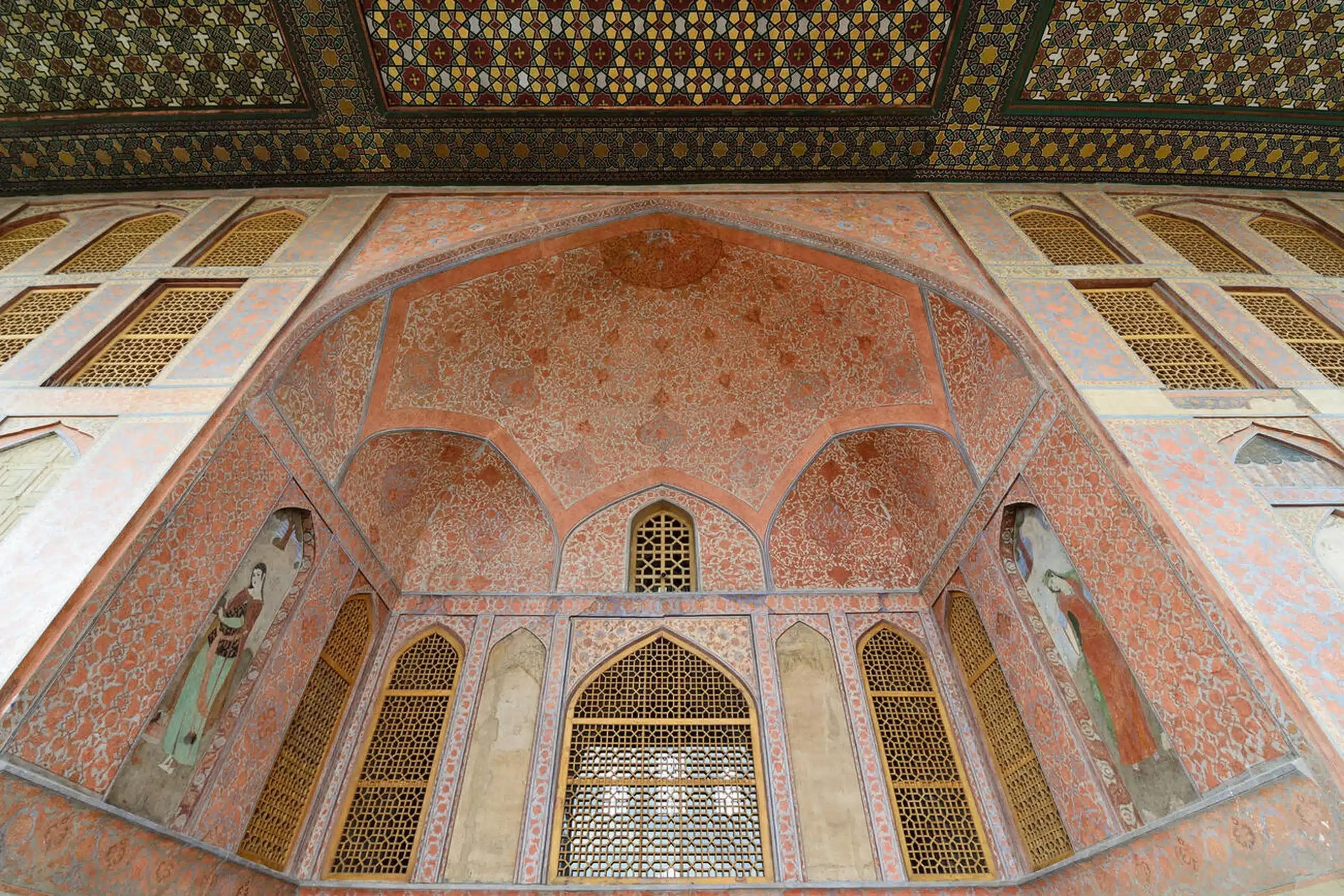
Abbas also moved Armenian merchants from Julfa on the Aras river to a new quarter across the river from Isfahan, New Julfa, where the Vank Cathedral still serves the community. Safavid governors built in the provinces too, such as the Ganjali Khan Complex in Kerman and the first garden at Fin near Kashan.
Carpets, painting and trade
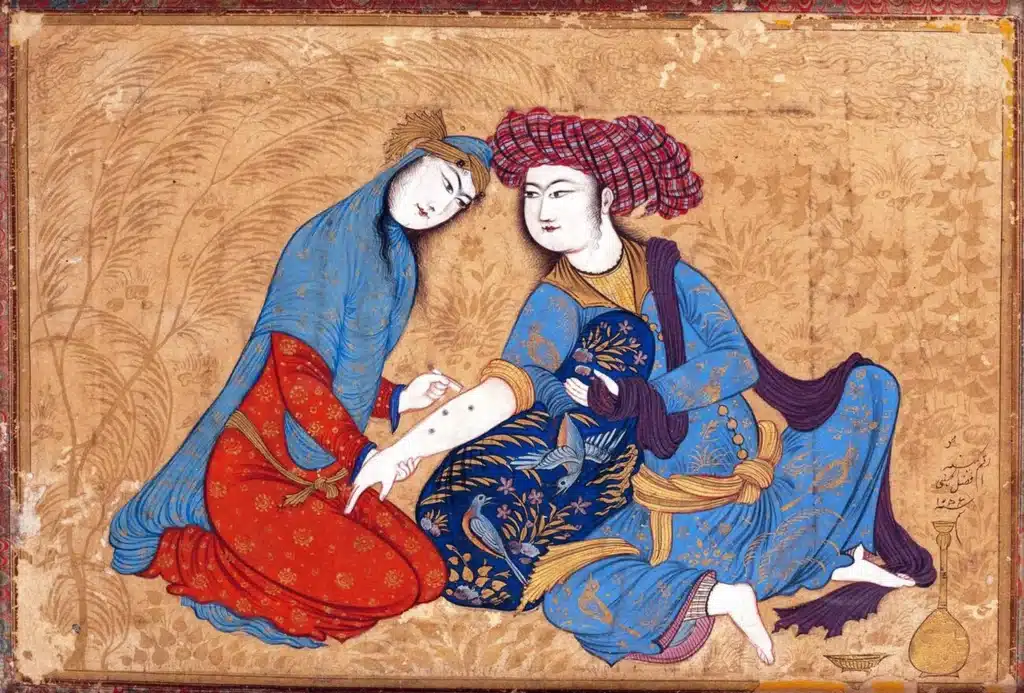
Court workshops produced carpets, silks and illustrated books. The pair of Ardabil carpets, woven for the Safavid shrine, ended up in London’s Victoria and Albert Museum and the Los Angeles County Museum of Art. Isfahan painters such as Reza Abbasi and, later, Afzal al-Husayni moved away from book illustration to single-page pictures of courtiers, lovers and dervishes.
The fall of Isfahan
Later shahs grew up inside the palace and rarely led armies. In 1722 Ghilzai Afghans from Kandahar besieged Isfahan and took it. Safavid princes survived as figureheads for a few more years, until their general, Nader, set them aside.
Afsharids and Zands (1736 to 1794)
Nader Shah Afshar
Nader, a soldier from the Afshar tribe of Khorasan, drove out the Afghans in the name of the Safavids and then, in 1736, deposed the infant Abbas III and made himself shah. In 1739 he defeated the Mughals at Karnal and sacked Delhi, bringing home the Peacock Throne and the Koh-i-noor diamond. His own troops killed him in 1747. His tomb, a 20th-century monument, stands in a park in Mashhad: see our guide to the Tomb of Nader Shah.
Karim Khan Zand and Shiraz
After Nader’s death, Karim Khan Zand won the south. By 1750 he was strong enough to call himself vakil, regent, rather than shah, and he ruled from Shiraz until he died there in 1779. Britannica credits him with giving Iran a rest after forty years of war.
Much of central Shiraz is his: the brick Karim Khan Citadel, the vaulted Vakil Bazaar, the Vakil Mosque and bathhouse beside it. His successors fought each other, and the last Zand prince, Lotf Ali Khan, was hunted down by the Qajars by 1794.
The Qajar Dynasty (1794 to 1925)
Agha Mohammad Khan, chief of the Turkmen Qajar tribe, set out to reunite Iran after Karim Khan’s death in 1779. By 1794 he had removed his rivals, and in 1796 he was crowned shah. He made Tehran his capital, and it has stayed the capital ever since. Britannica dates the Qajar dynasty from 1794 to 1925.
A court between Russia and Britain
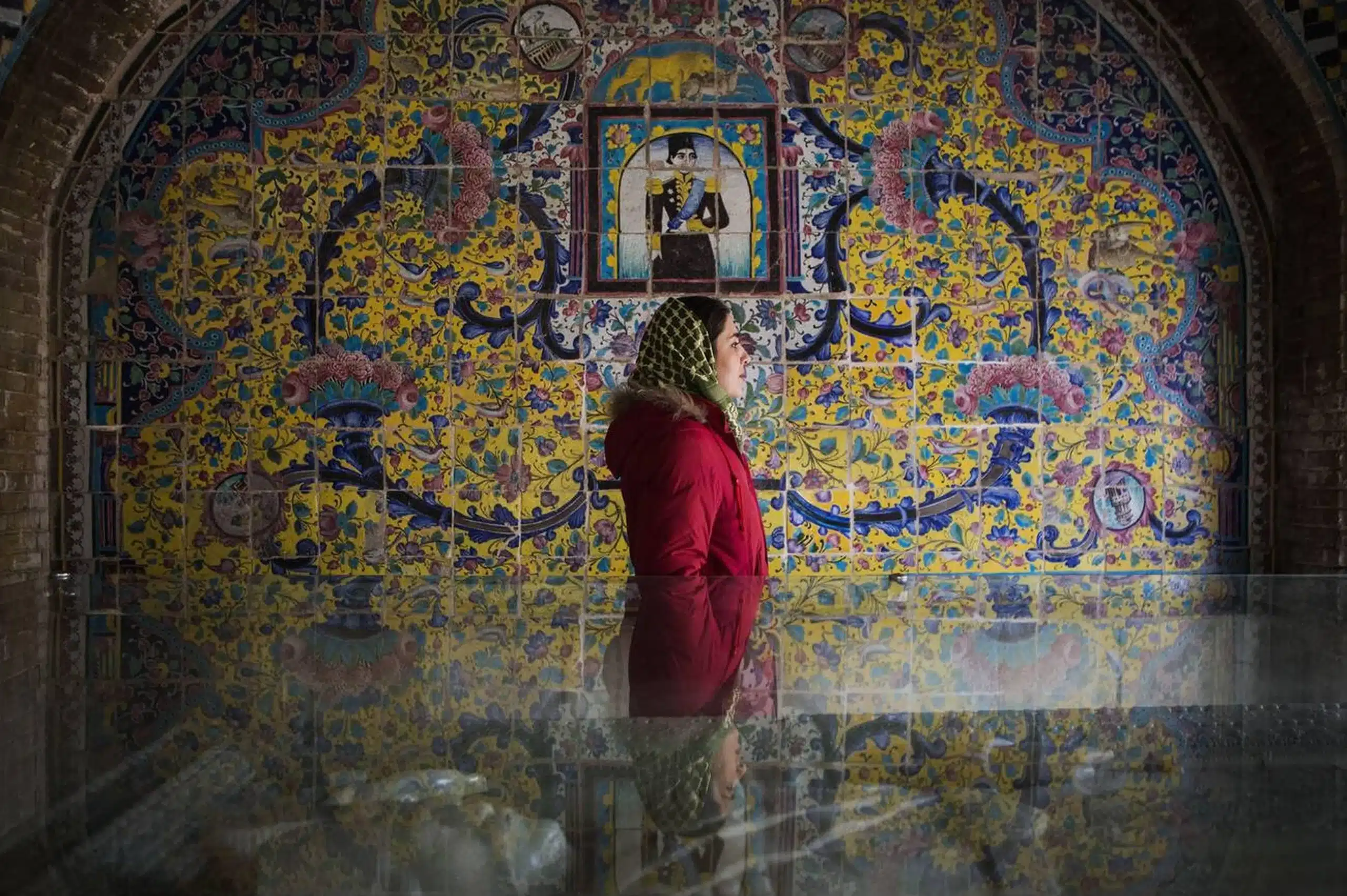
The 19th century was hard on Iran. Wars with Russia cost it its provinces in the Caucasus, and Britain and Russia competed for influence in Tehran. At the same time the court opened up to Europe. Naser al-Din Shah, who reigned for almost half a century until his assassination in 1896, travelled to Europe, took photographs and filled Golestan Palace with mirror halls and European clocks. UNESCO describes the palace as the outstanding example of Qajar art and architecture. Not far away, the Dar ul-Funun was Iran’s first modern college.
Qajar buildings travellers see
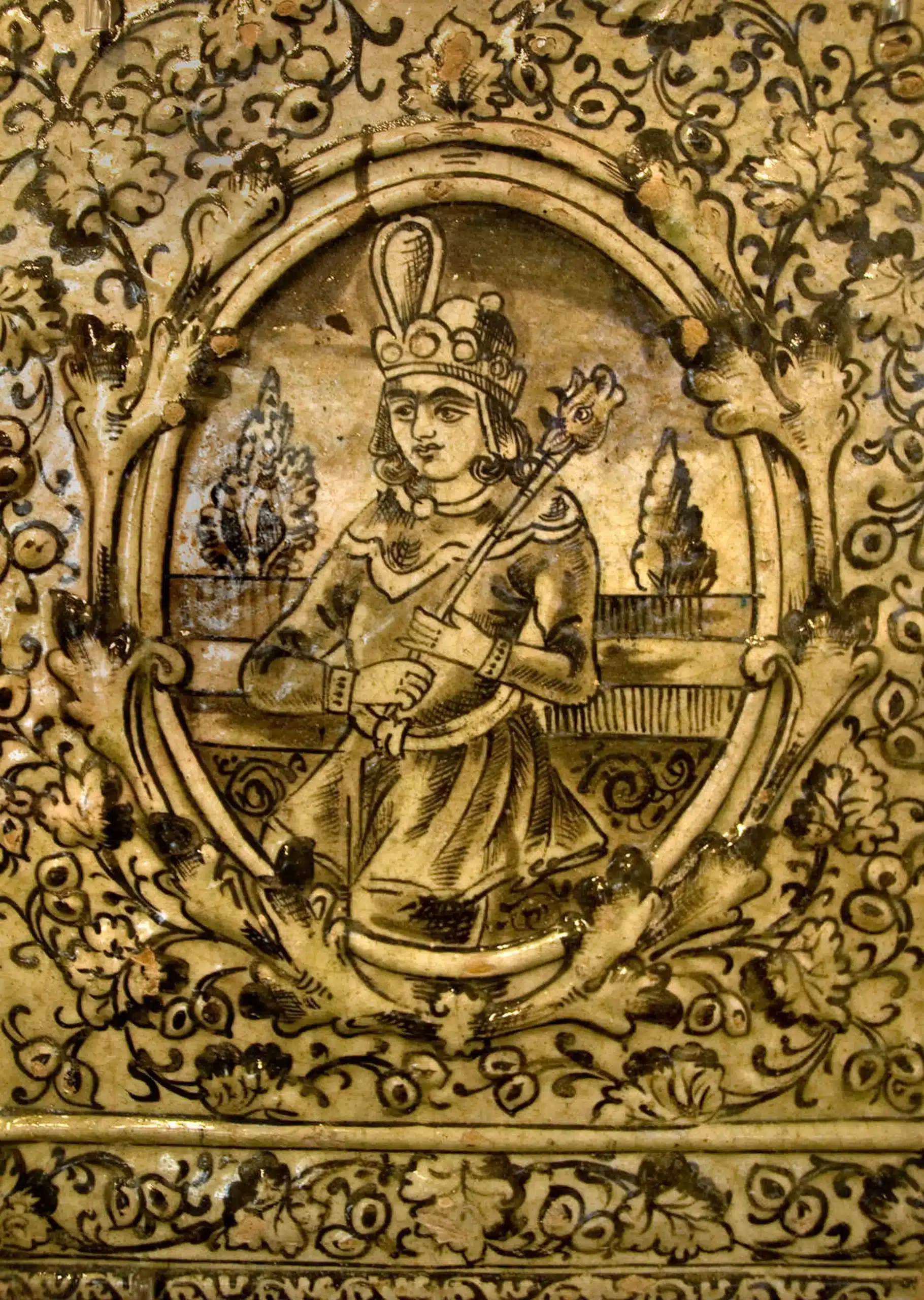
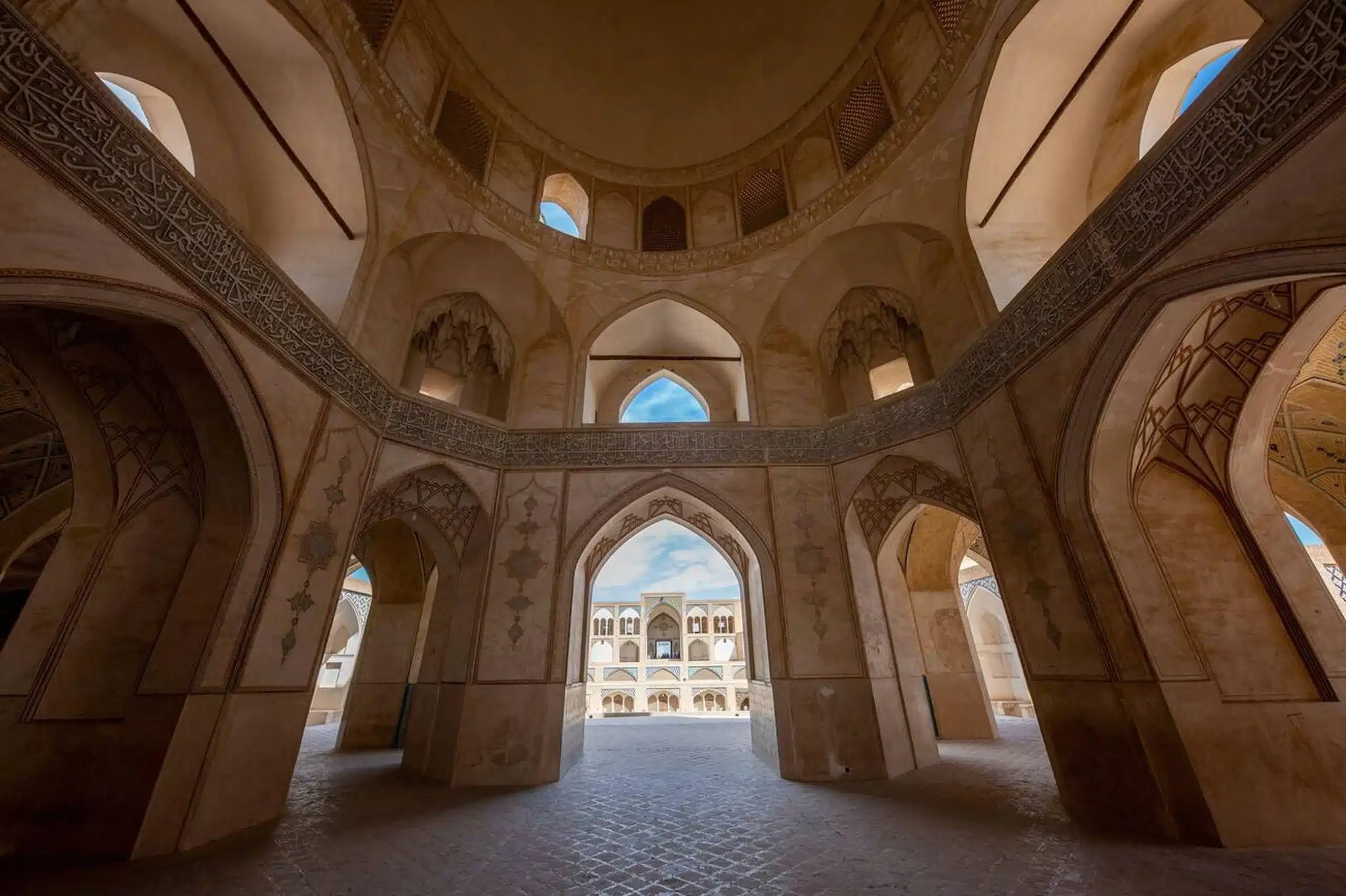
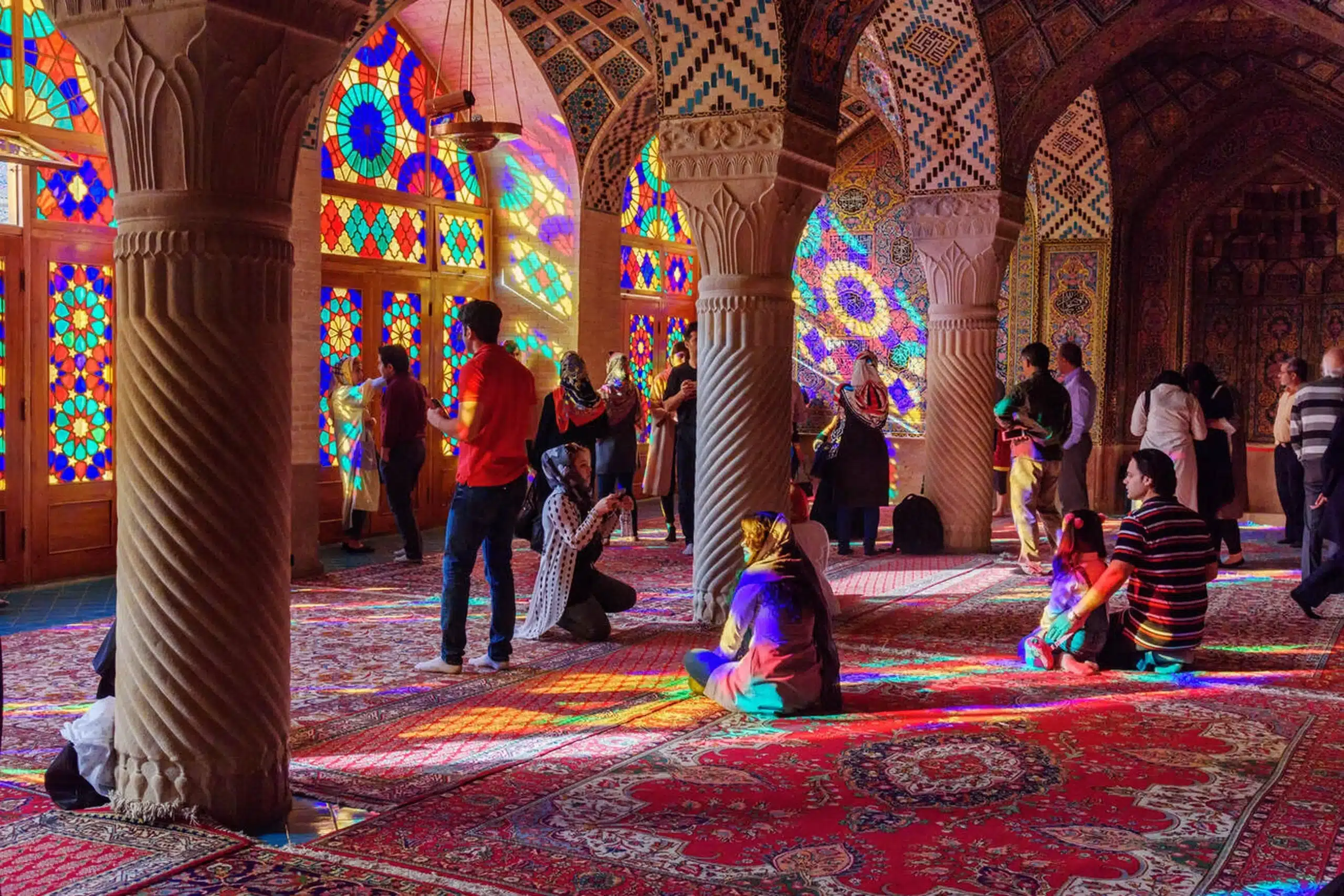
Many of the buildings people think of as “old Iran” are Qajar. In Shiraz, the Nasir al-Mulk Mosque with its stained glass dates from the late Qajar period, and so do the pavilions of Eram Garden. In Kashan, the Agha Bozorg Mosque and the merchants’ houses around it are 19th-century work. Fin Garden in Kashan, Safavid in origin, is where Amir Kabir, Naser al-Din Shah’s reforming chief minister, was killed.
The Constitutional Revolution
Merchants, clerics, reformers and workers united against foreign concessions and royal debt. In 1906 Mozaffar al-Din Shah was forced to grant a constitution and an elected parliament, the Majles. The fight over it lasted for years. The Qajars stayed on the throne, but weaker, until an army officer named Reza Khan took power.
The Pahlavi Dynasty (1925 to 1979)
Reza Shah
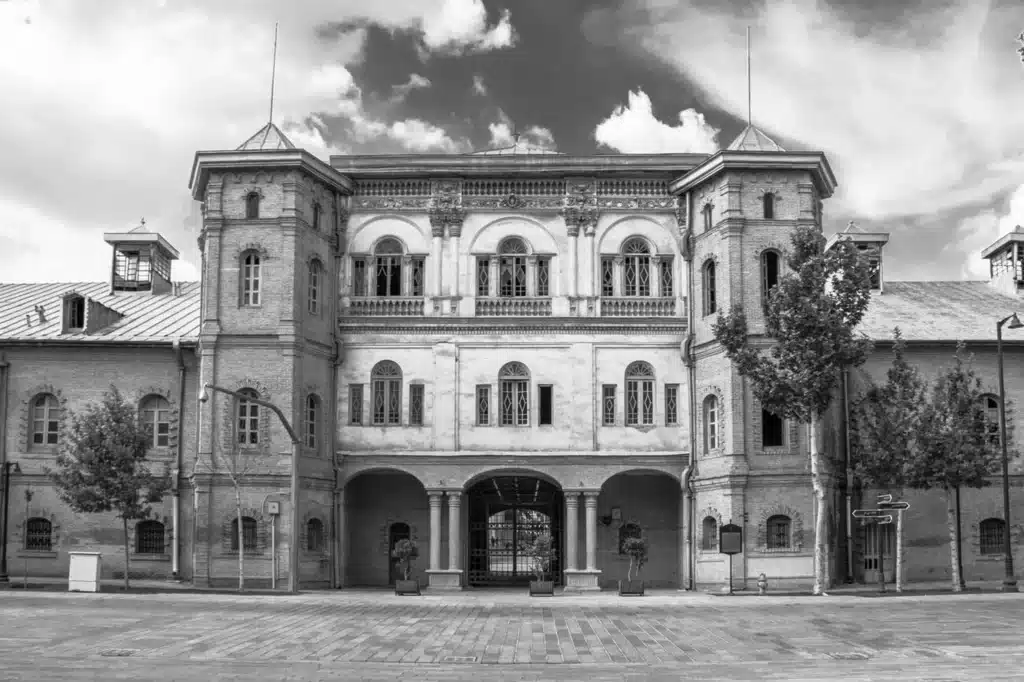
Reza Khan led a coup in 1921. In 1925 a constituent assembly deposed the Qajars and elected him shah, and he took the name Pahlavi, after the Middle Persian language of the Sasanians. He built the Trans-Iranian Railway, a national army, state schools and the University of Tehran, and he sidelined tribal chiefs and the clergy.
His reforms were imposed from the top. The most resented was the ban on the veil in 1936, enforced by police in the streets. In 1941, after British and Soviet troops occupied Iran, he abdicated in favour of his son.
Mohammad Reza Shah and the White Revolution
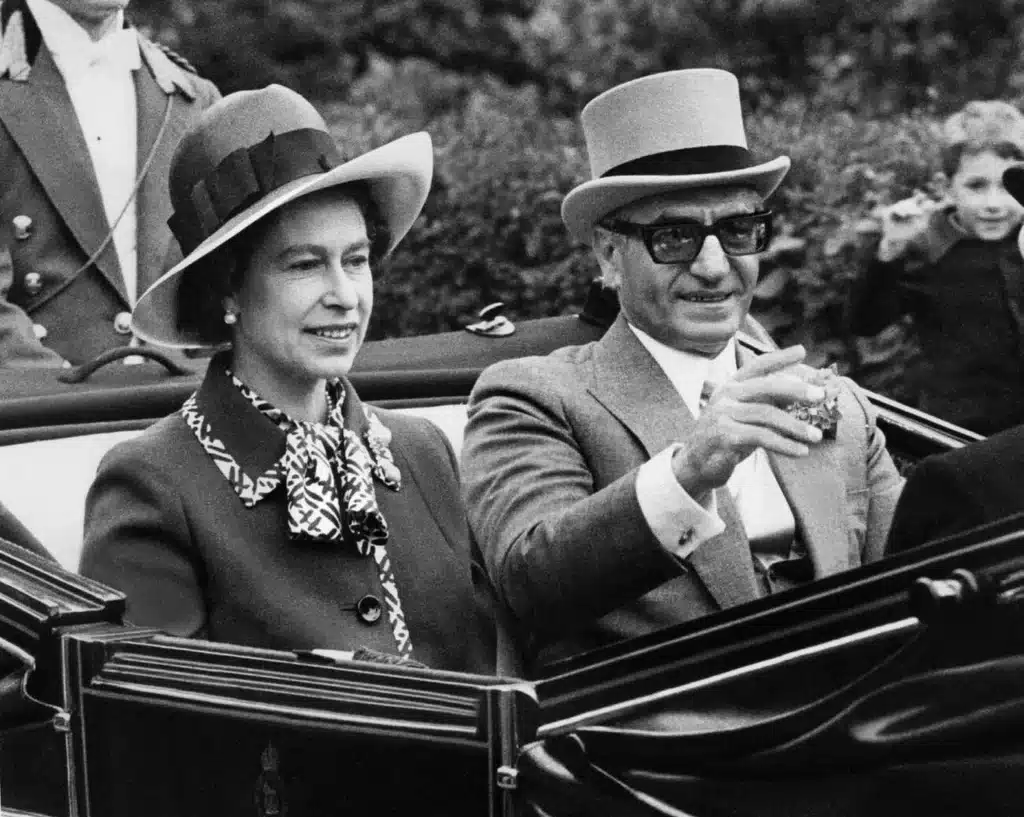
Mohammad Reza Shah reigned from 1941 to 1979. In 1963 he launched the White Revolution, a package of land reform, literacy campaigns, votes for women and industrial projects. Oil money paid for rapid growth, but it also brought inflation, crowded cities and a wide gap between rich and poor. The secret police, SAVAK, kept a tight hold on dissent.
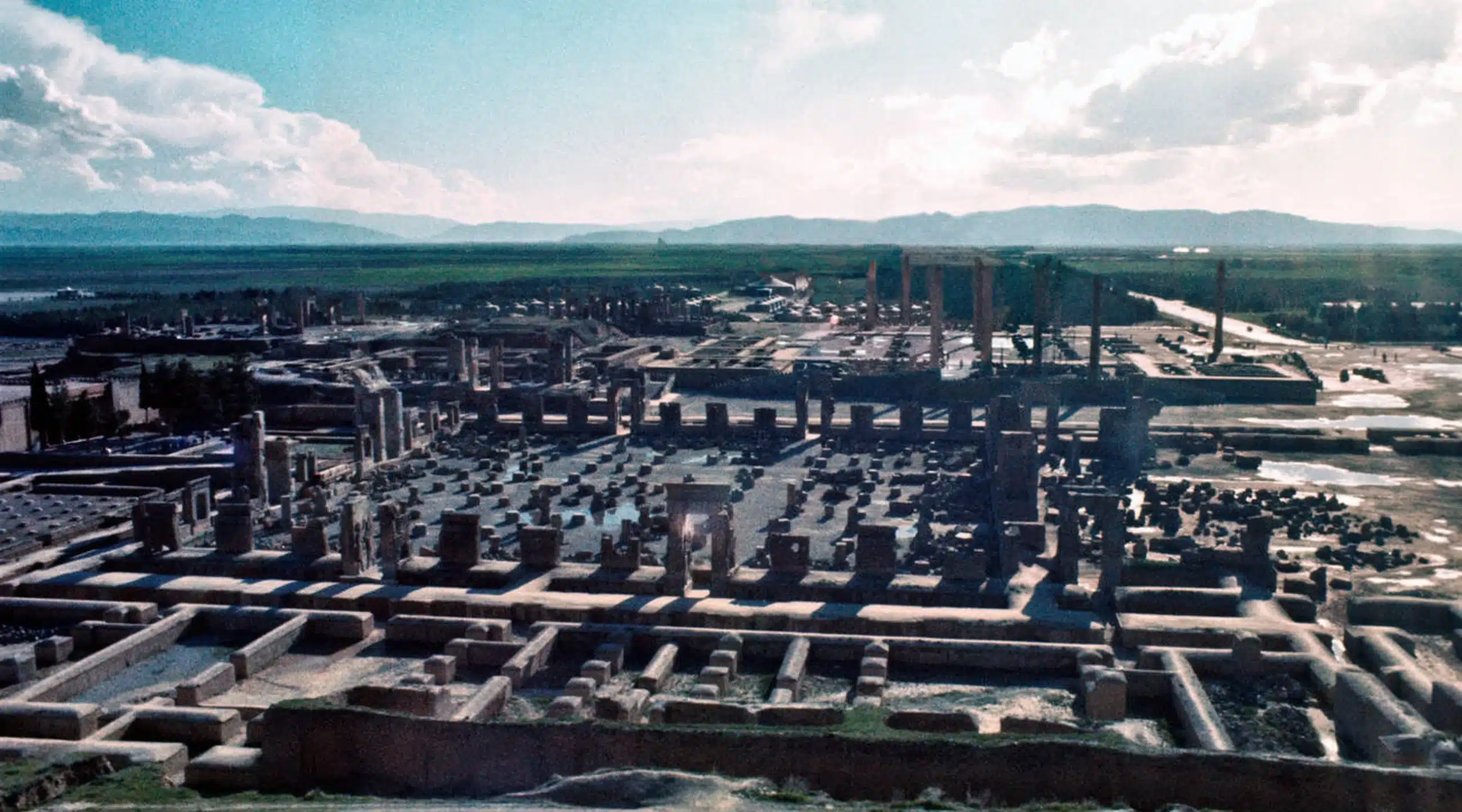
The shah leaned on the pre-Islamic past for legitimacy. In 1971 he hosted world leaders in a tent city beside Persepolis to mark 2,500 years of Iranian monarchy, the same year the Azadi Tower, then called Shahyad, went up in Tehran. Many Iranians saw the Persepolis party as extravagant at a time of poverty in the provinces.
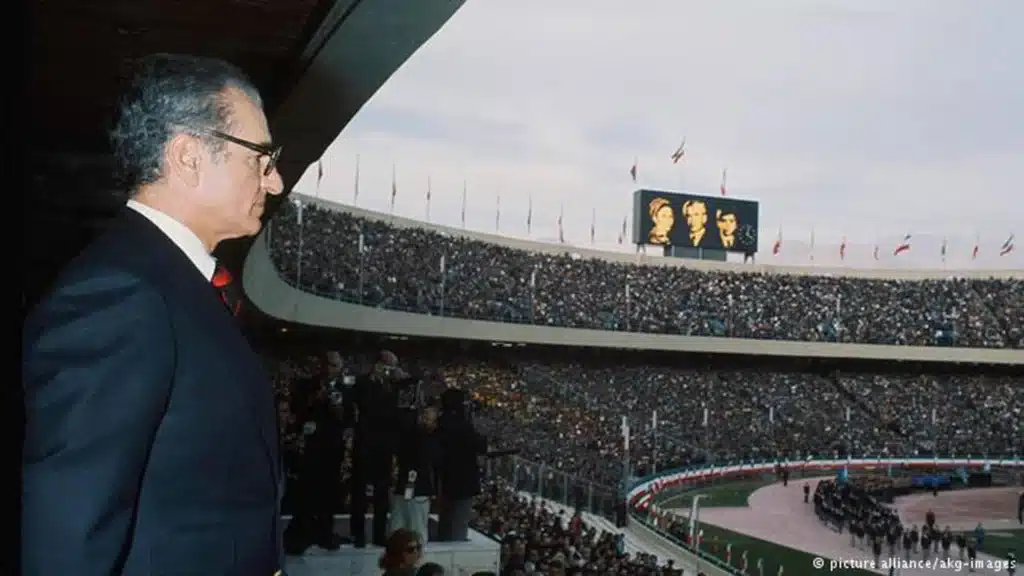
1979: the end of the monarchy
Protests grew through 1978, uniting religious conservatives, liberals and the left behind Ayatollah Ruhollah Khomeini, then in exile. The shah left Iran on 16 January 1979. Khomeini returned on 1 February, and on 11 February the army declared itself neutral and the old regime collapsed. After a referendum at the end of March, Iran became an Islamic Republic.
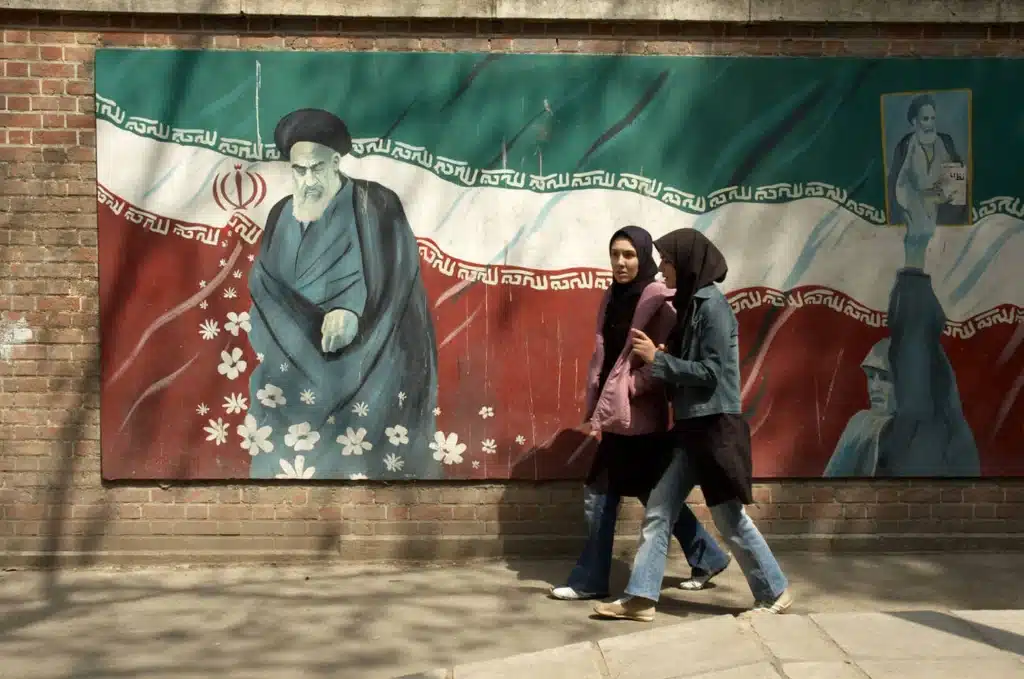
In north Tehran you can walk through the Pahlavi palaces at Sa’dabad, now museums. Our Pahlavi dynasty article covers the period in more depth.
Seeing the Dynasties on the Ground
You can cover most of this timeline without doubling back much, because the eras cluster by region.
- Tehran: start at the National Museum of Iran, where the archaeology galleries run from prehistoric pottery to the Sasanians. Then Golestan Palace for the Qajars and Sa’dabad for the Pahlavis. Our list of museums in Tehran has the rest.
- Fars: Persepolis, Naqsh-e Rostam and Pasargadae for the Achaemenids, the Sasanian reliefs at Naqsh-e Rostam, and Zand and Qajar Shiraz.
- Isfahan and Kashan: the Jameh Mosque for the Seljuks, Naqsh-e Jahan and the bridges for the Safavids, and Qajar houses in Kashan.
- The west: Hamadan for the Medes, Bisotun and Taq-e Bostan around Kermanshah, and Susa, Chogha Zanbil and Shushtar in Khuzestan for Elam and the Sasanians.
- The north-west and north-east: Soltaniyeh, Takht-e Soleyman, Tabriz and Ardabil; Mashhad for the Timurid mosque and Nader Shah.
Our Iran cultural tours follow these routes with a guide. The 15-day tour and the shorter 9-day tour both include Persepolis and Pasargadae. If you want to add Susa, Kermanshah or Soltaniyeh, a private tour can be built around the periods that interest you.
Iranian Dynasties: Frequently Asked Questions
What was the first Iranian dynasty?
The Medes are usually called the first Iranian dynasty, because they were the first Iranian-speaking people to form a kingdom, probably by the late 7th century BCE. Elam is older, but the Elamites did not speak an Iranian language.
What is the difference between Persian and Iranian dynasties?
“Persian” strictly means the people of Pars, today’s Fars province, home of the Achaemenids and the Sasanians. “Iranian” covers every dynasty that ruled Iran, including Parthians from Khorasan, Turkic Seljuks, Mongol Ilkhans and Turkmen Qajars. In everyday English the two words are often used for the same thing.
Which Iranian dynasty lasted longest?
The Parthians, who ruled from 247 BCE to 224 CE, nearly 470 years. The Sasanians come next, at a little over 400 years.
What was the last dynasty of Iran?
The Pahlavi dynasty, from 1925 until the revolution of February 1979.
Where can I see the most dynasties in one place?
In Tehran, the National Museum of Iran. In the field, Naqsh-e Rostam near Persepolis has Achaemenid tombs and Sasanian reliefs side by side, and the Jameh Mosque of Isfahan has work from more than a thousand years of Islamic dynasties.
Sources and Further Reading
Dates on this page follow Encyclopaedia Britannica’s articles on each dynasty and UNESCO’s World Heritage listings for each site. For more depth:
- Encyclopaedia Iranica, the standard scholarly reference on Iranian history and culture.
- UNESCO World Heritage Centre: Iran, with descriptions and dates for every listed site.
- British Museum: the Cyrus Cylinder.
- Louvre: the Code of Hammurabi, found at Susa.
- Michael Axworthy, Iran: Empire of the Mind (Penguin), a readable single-volume history from Zoroaster to the present.
- Maria Brosius, A History of Ancient Persia: The Achaemenid Empire (Wiley-Blackwell).
- Touraj Daryaee (ed.), The Oxford Handbook of Iranian History (Oxford University Press).
- John Curtis, Ina Sarikhani Sandmann and Tim Stanley, Epic Iran: 5000 Years of Culture (V&A Publishing), the catalogue of the 2021 exhibition in London.
- Homa Katouzian, The Persians: Ancient, Mediaeval and Modern Iran (Yale University Press).
On this site, see also Persian art through the ages, women in Persian history, the most visited museums in Iran and our history section.